
Europe Travel Tips We Swear By (After Dozens of Trips)
This post may contain affiliate links. If you make a purchase through them, we may earn a small commission (at no cost to you).
Planning a trip to Europe? Perhaps it’s your first visit – or your 10th! Either way, there are always a few things you forget, or wish you’d known sooner.
We’ve traveled here dozens of times. George was born in Romania and raised in Germany, and between us, we’ve explored most of its 40+ countries – lingering in places like Croatia, Italy, France, Portugal, Spain, Greece, Germany and Turkey.
Along the way, we’ve picked up plenty of tips for traveling to Europe.
So before you start researching charming European hotels and bucket-list stops, it’s worth brushing up on entry rules, money, train changes, where not to eat and other essentials.

Contents: Travel tips for Europe
What to know before you land


Here are the tips that will make your trip smoother (and help you avoid common mistakes).
New entry rules
You’ll need a valid passport to travel to Europe.
Travelers from many countries (including the U.S. and Canada) can visit the Schengen area visa-free for up to 90 days within any 180-day period.
A new system called ETIAS (European Travel Information and Authorization System) is slated to roll out in 2026 (timing TBD). It’s a simple online pre-travel authorization – not a full visa, but something to factor into your planning.
Money matters
Many European countries use the Euro, but not all. The U.K., Switzerland and Norway, for example, have their own currencies.
Exchange rates fluctuate, but as a rough guide, 1 euro is around $1.18 USD.
Can you get by with English?
In most major cities and tourist hotspots – yes, absolutely.
That said, English proficiency varies across Europe. You’ll generally find it more widely spoken in Northern Europe than in southern regions.
Learning a few basic words in the local language (hello, please, thank you) goes a long way – and is always appreciated.
Don’t forget a plug adapter
Pack a universal adapter. It’s one of those small things that’s easy to forget and annoying when you do.
Most of Europe uses Type C or F plugs (two round pins), while the U.K. and Ireland use Type G.
Our 10 best Europe travel tips
1) Don’t try to see everything in one trip

If it’s your first trip to Europe, you may be tempted to see as many countries as you can.
But Europe isn’t a checklist.
Yes. You can squeeze in three to five countries in a two-week vacation (France, Italy and Spain, for example). But it often turns into a blur of trains, planes, packing and unpacking.
We’re big fans of slow travel. Choose one or two countries – or even just one region – and give it the time it deserves. You’ll soak up more, stress less and actually remember the trip.
2) Double-check schedules
Opening hours, train times and even access to attractions can change – sometimes at short notice.
Add in the occasional strike or holiday closure, and it pays to double-check plans before heading out.
We’ve learned this the hard way!
On a trip to Portugal’s Douro Valley, we booked train tickets from Porto three weeks ahead. But when we showed up at the scheduled station, we discovered the departure had just been switched that day – to a completely different station miles away.
With help from a kind official (and a quick taxi ride), we made that train just in time. But if we’d missed it, we’d have been waiting hours for the next one.
3) Pack light
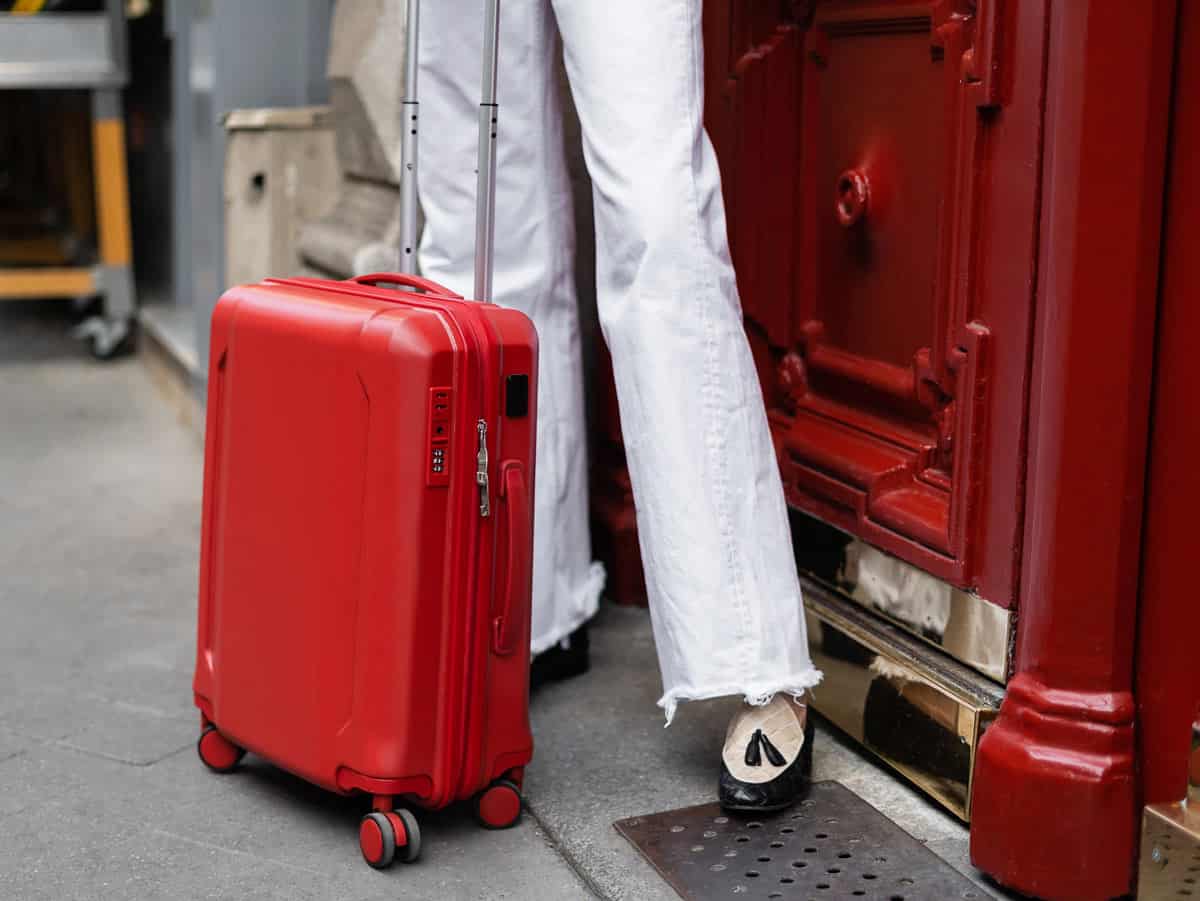
Dragging huge bags around Europe is no fun. Cobblestone streets, stairs and train platforms are not suitcase-friendly, so keep your packing list to a minimum.
4) Leave those high heels at home!
In Athens, it’s even against the law to wear high heels at the Acropolis!
And realistically, you’ll be doing a lot of walking. Comfortable walking shoes or travel sandals are the way to go.
5) Learn about gratuities
Tipping isn’t the same everywhere.
In some countries, service is included. In others, a small tip is expected. But 15% to 20% at restaurants – like in the U.S. and Canada – isn’t the norm.
A quick check on local etiquette before you go saves awkward moments.
6) Don’t eat next to major attractions
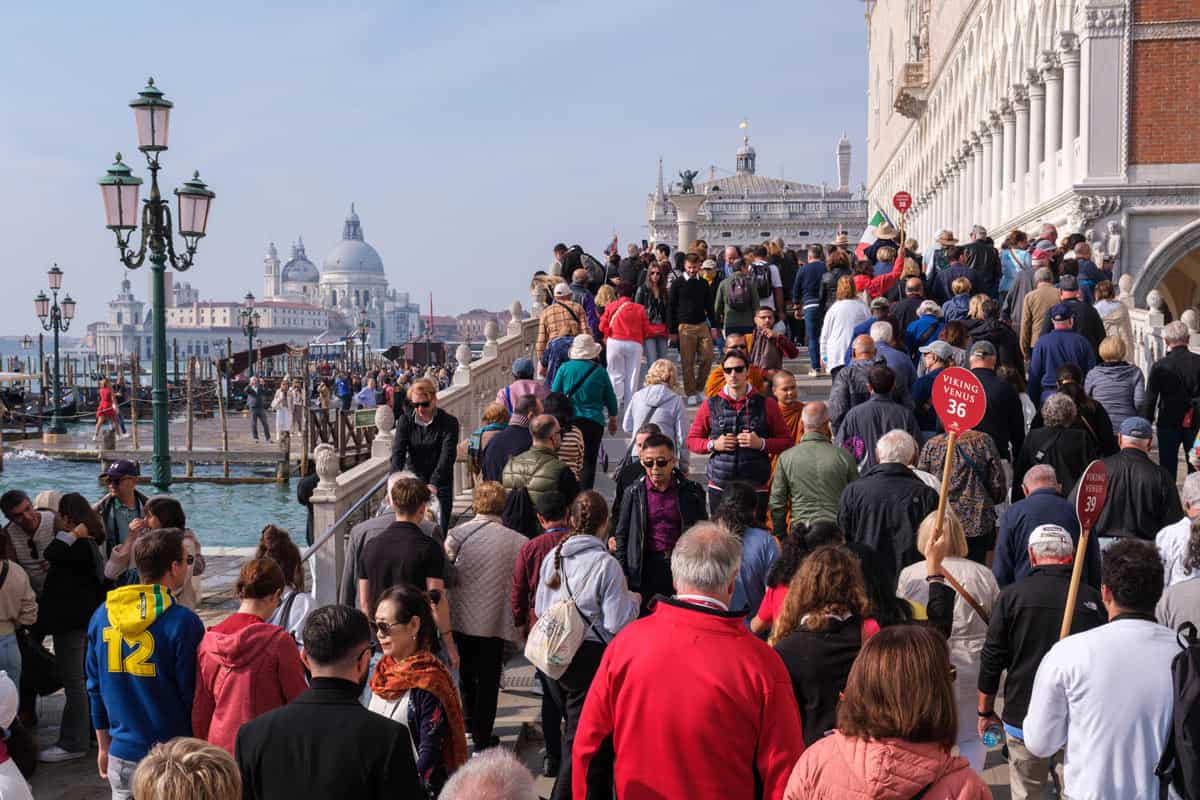
When choosing restaurants, we try to avoid spots directly beside big tourist attractions.
They’re usually more expensive and busy – and often not as good.
This means skipping cafés around St. Mark’s Square in Venice (we were shocked by the exorbitant cappuccino prices on our first visit!), waterfront places around the Praca da Ribeira in Porto and restaurants immediately around the Eiffel Tower in Paris.
Instead, walk a street or two away. You’ll usually eat better – and for less.
7) Find the restaurants locals actually love
A great way to suss out non-touristy restaurants is to join a walking food tour – and then pick your guide’s brain.
On a food tour in Porto, we learned about a little gem with just six tables, serving up MICHELIN-quality dining for a fraction of the price. We’d never have found the place on our own, and it ended up being our favorite meal in the city.
8) Ask for the bill
Don’t wait for the bill to automatically arrive. Unlike in North America, servers in Europe don’t normally bring it unless you ask.
9) Book tickets ahead of time
Popular attractions (and even some restaurants) can book out well in advance, especially in summer. If there’s something you really want to do, reserve it early.
10) Validate tickets when needed
In some countries, you may need to validate train or transit tickets before boarding.
It’s a small step, but skipping it can mean fines.
Best time to visit Europe
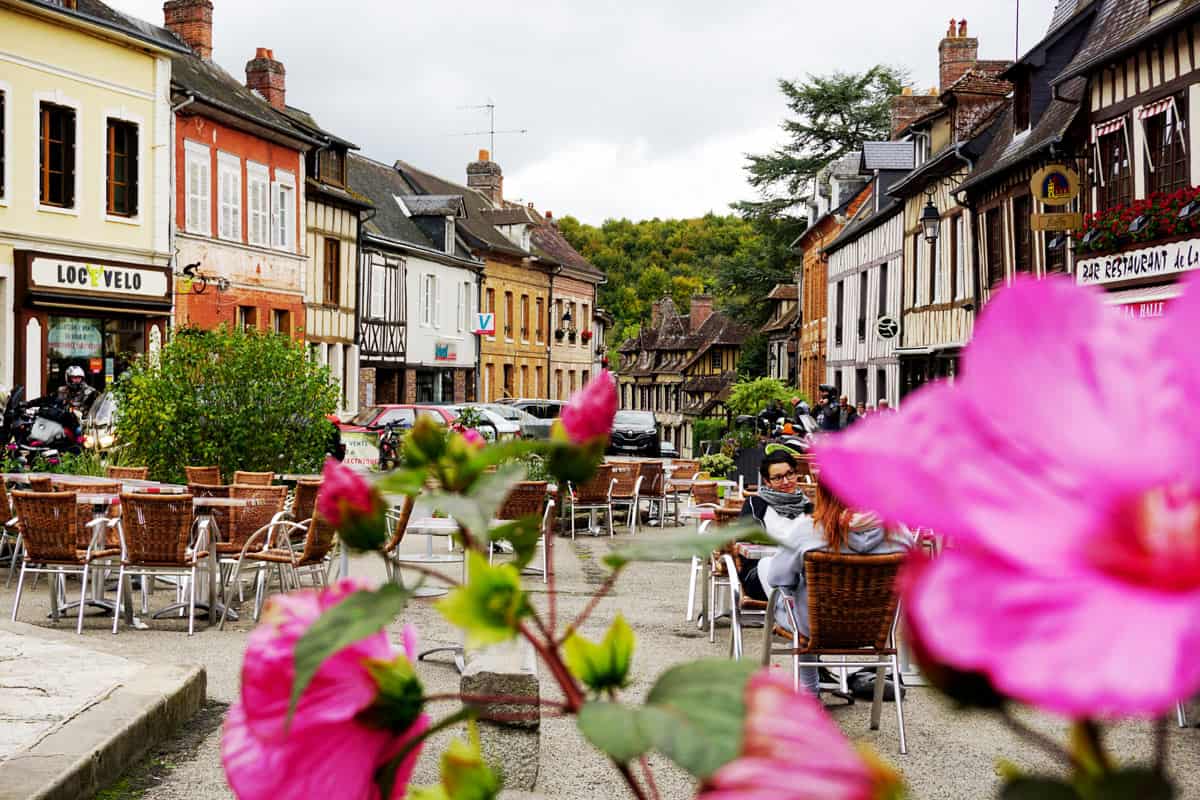
Timing your trip can make a big difference, not just for the weather, but also for crowds and cost.
And keep in mind that Europe isn’t one-size-fits-all when it comes to weather. While it may be sizzling in the Mediterranean in summer, it can be cool up north in places like Stockholm or Bonn.
Spring
Spring is a beautiful time of year to visit.
Flowers burst into bloom, and the weather is ideal for exploring outdoors. Some of the most beautiful gardens in Europe shine now – like Keukenhof in Amsterdam and Claude Monet’s gardens in Giverny.
Ski destinations in Iceland, the Alps and Nordic countries may still be open too.
Bonus: It’s shoulder season, so you’ll dodge the biggest crowds.
Summer
This is peak travel season.
July and August see many Europeans heading off on vacation, and popular destinations get busy. Temperatures soar in places like Rome, the Greek Islands and Cappadocia in Turkey. Expect heat and sunshine.
Northern Europe is milder, though occasional heatwaves do happen.
Fall
Fall is one of our favorite times to visit Europe.
You’ll encounter fewer tourists in places like Greece and Italy, and the Mediterranean Sea is still warm enough for swimming.
We loved a recent October sailing cruise from Nice to Corsica – lots of dips in the sea and fewer tourists.
By late October, though, some seasonal hotels, restaurants and tours begin to close.
Winter

Winter might not seem like the obvious time to visit, but it can be wonderful.
Cozy up with locals in Athenian tavernas and Roman trattorias. Museums offer a warm cultural escape, and cities feel far less crowded.
We did a quiet-season Med cruise in November – and enjoyed sunny skies (mostly), mild temperatures and perfect sightseeing weather. Florence, in particular, spoiled us with blue skies and afternoons in the low 70s.
You should expect some rain, though, particularly from December to February.
How to get around in Europe
Trains

Trains are the backbone of European travel.
They connect major cities and many smaller towns, making it easy to get around without a car. From short city hops to longer scenic journeys, train travel is reliable, efficient and often very enjoyable.
For easy train bookings, Rail Europe is your friend. And if you’re planning several journeys, a rail pass with unlimited travel can offer great value.
Car rental
If you want to explore smaller towns, the countryside or off-the-beaten-path coastal areas, renting a car gives you much more flexibility. A few tips:
- Smaller is better – Rent a small car! Roads can be winding and narrow, especially in villages and rural areas. (We regretted the “free upgrade” to a bigger vehicle given to us on one of our Mallorca trips.)
- You drive on the left (sometimes) – Don’t forget. It’s not just the U.K. where you’ll have to drive on the left. There’s also Malta, Ireland and Cyprus.
- Check licence requirements – Some countries require an international driving permit.
Where to stay in Europe?
Hotels
From well-known chains to smaller boutique stays, hotels in Europe offer a high standard of accommodation – often with a big dose of character.
And we can think of plenty of lovely places that fit the bill if you’re traveling as a couple! We’ve rounded up some favorites in these guides:
Hotel booking sites

Booking.com has one of the largest selections of properties in the world – and a huge footprint in Europe – making it our go-to for finding great stays.
Join its free Genius Rewards program, and you’ll unlock at least 10% off, with discounts climbing as high as 20% the more you book. We’re Genius Level 3, and typically find way better rates on Booking.com than reserving directly with hotels.
It’s easy to narrow things down too. Filter by rating (we usually look for 9+ scores), location and budget – or use the map view to pinpoint the perfect spot.
We also love the flexibility of its free cancellation options.
Vrbo
Vrbo (Vacation Rentals by Owner) is a great option if you prefer a private apartment or home.
All accommodations are fully self-contained – ideal for longer stays or when you want more space or a kitchen.
FAQs about traveling to Europe
Should you use cash or credit card in Europe?
Both. Cards are widely accepted, but cash is useful for smaller purchases, taxis and local markets.
Is the tap water safe to drink?
In most of Europe, yes. You don’t need to buy bottled water.
But in some places (including parts of the Greek islands, Turkey, Cyprus, Albania, Montenegro and Bulgaria), it’s best to check locally first.
How far in advance should you book?
Going in summer? Book at least two months in advance (preferably four or more months ahead).
In the off-season, you’ll be fairly safe booking a few weeks before you travel.
Is Europe expensive to visit?
It depends where you go. The U.K., France, Iceland, Germany and Switzerland tend to be pricier, while places like Poland, Lithuania and Albania are more affordable.
Timing matters too. Summer is peak pricing, while shoulder seasons are often more affordable.
Ready for Europe?
Europe rewards a little planning – and a lot of curiosity.
Keep these tips in mind, but leave room for the unexpected. Hotel rooms may be smaller than you’re used to – and there will be a few other surprises along the way.
But that’s part of the fun, right? Experiencing different cultures, rhythms and little moments you didn’t see coming.
Enjoy!
Pin our travel tips for visiting Europe!

Our top travel tips and resources
→ Hotels | Booking.com is our go-to for scoring a “wow” hotel – or at least a decent one – often at lower rates than the hotel’s own website. (We especially like Booking.com’s flexible cancellation policy!) You can also find excellent discounted rates on Expedia, especially for hotels in the U.S. and Mexico.
→ Vacation homes, condos and rentals | We prefer and use Vrbo (Vacation Rentals by Owner).
→ Flights | For the best flights, we search on Google Flights first. Expedia and Kayak are then perfect for snagging the cheapest tickets. (They’re often non-refundable, though, so for more flexibility, we book directly with the airline, even if it costs more.)
→ Airport lounge access | We love (and have) Priority Pass for comfy lounge seats, free snacks and drinks, complimentary WiFi and sometimes even showers and spa services!
→ Tours | For the best local food, walking and other guided tours, plus skip-the-line tickets to attractions, check out Viator (a TripAdvisor company) and GetYourGuide.
→ Car rental | Renting a car can be a great way to explore off the beaten path. Discover Cars searches car rental companies for the lowest rates.
→ Travel insurance | SafetyWing is designed for frequent travelers, long-term adventurers and digital nomads. It covers medical expenses, lost checked luggage, trip interruption and more. We also have and recommend Medjet for global air medical transportation.
→ Travel gear | See our travel shop to find the best luggage, accessories and other travel gear. (We suggest these comfy travel sandals for city walking, the beach and kicking about.)
→ Need more help planning your trip? | Check out our travel tips and resources guide for airline booking tips, ways to save money, how to find cool hotels and other useful trip planning info.
If you make a booking or purchase through our site, we may earn a small commission (at no cost to you). Thanks!
About the authors
