
Top 5 Snorkel Spots in Cabo (Tried and Loved by Us!)
This post may contain affiliate links. If you make a purchase through them, we may earn a small commission (at no cost to you).
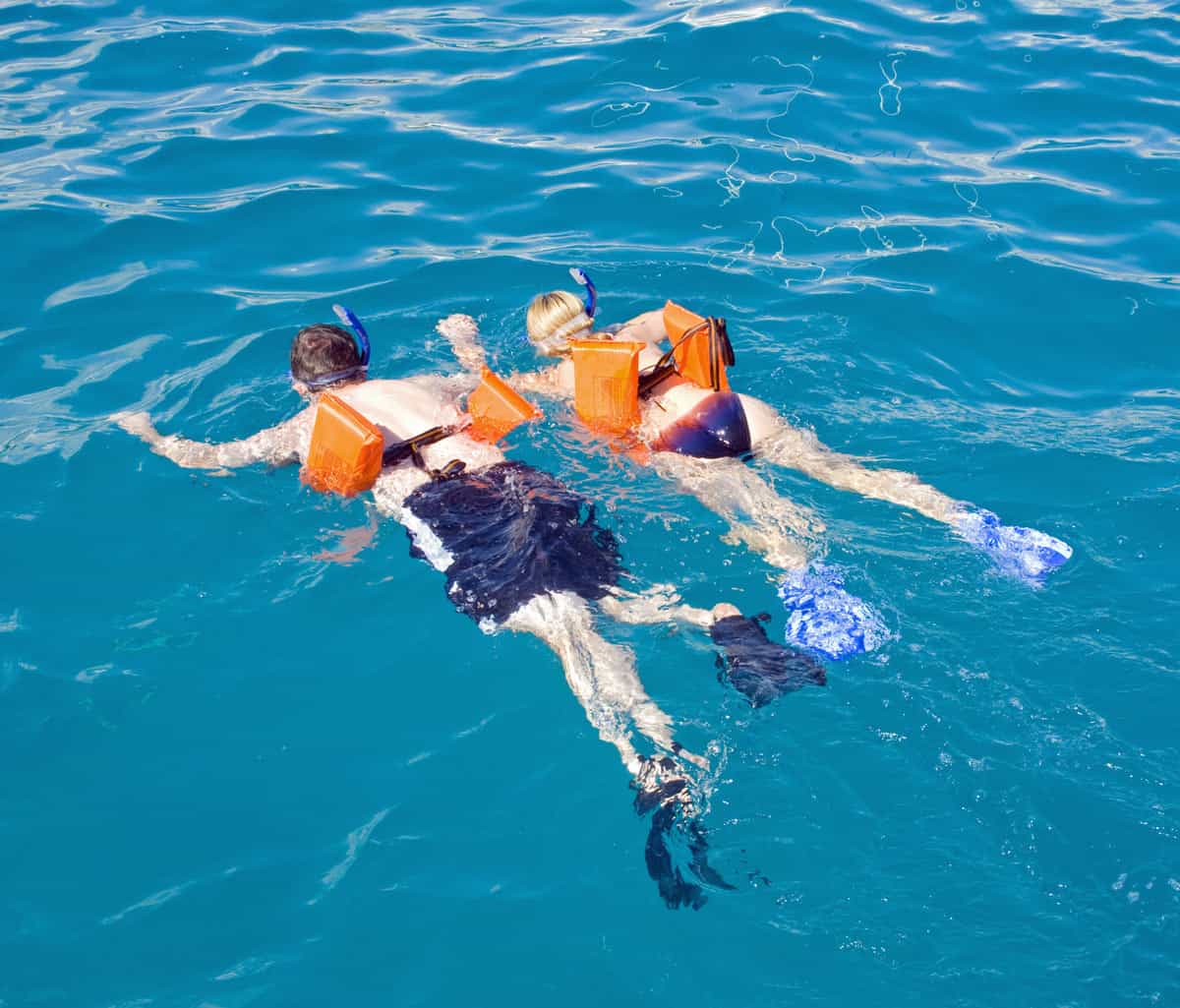
From colorful fish to sea lions, Mobula rays and whale sharks – not to mention sunshine and sparkling blue water – Cabo has all the right ingredients for an unforgettable snorkeling adventures.
Over our many visits, we’ve gone snorkeling more times than we can count. It’s easily one of our favorite activities in Cabo!
Here’s our guide to the best places to snorkel in Cabo – from calm fish-filled bays ideal for beginners to remote reef parks teeming with marine life (where you might spot some of the ocean’s bigger creatures too!).
Grab your mask and fins… And let’s dive in!
3 of our favorite snorkeling tours in Cabo
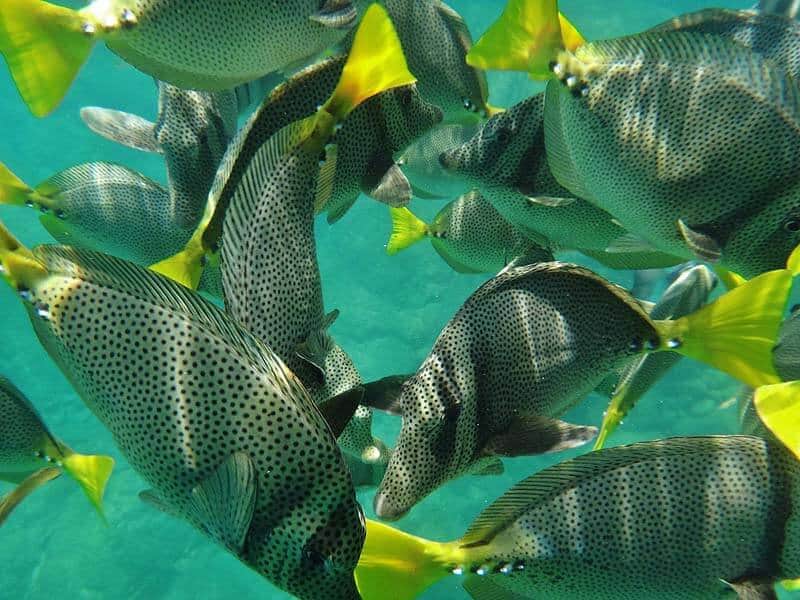
Among the many great snorkeling tours we’ve enjoyed in Cabo, these three really stand out. They’re unique, memorable and top our list of faves!
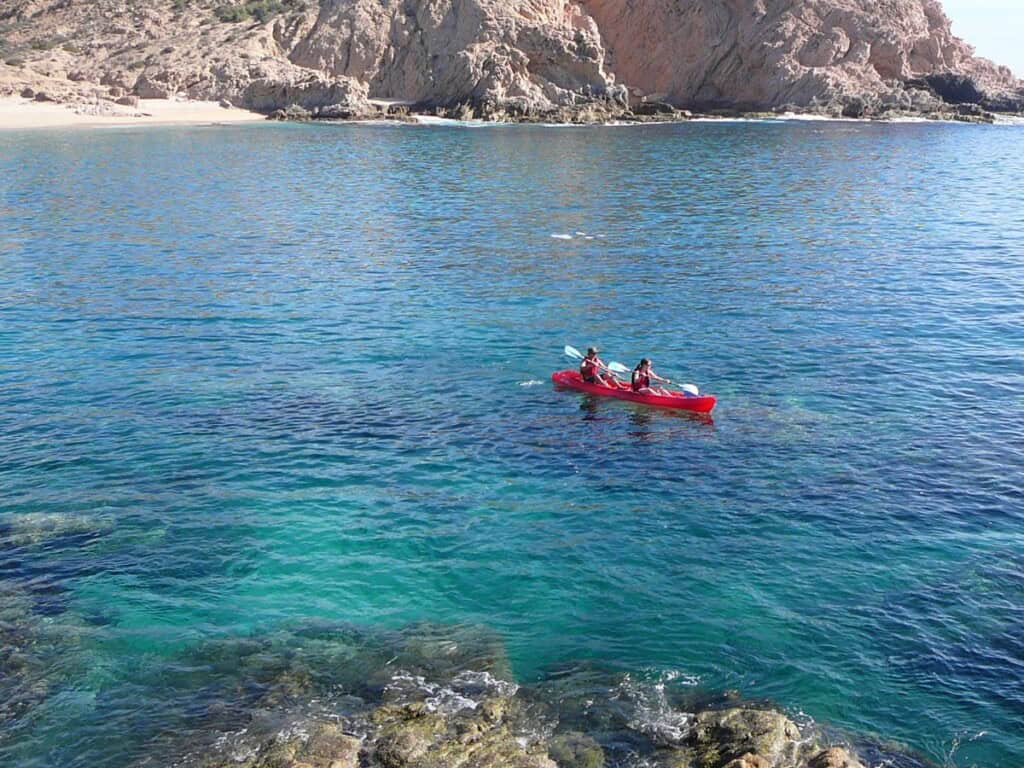
Snorkeling with kayaking!
⭐⭐⭐⭐⭐
Book this awesome Santa Maria and Chileno Bay tour (see #2 and 3)
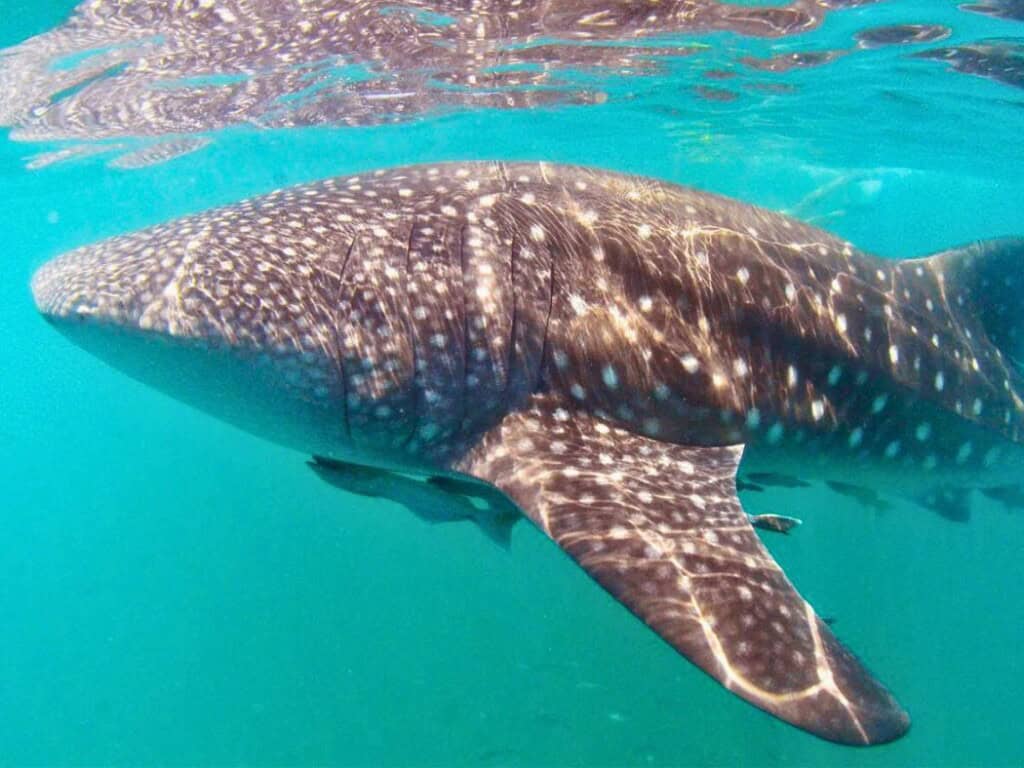
Whale shark snorkeling!
⭐⭐⭐⭐⭐
Book this luxury La Paz catamaran adventure, with transfers (see #5)
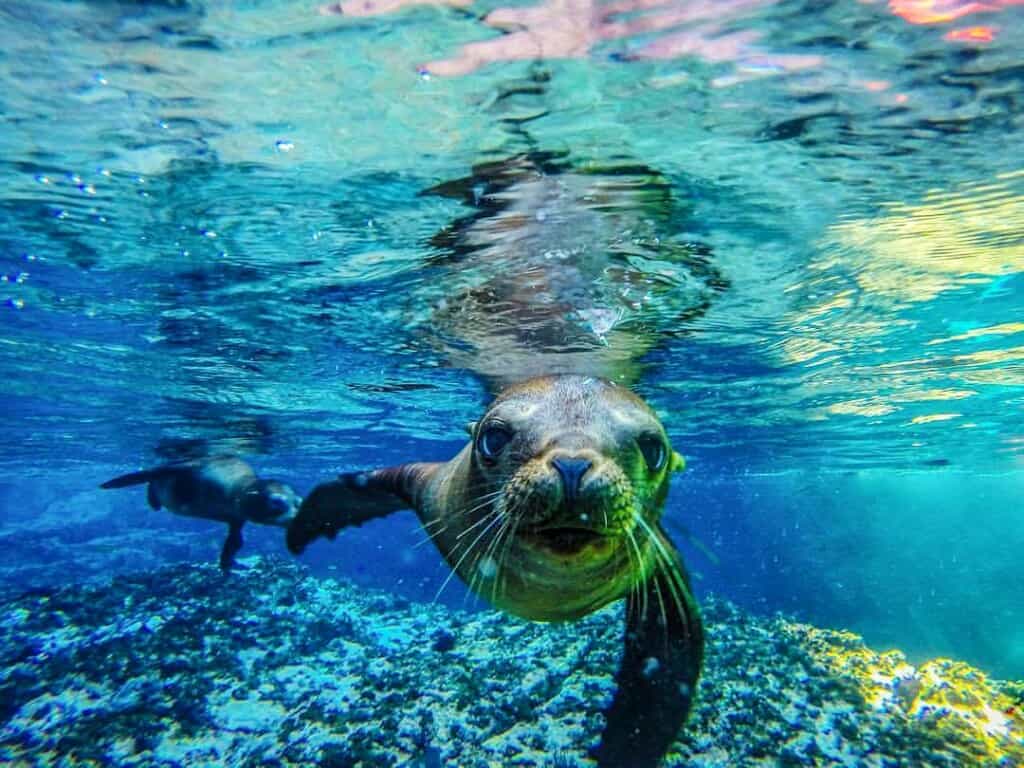
Sea lion adventure!
⭐⭐⭐⭐⭐
Book this Balandra Bay snorkeling day trip (see #5)
Contents: Guide to Cabo’s best snorkeling!
Best places to snorkel in Los Cabos
Is snorkeling good in Cabo San Lucas and beyond?

Snorkeling in Cabo is a bit different from other tropical spots we’ve explored around the world.
Don’t expect lush coral gardens like you’d find in the Caribbean or the Red Sea. Instead, Cabo’s underwater landscape is mostly about dramatic rocky outcroppings and boulder-strewn reefs.
But don’t be fooled. This craggy seascape teems with life.
In fact, on the eastern side of the Baja California Peninsula (Cabo sits at the tip), the Sea of Cortez is famously rich in marine biodiversity. Jacques Cousteau dubbed it “the world’s aquarium” – and it lives up to the name.
You’ll see angelfish, parrotfish and pufferfish darting among the rocks. Rays and sea turtles often glide by. And from April to July, Cabo’s waters become Mobula ray central, with hundreds leaping and flipping in the air during the largest ray migration in the world.
The snorkeling varies widely.
Santa Maria and Chileno Bays are calm and perfect for beginners – and if you go on a boat tour in winter (December to March), chances are you’ll spot whales too! Cabo Pulmo is remote and offers wilder reef adventures. And La Paz? That’s where you go for bucket-list-worthy swims with whale sharks and sea lions!
Visibility is often excellent, especially from late spring through November, when the water is clearest. Just keep in mind that Cabo has a hurricane season, which peaks in September.
Cabo confusion? Let’s clear it up
Technically, “Cabo San Lucas” is the lively town at the southern tip of the Baja California Peninsula. Most folks use “Cabo” to refer to the whole Mexican beach destination of “Los Cabos”– which also includes the town of San Jose del Cabo and the resort-studded Tourist Corridor in between.
Now, so we’re all on the same page… When we say “Cabo,” we mean the whole Los Cabos area.
This guide covers snorkeling all across Los Cabos and beyond. That includes wonderful day trips to Cabo Pulmo and La Paz on the Sea of Cortez, where some of the most unique underwater experiences await.
5 Best places to snorkel in Cabo – and nearby!
1) Land’s End and Lover’s Beach
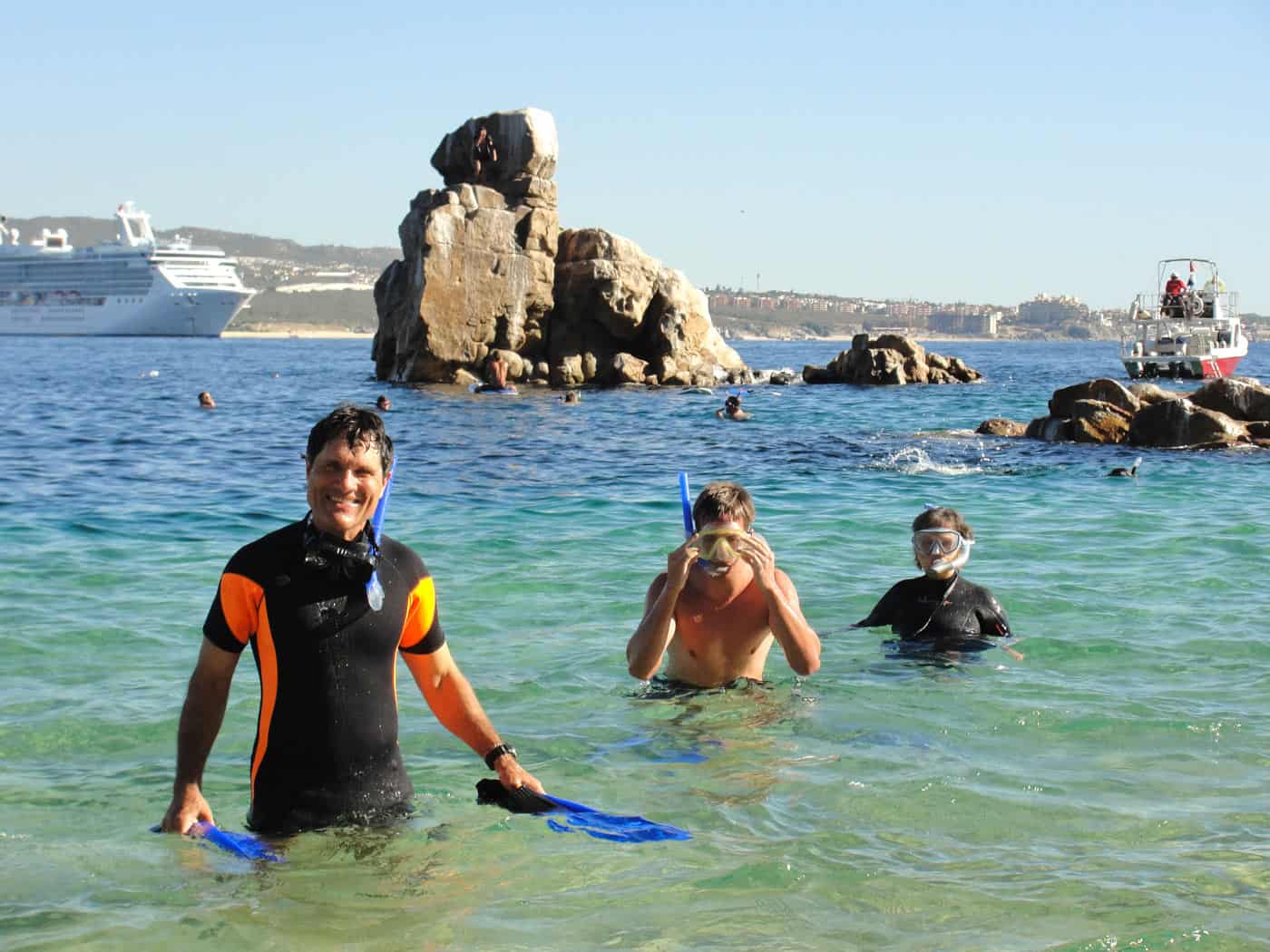
Land’s End is a dramatic tangle of sculpted rock formations jutting up from the sea at the very tip of Baja, on the edge of Cabo San Lucas town.
It’s where the Pacific Ocean meets the Sea of Cortez – and where you’ll find the best close-to-town snorkeling in Los Cabos.
A top spot is Pelican Rock, home to schools of tropical fish and crystal-clear water. Keep an eye out for sea cucumbers, sea urchins, sea stars, stingrays, crabs and more. As for the rock itself, yes, pelicans roost here – and leave their, ahem, mark.
Nearby, there’s the famous Arch of Cabo San Lucas (El Arco) and its sea lion colony – the barking blubber lumps bask out on the rocks in the sun. If you’re lucky, you might even spy one underwater.
Land’s End is also a prime place to see Mobula rays in summer, when thousands migrate here to feed on zooplankton, fatten up and get ready to breed. During this time, they put on quite the show – leaping out of the water and twisting through the air in spectacular acrobatic mating displays.
Another good snorkeling site is Neptune’s Finger – a tall rocky pinnacle rising between the Arch and Lover’s Beach, surrounded by swarms of colorful fish.
Speaking of Lover’s Beach… It’s one of Cabo’s most beloved beaches, on the protected bay side of Land’s End, and one of the only real snorkeling beaches in Cabo San Lucas proper.

How to get there
- Water taxi – If you’ve got your own snorkeling gear, you can take an inexpensive water taxi from the from the Cabo San Lucas Marina (about $20 p.p.). It’ll do a short sightseeing spin past the Arch and can then drop you off at Lover’s Beach. (Ask the driver to pick you up at a pre-arranged time.)
- Boat tour – For a 5-star Cabo San Lucas snorkeling experience, book this luxury sail-and-snorkel cruise. It includes snorkeling at Land’s End, lunch and an open bar.
- Kayak tour – Join a small group on a fun kayaking-and-snorkeling adventure. You’ll paddle from Cannery Beach (Playa Empacadora), go past the Arch, stop at Lover’s Beach and snorkel at Pelican Rock. (Or you can rent a kayak on Medano Beach and paddle out on your own.)
- SUP experience – Enjoy standup paddleboarding to Land’s End and snorkeling around Pelican Rock on this top-notch guided stand-up paddle board adventure.
Tips
- Go early! Mornings (before 10:00 am) are best for calm water and better visibility. If kayaking on your own from Medano Beach, be back by 9:30 am, before boat traffic picks up and conditions become less safe.
- Watch the winds – Some days are calmer than others.
- Don’t swim at Divorce Beach – Opposite Lover’s Beach on the Pacific Side, it may look tempting, but the currents are dangerously strong.
2) Santa Maria Bay
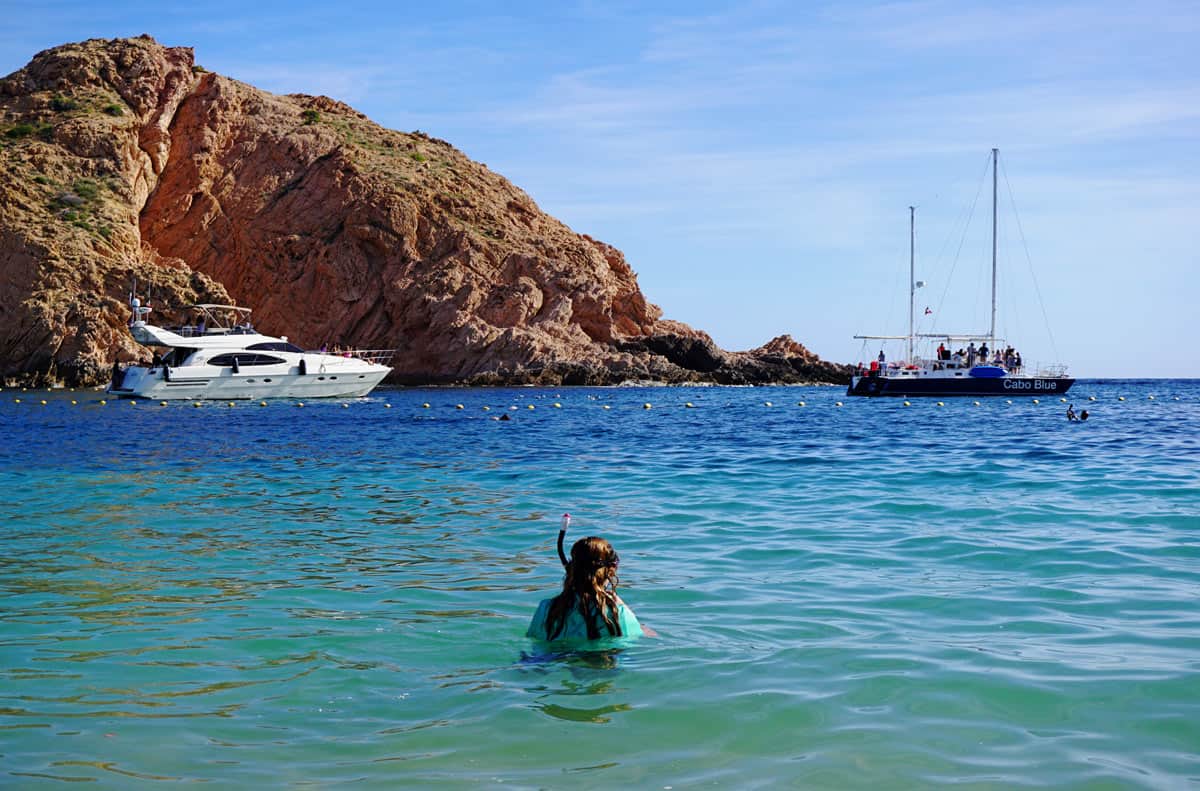
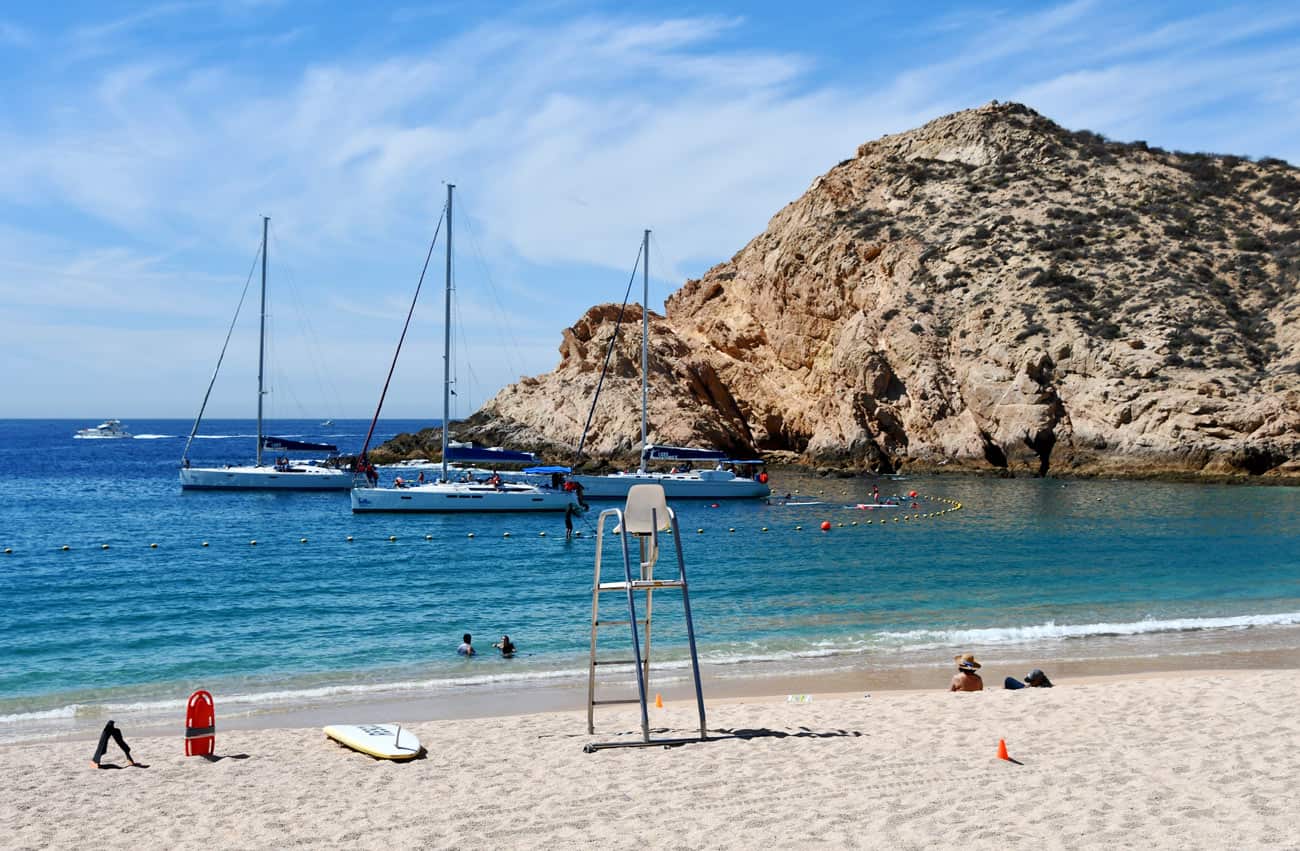
Tucked in a horseshoe-shaped cove along the Tourist Corridor, Santa Maria Beach (Playa Santa Maria) is a calm protected marine sanctuary with soft golden sand – perfect for beginners, families and anyone looking for stress-free snorkeling.
It’s also one of only two beaches in Mexico with the prestigious Blue Flag “A+” rating for exceptional cleanliness and environmental management.
We love it so much, we’ve written a full guide just on snorkeling at Santa Maria Bay!
While you won’t find Captain Nemo, you will find clear water, rocky reefs and swarms of candy-colored tropical fish – especially near the rocky sides of the bay.
How to get there
- Drive or take an Uber or the public bus – This is a great option for independent do-it-yourselfers who want to avoid the snorkeling crowds. There’s a small parking lot near the beach.
- Kayak-and-snorkel tour – Paddle to Santa Maria Bay (and Chileno Bay, covered next) on this awesome kayaking-and-snorkeling tour with Cabo Outfitters. We’ve done it – and love the extra adventure kayaking adds!
- Snorkeling boat tour – Choose a fun 4-hour snorkeling cruise (great for adults and families) or a cheap, cheerful and high-energy 3½-hour snorkeling cruise (that also gets rave reviews). Or opt for a private deluxe yacht charter to Santa Maria Bay with premium drinks and lunch.
Tips
- Bring your own gear – There are no facilities, so pack your snorkel, snacks, water and shade umbrella if visiting on your own.
- Snorkel at the far right side of the bay – We’ve found the right side, as you’re facing the ocean, offers the best snorkeling.
- Go early in the morning – We usually get to Santa Maria Beach by 9:00 am for the best visibility and virtually no people (and then leave before 11:00 am when the tour boats arrive).
3) Chileno Beach
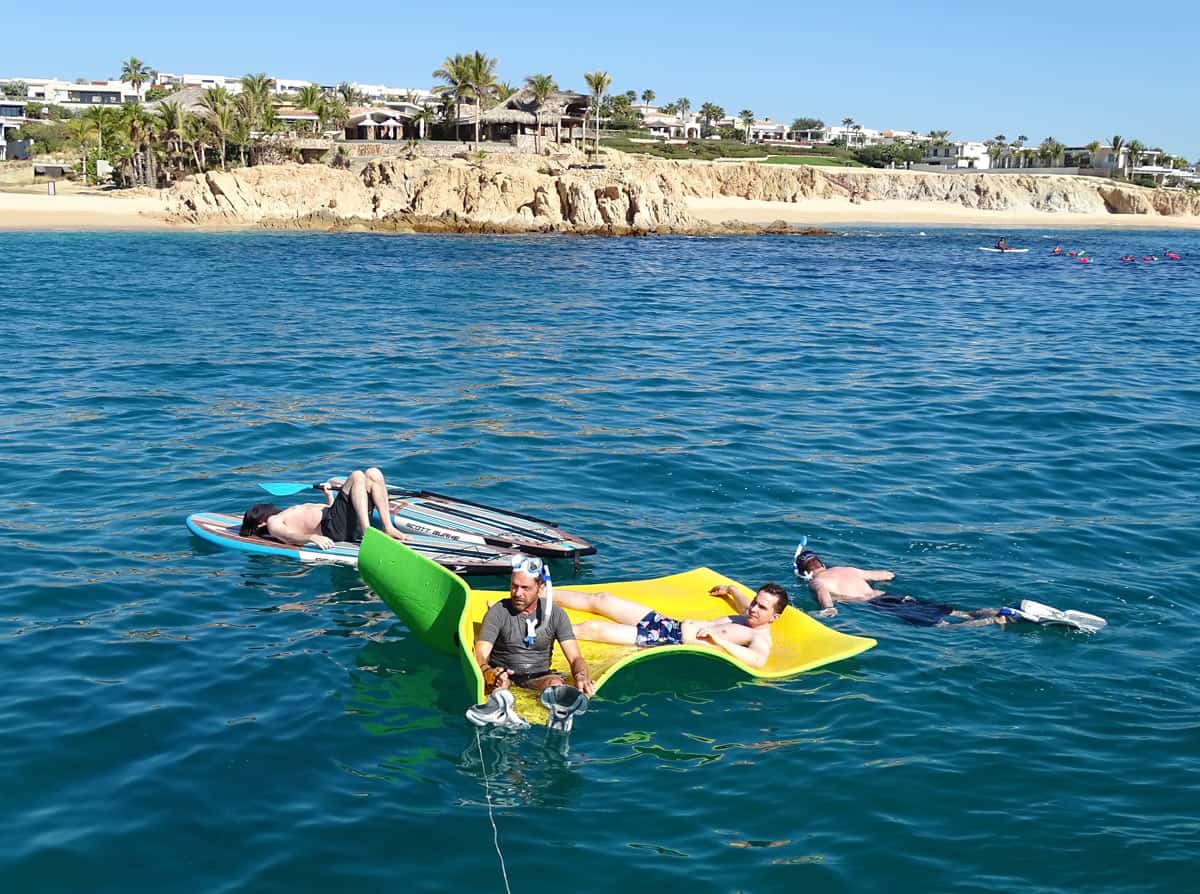
Chileno Beach is another attractive public beach (also Blue Flag-certified), with clean coarse golden sand, ideal for both sunbathing and snorkeling.
The water is typically calm with a shallow sandy entry – great for beginners and families. And the water clarity can be spectacular first thing in the morning before the breeze comes up.
Just offshore, rocky reefs harbor a rainbow of marine life. We’ve spotted colorful parrotfish, angelfish, sea turtles, rays and more.
You’ll also find clean bathrooms, outdoor showers and even a lifeguard on duty.
How to get there
- Drive or take an Uber – You can access Chileno Bay off the Tourist Corridor (look for the Km 14 marker). There’s a paved public parking lot.
- Chileno Bay and Santa Maria Bay duo – This popular 3-hour snorkeling tour takes you to both Santa Maria Bay and Chileno Bay by air-conditioned mini-van. Hotel or cruise port transfers are included.
- Hike to a hidden beach – On this unique small-group guided tour, you’ll hike 20 minutes from Chileno Beach along a rocky trail to a secluded cove, where your guide sets up an umbrella and beach chairs, and you snorkel together.
- Boat tour – We loved this luxury sailing, snorkeling and lunch cruise with Cabo Adventures. It typically goes to Chileno Bay but may switch to Santa Maria Bay, depending on conditions. (Or choose their power catamaran option.)
Tips
- Bring snacks, water and your own gear – There are no restaurants on the beach. But you can rent an umbrella and chairs from a vendor who usually sets up shop near the beach entrance.
- Go early – Like Santa Maria Bay, Chileno Bay is also on the snorkeling tour boat circuit, so if you’re visiting on your own, it’s better to get there earlier in the morning than later.
- Visit weekdays – There are more people on weekends.
4) Cabo Pulmo
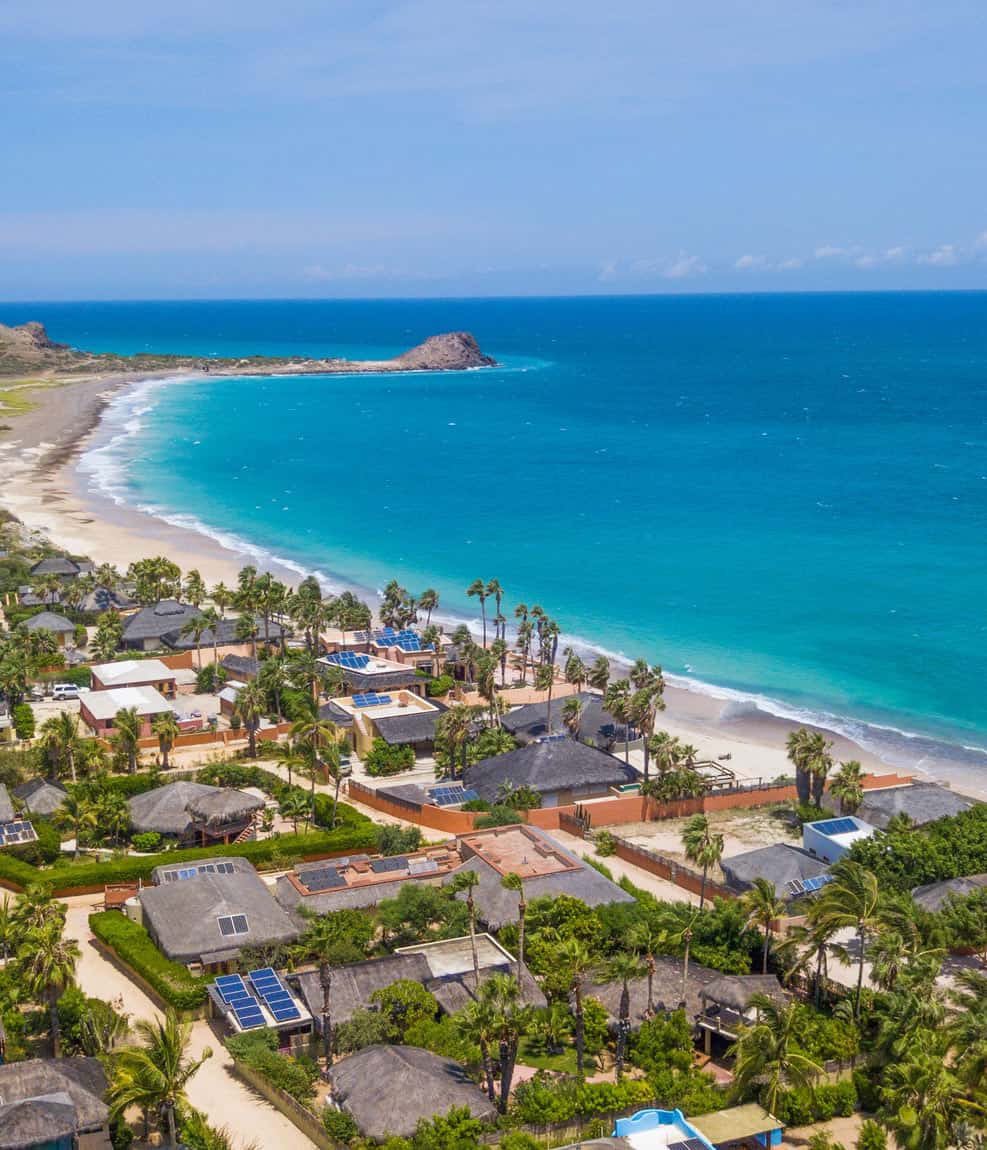
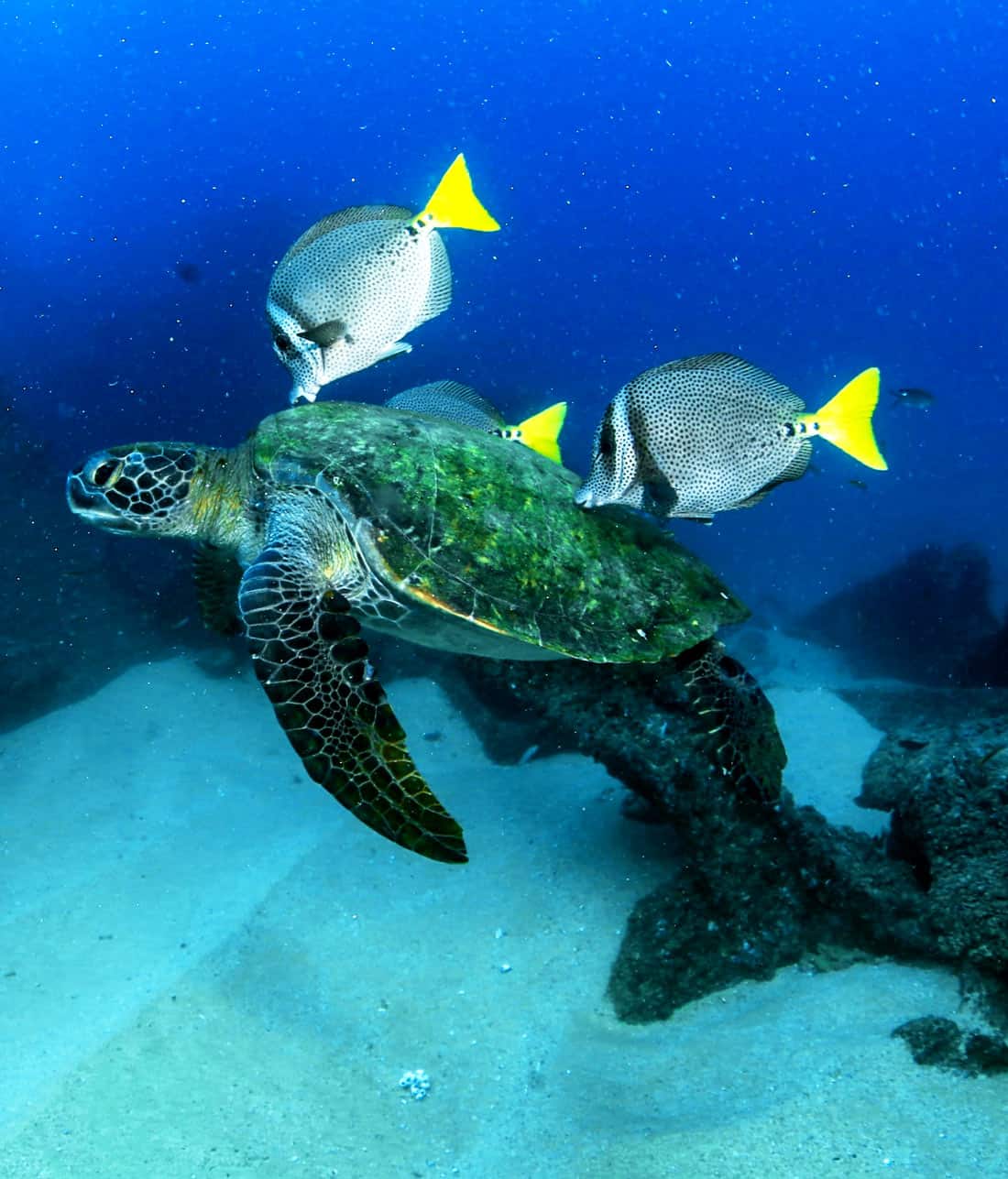
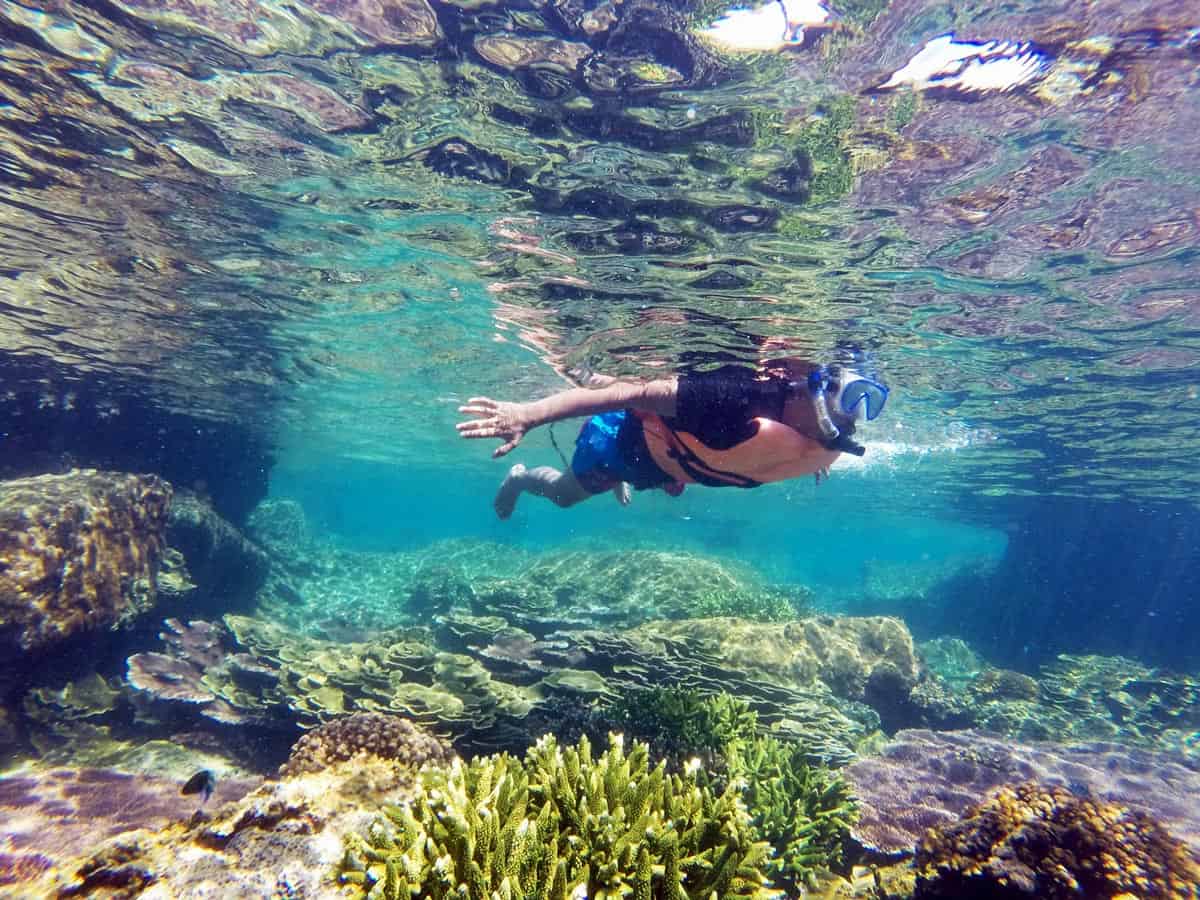
Some of the best snorkeling in Cabo isn’t actually in Los Cabos – it’s further north up the Sea of Cortez at Cabo Pulmo National Marine Park.
This remote marine sanctuary, about a 2-hour drive from Cabo San Lucas, makes for a wild and wonderful day trip.
Protected since 1995, Cabo Pulmo is home to the oldest living coral reef on the Pacific side of North America.
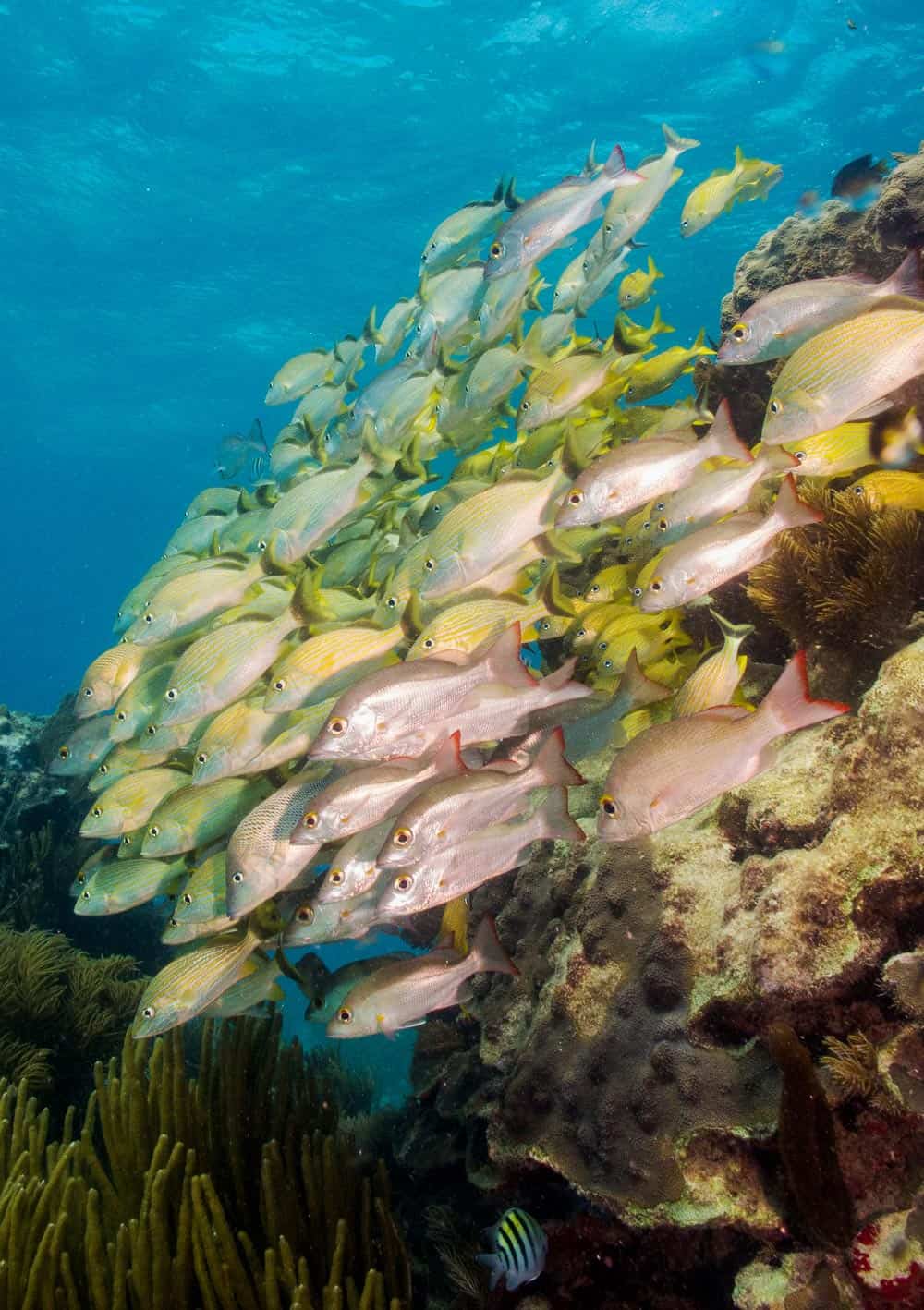
Once overfished, it’s now a conservation success story in Mexico – and a snorkeler’s paradise. With over 800 species of marine life, you might see schools of snapper, sea turtles, rays, giant groupers and several types of reef sharks.
On one scuba outing to Cabo Pulmo, we even saw bull sharks and a tiger shark!
How to get there

If you’re adventurous, you can drive to Cabo Pulmo.
But access is via bumpy dirt roads, and some rental companies don’t cover damage driving on unpaved roads. A 4×4 makes the trip easier and may be covered (check your rental terms first).
For a carefree day, we recommend taking a guided tour that includes transportation, snorkeling gear, the marine park entrance fee and lunch.
- Private jeep tour – Go off-road by jeep, snorkel at Playa Arbolitos and enjoy a traditional Mexican lunch before returning.
- Kayak-and-snorkel adventure – We’re partial to this kayaking tour with snorkeling, offered by Cabo Outfitters. Paddle to La Sirenita Beach, visit a sea lion colony, then snorkel vibrant coral reefs. End with shrimp tacos at a local eatery.
- Snorkeling expedition – This 10-hour Cabo Pulmo day tour visits three to four snorkeling sites by panga boat, with lunch included.
Tips
- Go May to November – This is when the water is warmest and typically calm. October is prime time, with water temps averaging 85 F.
- Be prepared for tour cancellations in winter – Cabo Pulmo can be very windy in winter, and snorkeling may be canceled due to rough conditions. (On one of our tours, the snorkeling part was scrapped and we detoured to some natural hot springs in the Sierra de Laguna mountains instead – still a fun day!)
- DIY? Bring cash, snacks and reef-safe sunscreen. And fuel up before you go. There are no gas stations in Cabo Pulmo.
5) La Paz
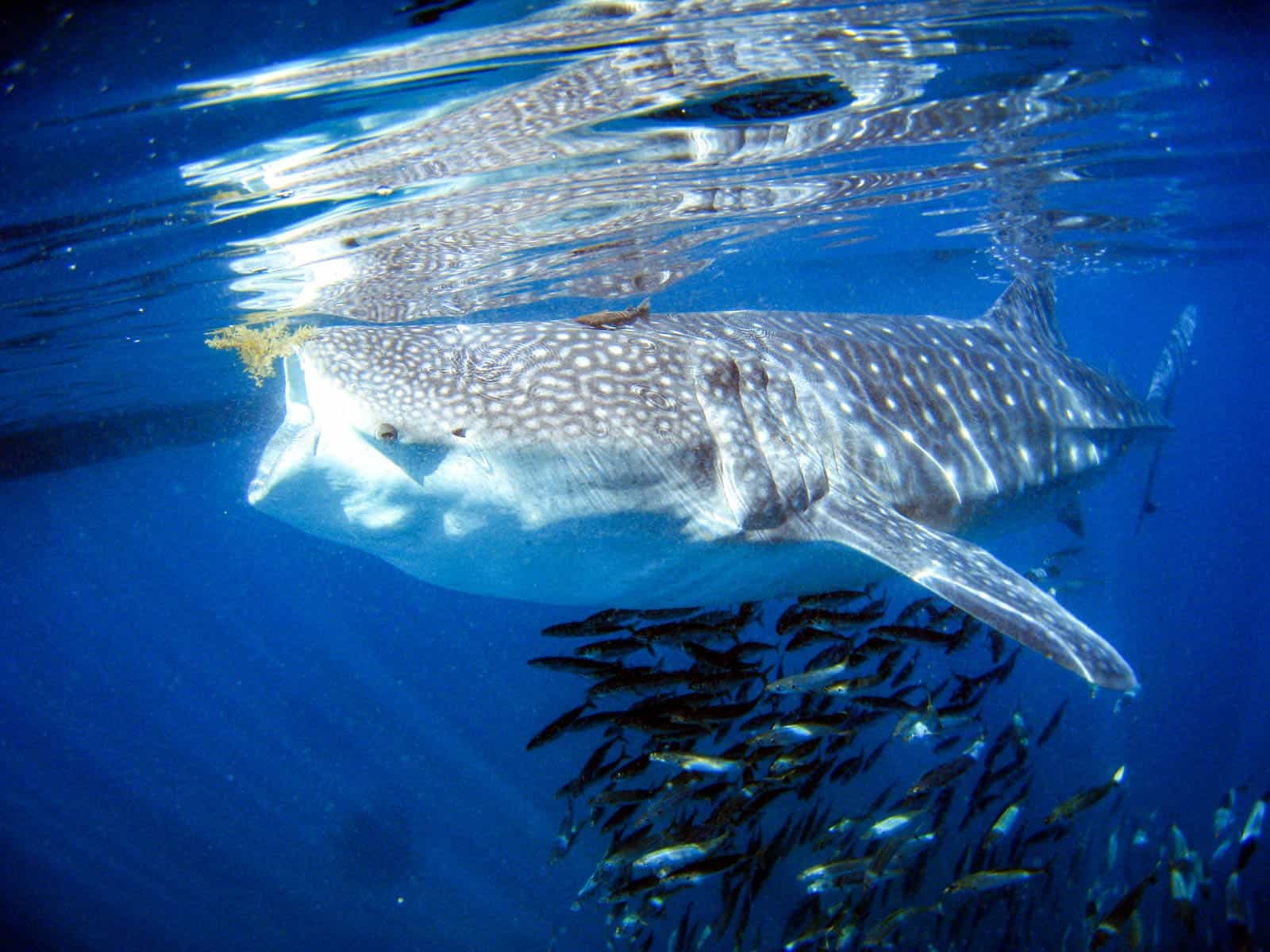
La Paz is the epitome of a laid-back Baja beach town – just on a bigger scale.
A 2- to 2-½ hour drive from Los Cabos, it delivers some of the most unique and rewarding snorkeling experiences in the region.
For starters, you can snorkel with whale sharks from October to April. These gentle giants are massive – and swimming alongside them is truly a once-in-a-lifetime experience! You’ll go out by boat from La Paz, slide into the water when one is spotted, then hop back onboard and repeat.
You can also snorkel with sea lions at Los Islotes and around Espiritu Santo Island. Part of the UNESCO-protected islands and coastal areas in the Sea of Cortez, they’re about a 1- to 1½-hour boat ride from La Paz.
The sea lions are very playful and curious – they swam right up to us, almost booping our snorkel masks before darting away! (Note: Swimming with the Los Islotes colony isn’t allowed June through August, when pups are being born.)
Another great spot? The tiny islet of San Rafaelito.
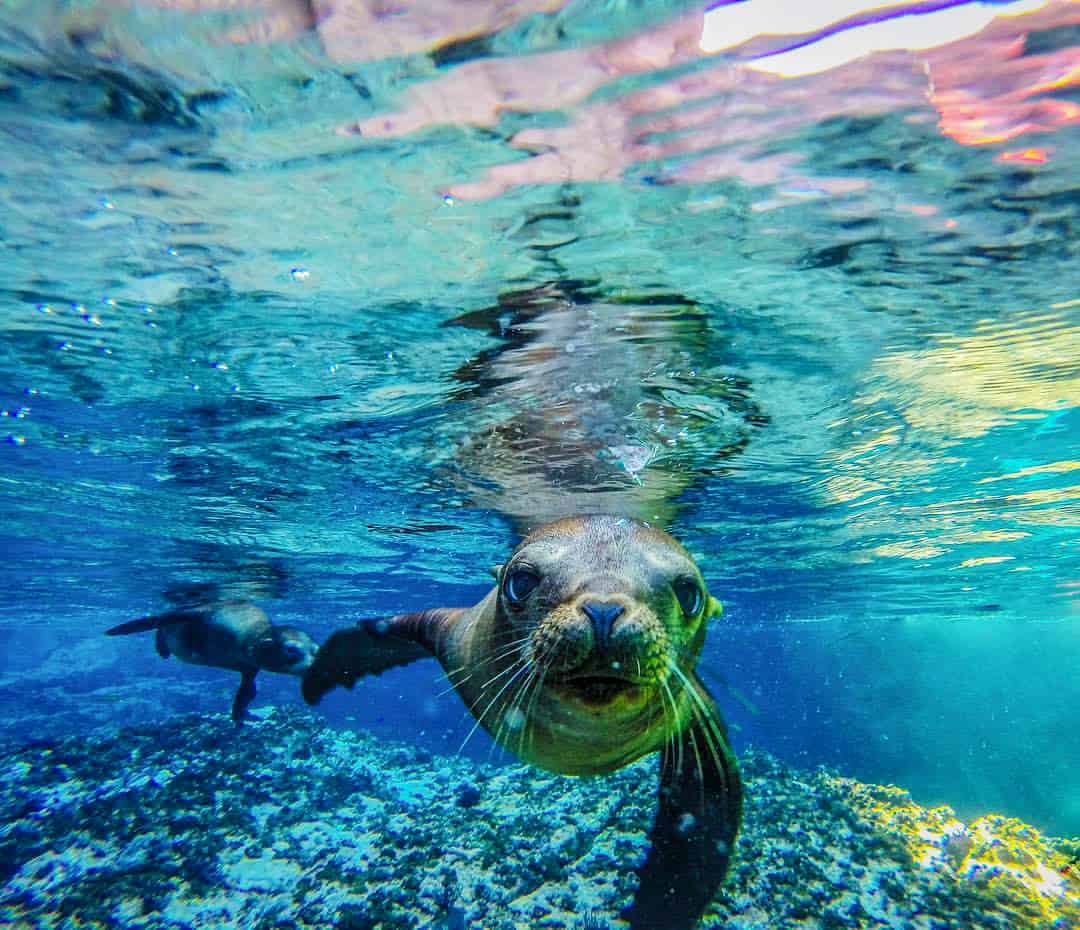
Visibility isn’t the clearest (thanks to the nutrient-rich waters), but snorkeling with the sea lions there is still fun.
Plus, you can visit nearby Balandra Bay – one of Mexico’s most beautiful beaches – and wade chest-deep through vivid turquoise waters for what feels like forever.
That’s not all!
From April to October, wild dolphins gather in superpods around Cerralvo Island (aka “Isla Jacques Cousteau Island”). It’s near the fishing village of La Ventana (2½ hours from Cabo).
You can swim and snorkel with the dolphins too!
How to get there
These La Paz snorkeling trips all include round-trip transport from your Los Cabos hotel:
- Snorkeling with whale sharks – We’ve gone with both Cabo Expeditions (small boat and restaurant lunch) and Baja Charters (luxury catamaran with hot lunch onboard). Cabo Trek offers excellent educational whale shark excursions, with a stop in Todos Santos on the return.
- Snorkeling with sea lions at Ispiritu Santo – Join Baja Charters on a deluxe catamaran day trip (with hot breakfast, chef-prepared lunch and premium drinks). After anchoring, a smaller boat takes you snorkeling. Spot sea lions plus sea turtles, Mobula rays and dolphins! This tour runs August to November. It’s top tier!
- Snorkeling with sea lions near Balandra Bay – We’ve also done this fabulous day tour. Cruise from La Paz aboard a French catamaran to Balandra Bay to kayak, swim and snorkel at San Rafaelito. (Note: You don’t go ashore at Balandra Beach.)
- Snorkeling with wild dolphins – On this amazing dolphin adventure, drive to La Ventana, then head out in a panga for a 6-hour experience, complete with a beach picnic.
Tips
- Skip Ispiritu Santo in winter – We went in January and the water was icy cold – we could only last a few minutes in the water. The experience is far better in May or October/November when the sea temps are warm.
- Balandra Beach gets busy – Arrive early if driving there yourself.
Best time of year to snorkel Cabo?
October to early December

This is prime snorkeling season.
Water temperatures are lovely and warm – around 82 F (28°C) in October – and visibility is excellent (up to 100 feet at Cabo Pulmo). On one trip in late October to early November, we did tons of snorkeling and diving, and it felt like slipping into a perfectly heated pool.
The weather’s hot too, especially in October, with daytime highs around 88 F (31°C), so it’s blissful being in the ocean.
June to August
Summer in Cabo is also a great time for snorkeling. The water is warm in late summer, with temps hitting over 80 F (about 27 C).
And when it’s sizzling on land – average highs of 91 F (33 C) in August – cooling off in the ocean is very welcome.
Late December to May
Late December is when the water starts to cool down noticeably after the heat of the summer and fall – think around 72 F (22 C) in February. And a shorty wetsuit definitely helps. We personally find January a bit too chilly for comfort.
April and May can also bring wind and stirred-up visibility depending on currents.
September
We wouldn’t planning a snorkeling trip in September.
It’s the peak of hurricane season. Storms can churn up the sea, ruin visibility and cancel tours. Plus, it’s very humid in September, making it one of the least comfortable months to be in Cabo.
Snorkeling tours in Cabo or DIY?
Do you need to book a tour?
It depends on your comfort level and the kind of adventure you’re after.
Tours are great if you want a hassle-free experience – think boat access to remote sites like Cabo Pulmo (with hotel transfers and no driving yourself!), all your gear included and a knowledgeable guide to show you the ropes. Some even combine snorkeling with sailing or whale watching.
Prefer to do your own thing?
If you’re looking for an easy go-it-alone option, head to Santa Maria or Chileno Bay. Both have calm water, reef life close to shore and great beach access. You can easily get there by rental car or Uber.
For Land’s End, on several occasions, we’ve simply hopped in a water taxi or rented kayaks to paddle to Lover’s Beach to snorkel on our own (bringing our own snorkel gear).
Other local snorkeling FAQs
Do I need to be a strong swimmer to snorkel in Cabo?
Not necessarily! Some of the best snorkeling beaches in Cabo – like Santa Maria and Chileno – have calm, shallow waters ideal for beginners.
But it’s important to feel comfortable in the water. A life jacket or snorkel vest (even a noodle) helps with buoyancy, especially if you’re not confident swimming in open water.
Can I snorkel directly from the beach?
Yes! That’s one of the great things about Cabo. At beaches like Santa Maria Bay and Chileno Beach, you can walk right in and start snorkeling. No boat tour is required.
Are there dangerous marine animals?
You might spot pufferfish, eels or even harmless reef sharks. But they’re not dangerous if you keep a respectful distance.
More aggressive sharks – like bull or tiger sharks – are usually only seen in Cabo Pulmo when scuba diving (not snorkeling).
For peace of mind, there have been no recorded incidents of shark attacks in the area for over 17 years. (Apparently a small shark bit a man’s toe in 2008.) So this isn’t a place where you need to worry about sharks.
What gear do I need to bring (or can I rent it)?
If you’re snorkeling on your own, bring a snorkel, mask and fins – and maybe wear a rash guard or thin wetsuit for sun protection or warmth in winter.
Prefer not to pack gear? You’re probably better off buying a basic snorkel set at the original Walmart on the Tourist Corridor (near Cabo San Lucas), as rental places are few and far between.
If you’re joining a tour, they’ll supply the necessary gear (though wetsuits may not be included).
Are jellyfish or stingrays a concern?
They can be. In summer, jellyfish sometimes drift in – watch for warning flags.
Stingrays can also sometimes be found hanging out on sandy sea floors in summer, especially in shallow water. To avoid stepping on one, do the “stingray shuffle” – shuffle your feet as you enter the ocean so they get a heads-up and swim away.
Tips for Snorkeling Responsibly in Cabo
- Look, don’t touch – Avoid touching coral or marine animals, and never stick your hands into rocky crevices.
- Use reef-safe sunscreen – Regular sunscreens harm coral reefs; opt for mineral-based formulas that are ocean-friendly.
- Don’t feed the fish – Feeding them bread disrupts natural behavior and can harm marine life.
Now you know where to snorkel in Cabo San Lucas and the surrounding area!
As you’ve probably deduced by now, you really can’t visit Cabo and not go snorkeling.
In summer, fall and right though to early December, you’ll bask in warm waters. In winter, you may get to view whales too on your snorkeling adventure.
The sea’s calling… Are you eager to meet Cabo’s underwater locals now?
Discover more of Cabo!
Pssst! Save this on Pinterest for later!
Our top travel tips and resources
→ Hotels | Booking.com is our go-to for scoring a “wow” hotel – or at least a decent one – often at lower rates than the hotel’s own website. (We especially like Booking.com’s flexible cancellation policy!) You can also find excellent discounted rates on Expedia, especially for hotels in the U.S. and Mexico.
→ Vacation homes, condos and rentals | We prefer and use Vrbo (Vacation Rentals by Owner).
→ Flights | For the best flights, we search on Google Flights first. Expedia and Kayak are then perfect for snagging the cheapest tickets. (They’re often non-refundable, though, so for more flexibility, we book directly with the airline, even if it costs more.)
→ Airport lounge access | We love (and have) Priority Pass for comfy lounge seats, free snacks and drinks, complimentary WiFi and sometimes even showers and spa services!
→ Tours | For the best local food, walking and other guided tours, plus skip-the-line tickets to attractions, check out Viator (a TripAdvisor company) and GetYourGuide.
→ Car rental | Renting a car can be a great way to explore off the beaten path. Discover Cars searches car rental companies for the lowest rates.
→ Travel insurance | SafetyWing is designed for frequent travelers, long-term adventurers and digital nomads. It covers medical expenses, lost checked luggage, trip interruption and more. We also have and recommend Medjet for global air medical transportation.
→ Travel gear | See our travel shop to find the best luggage, accessories and other travel gear. (We suggest these comfy travel sandals for city walking, the beach and kicking about.)
→ Need more help planning your trip? | Check out our travel tips and resources guide for airline booking tips, ways to save money, how to find cool hotels and other useful trip planning info.
If you make a booking or purchase through our site, we may earn a small commission (at no cost to you). Thanks!
About the authors

@Lisa,
I’m so glad you mentioned about not feeding the marine life. When I saw that in the article, I was fairly shocked, so thank you for bringing it up.
The blog writers seem to really enjoy the ocean and I’m sure (at least I hope!) they would want to learn all they could about care and conservation of Cabo’s snorkeling sites and include that with all their other travel tips.
I took a moment to do a simple online search and there are LOTS of articles that explain why it’s bad to feed the fish – in short, that it’s not healthy for them, it can be dangerous for them and in turn it damages the ecosystem in a myriad of ways.
I hope this site is revised to include spreading the word about actions that help these lovely snorkeling sites, rather than contribute to suggestions that might cause damage if followed.
Snorkeling is AMAZING and it would be great if everyone would do it responsibly.
Hi Melinda,
Thanks for reading our article and taking the time to comment :-).
You’re right. It’s not a good idea to feed fish bread. It’s not a practice we do anymore, and we’ll be amending our articles to include points on how to snorkel in a more sustainable manner that doesn’t hurt the fish or the ocean reefs.
Thanks again…
Please don’t ever take bread – or anything else – to feed the fish!
I suspect from the pics (using floating devices to snorkel) that you might not be very experienced in the water so I assume there was no ill intent. But please know feeding the fish is NEVER the right move. You’re messing with the eco system and ultimately, killing them and the coral.
Also, let’s not now discuss the likelihood that the bread would be in a plastic bag that would likely end up in the ocean….
Other that that.. great resources, here. Thank you!
Thank you for the information. Never really knew feeding bread to fish isn’t good for them or the eco-system!
Oh, and that’s not us wearing the floaties :-).