
Visiting the Temple of the Tooth in Kandy: What to Know
This post may contain affiliate links. If you make a purchase through them, we may earn a small commission (at no cost to you).
It’s all about a tooth.
Mind you, it’s not just any tooth.
It’s the Buddha’s tooth.
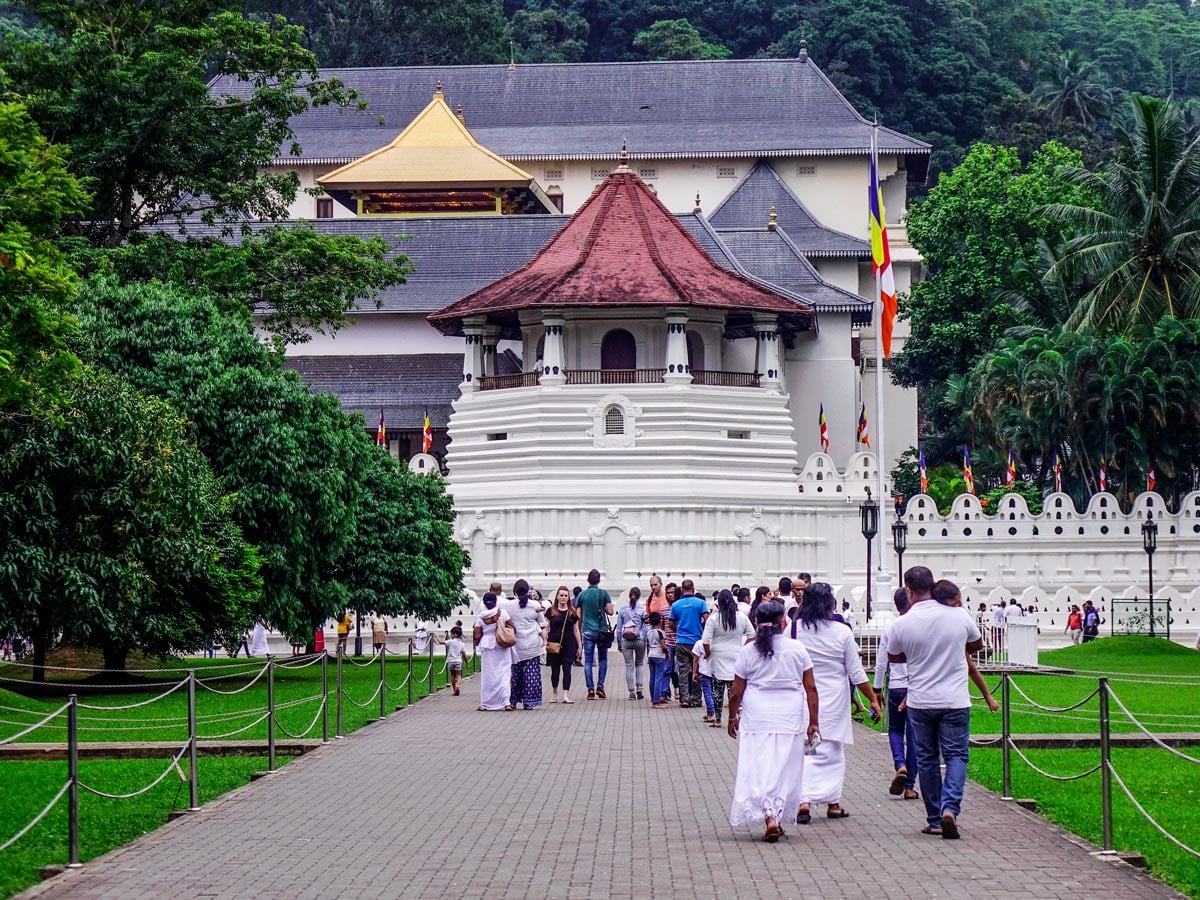
Today, it’s kept under lock and key in Kandy’s glorious Temple of the Sacred Tooth Relic – and we couldn’t visit Sri Lanka’s old royal capital of Kandy without going to see what all the fuss was about.
Except, as we discovered, you don’t actually see the tooth. And that hardly matters.
The temple – part of the country’s storied “Cultural Triangle” – is the real treasure. And it deserves a spot in your Sri Lanka travel plans.
Here’s our guide to what you’ll see inside (from the ornate shrine housing the tooth relic to a beloved taxidermied elephant), along with the best times to visit, what to wear and a few temple etiquette tips.
Temple of the Tooth at a glance
- WHERE → In central Kandy, right beside Kandy Lake
- WHY VISIT → It’s Sri Lanka’s most sacred Buddhist temple, home to a relic believed to be the Buddha’s tooth
- WHAT YOU’LL SEE → Ornate shrines, golden relic caskets, huge elephant tusks, Buddha statues and pilgrims bearing lotus flowers (all quite extraordinary!)
- DON’T MISS → A daily puja ceremony, with drumming and worshippers filing past the tooth relic shrine
- HOW LONG → Allow 1½ to 2 hours
- COST → LKR 3,000 (about $9 USD) for most foreign adults
- GOOD TO KNOW → You won’t actually see the tooth itself!
👉 Pssst! Want to bed down somewhere fabulous? Check out our favorite Kandy hotel gems.
What is the Temple of the Tooth?
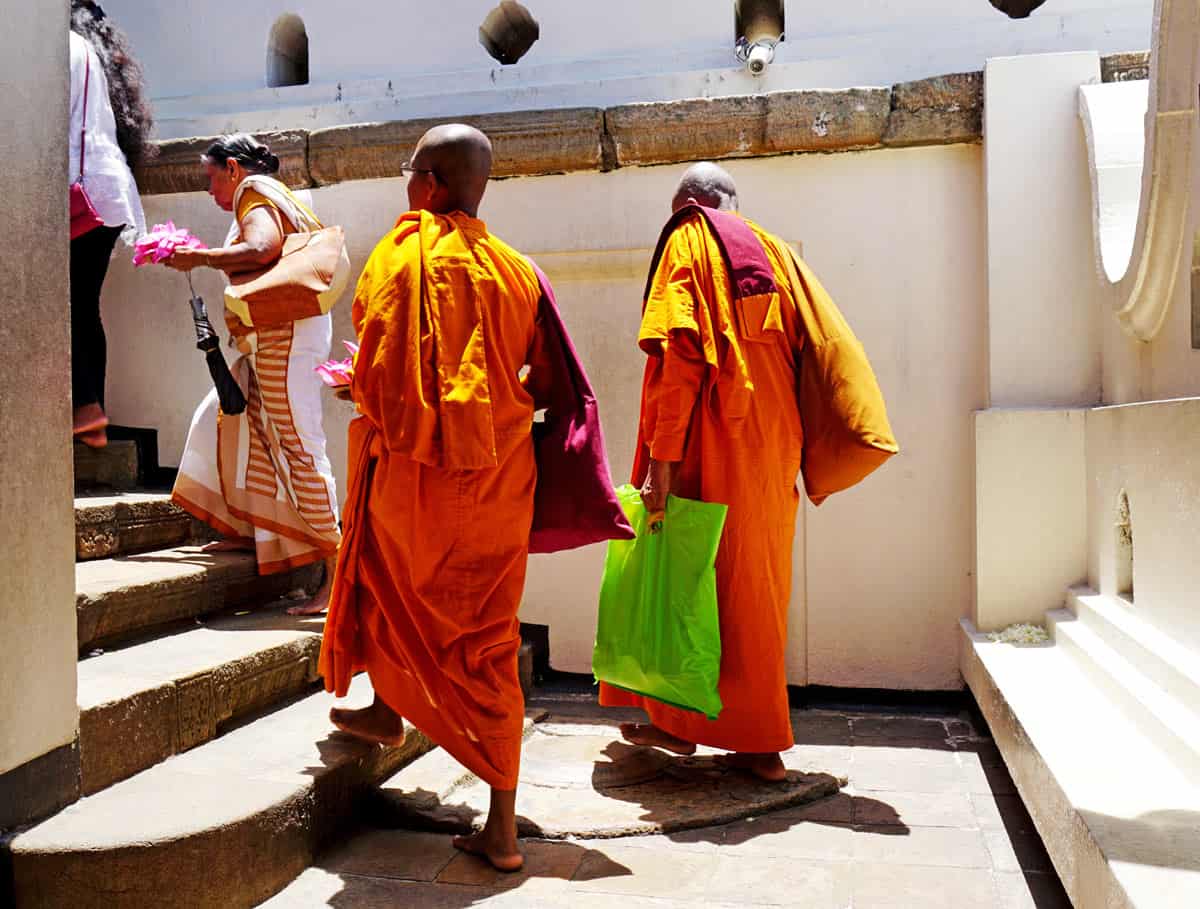
The Temple of the Sacred Tooth Relic (Sri Dalada Maligawa) is Kandy’s most important religious site – and one of the holiest Buddhist temples in Sri Lanka.
Set beside Kandy Lake within the former royal palace complex, it was built in the late 16th century and expanded in the early 1800s.
Today, Kandy is a UNESCO World Heritage Site, with the temple as its star attraction, drawing pilgrims and curious visitors from around the world.
Why is the Buddha’s tooth in Kandy?
There’s quite a story behind how one of Buddha’s teeth ended up here.
After the Buddha was cremated in India in the 5th century BC, his left canine tooth was said to have been picked up from his funeral pyre.
Centuries later, with war brewing, it was secretly spirited out of India for safekeeping. According to legend, Princess Hemamala hid the tooth in her hair and brought it to Sri Lanka with her husband, Prince Dantha, in the 4th century AD.
The relic was presented to the king and soon became much more than a religious treasure. Possession of the tooth became a symbol of the right to rule Sri Lanka.
So as the country’s royal capitals changed, the tooth moved too.
Eventually, it found its permanent home in Kandy, Sri Lanka’s last royal capital.
Entering Sri Dalada Maligawa
Our first surprise came before we even reached the temple.
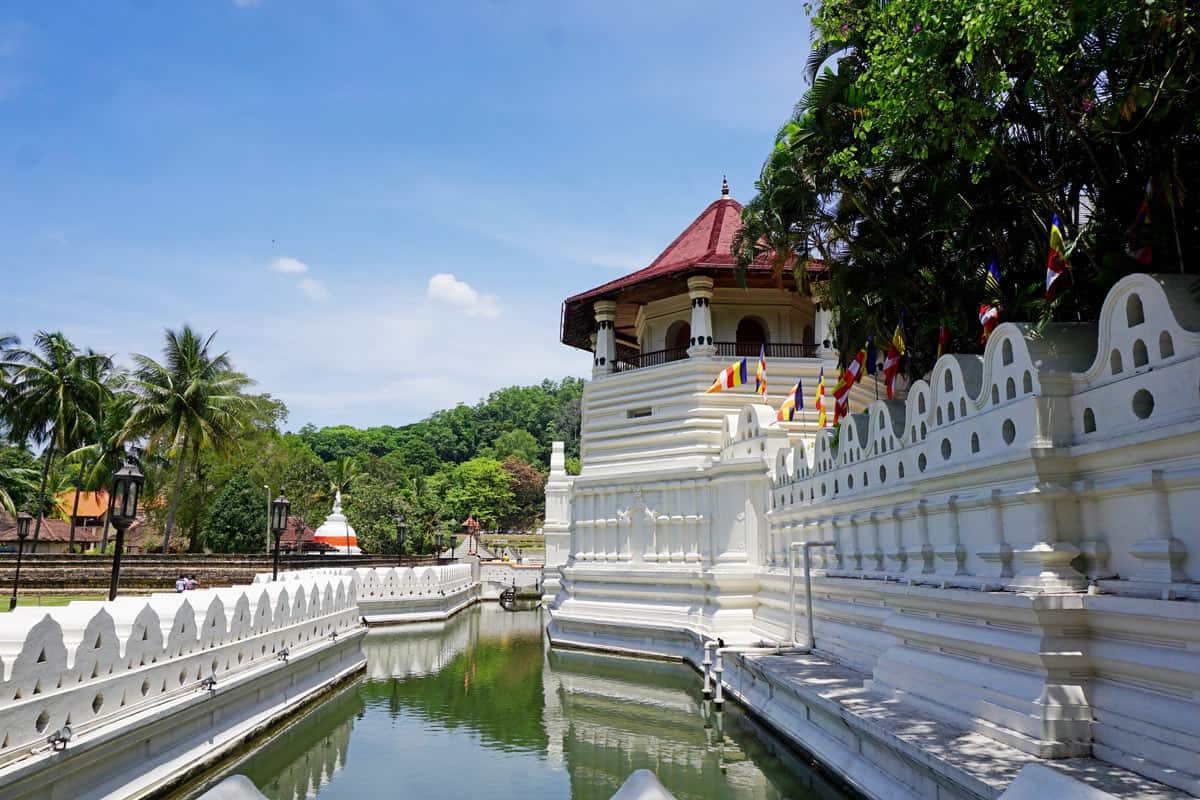
A moat encircles the temple complex, and we spied a giant water monitor lizard, larger than an alligator, cruising through the dark muddy water, swimming among the fish.
After crossing the moat, we followed the broad walkway toward the temple, bought our tickets and passed through security.
Then, following Buddhist temple etiquette, we took off our shoes and left them at the shoe counter near the entrance.
George wrapped a sarong around his waist to cover his bare knees. (Unfortunately, it kept slipping off and puddling around his ankles, attracting a few giggles from onlookers.)
Suitably attired (more or less), we were ready to go inside.
Inside the Kandy temple
Ambarawa Tunnel
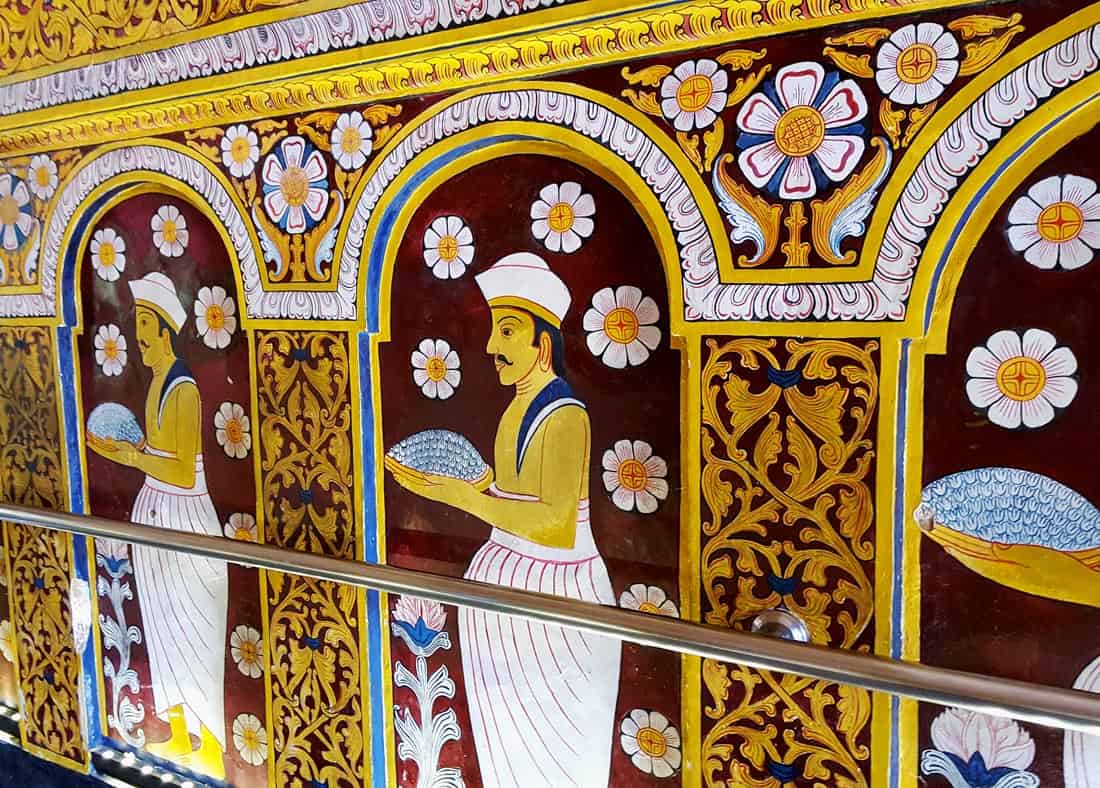
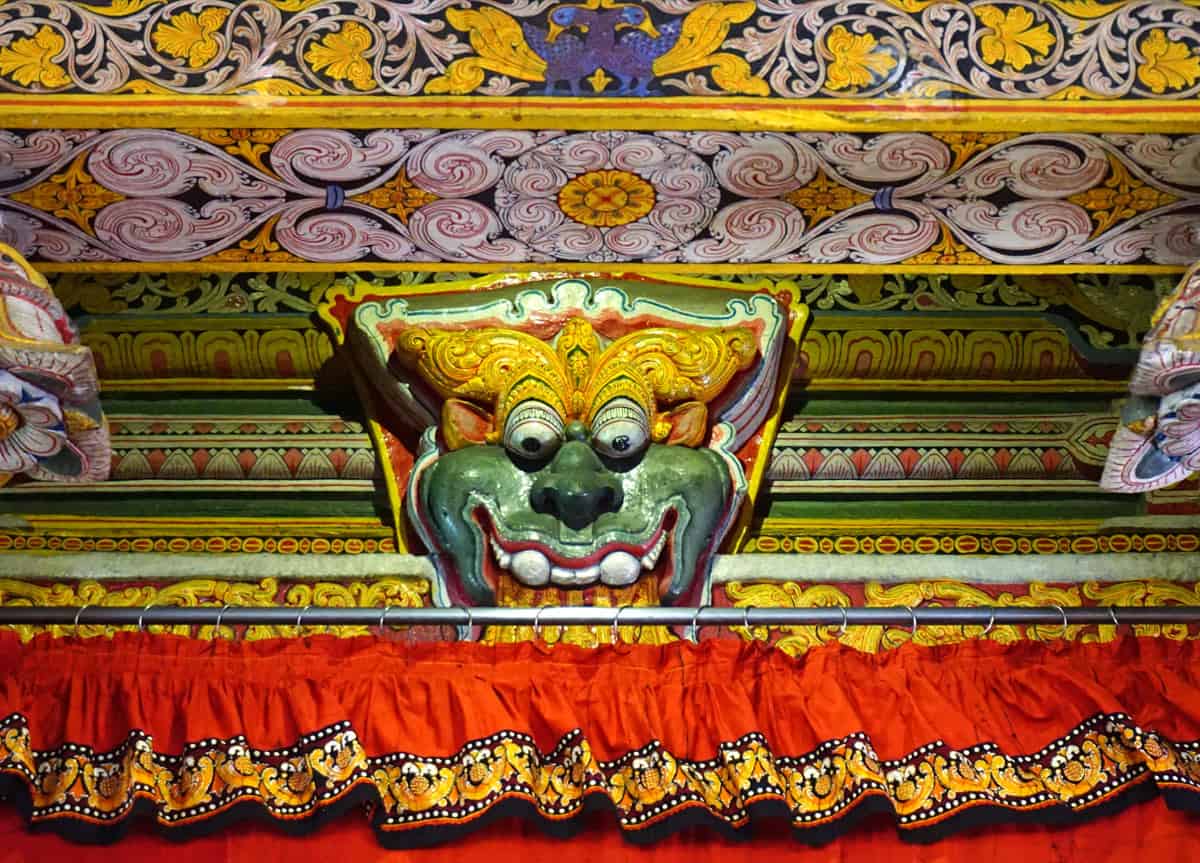
Once inside, we walked through the Ambarawa, a colorful entrance tunnel leading into the heart of the temple.
Its walls and curved ceiling are covered in intricate Kandyan-style paintings, many of devotees bearing offerings to the Sacred Tooth Relic.
A living place of worship
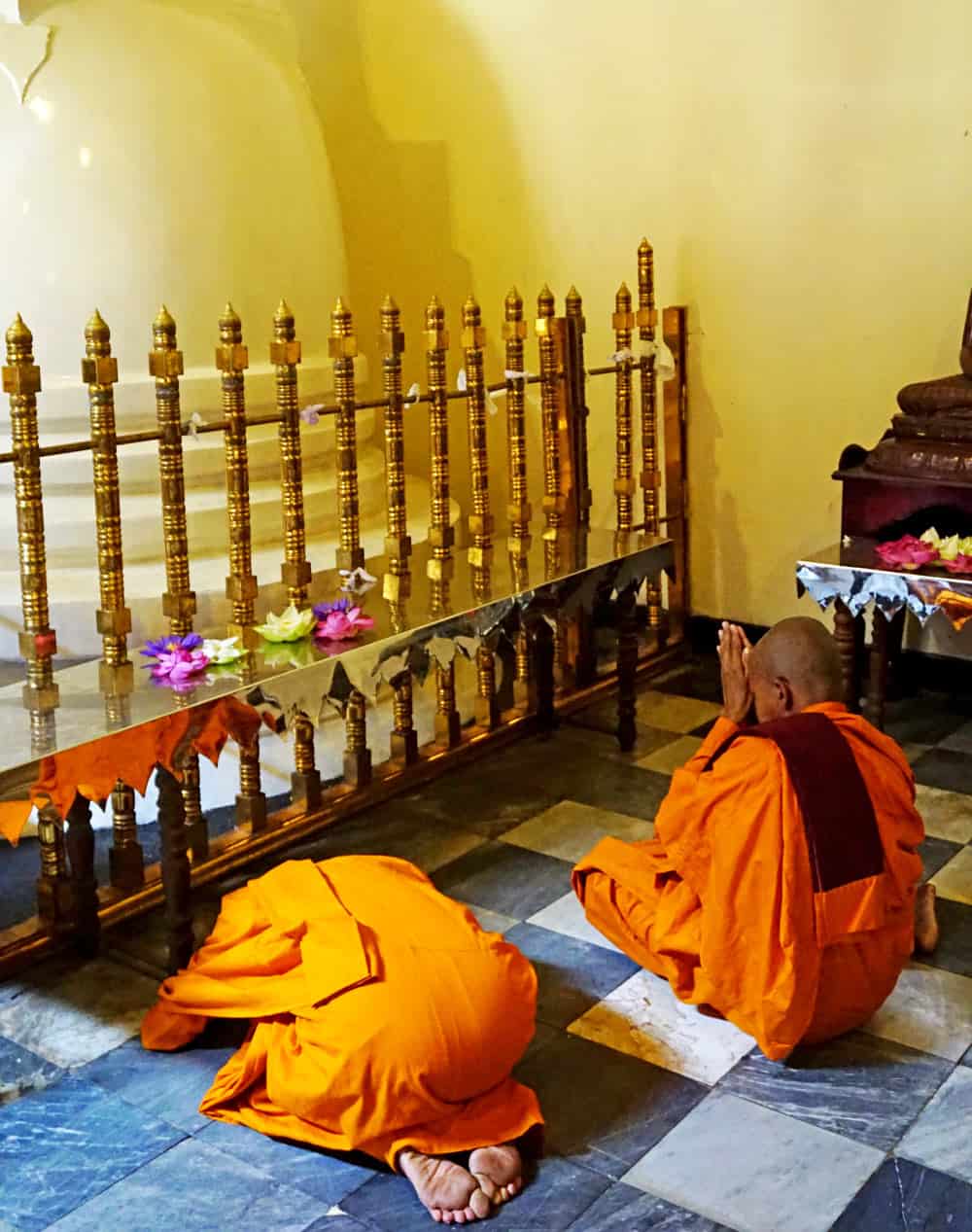
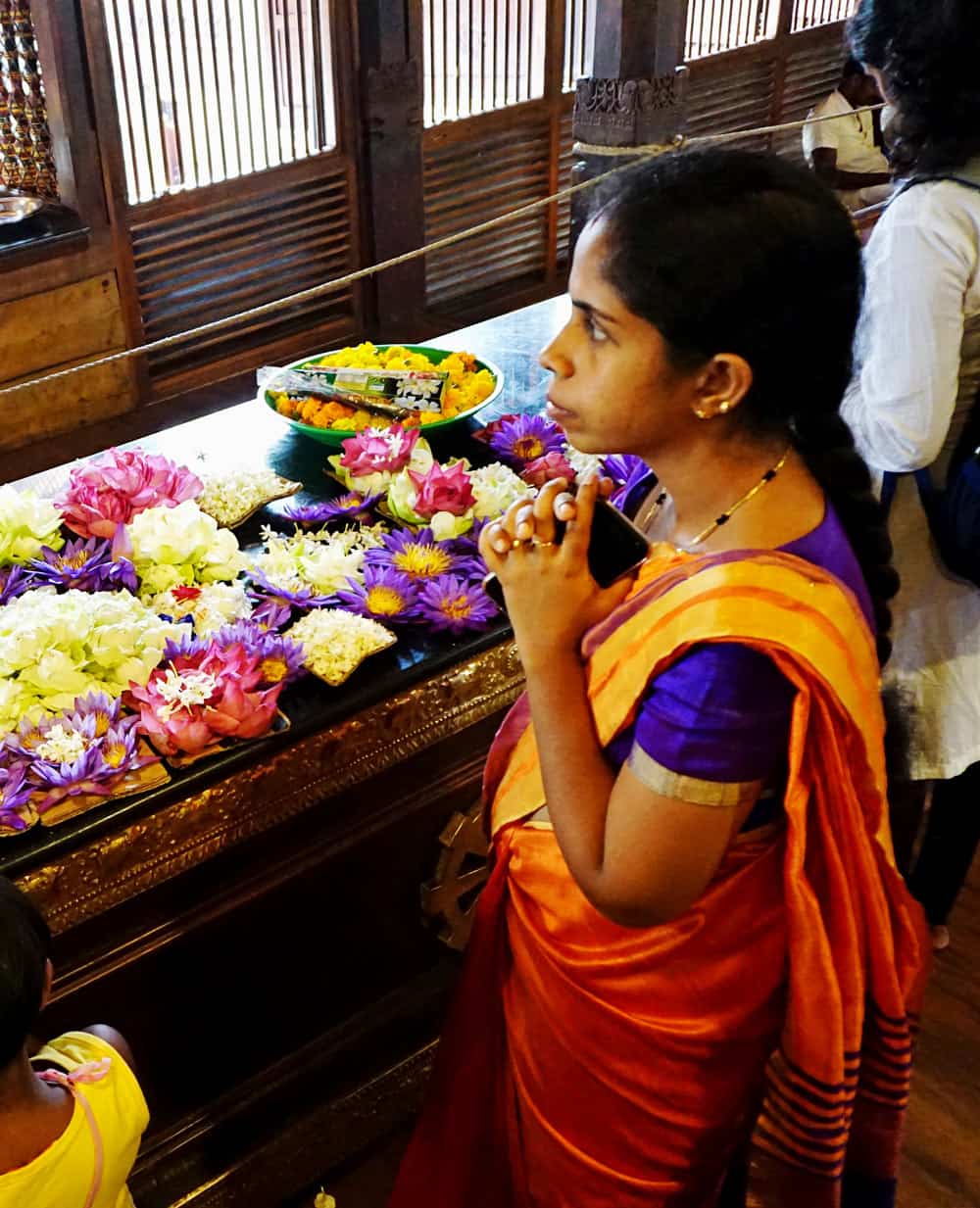
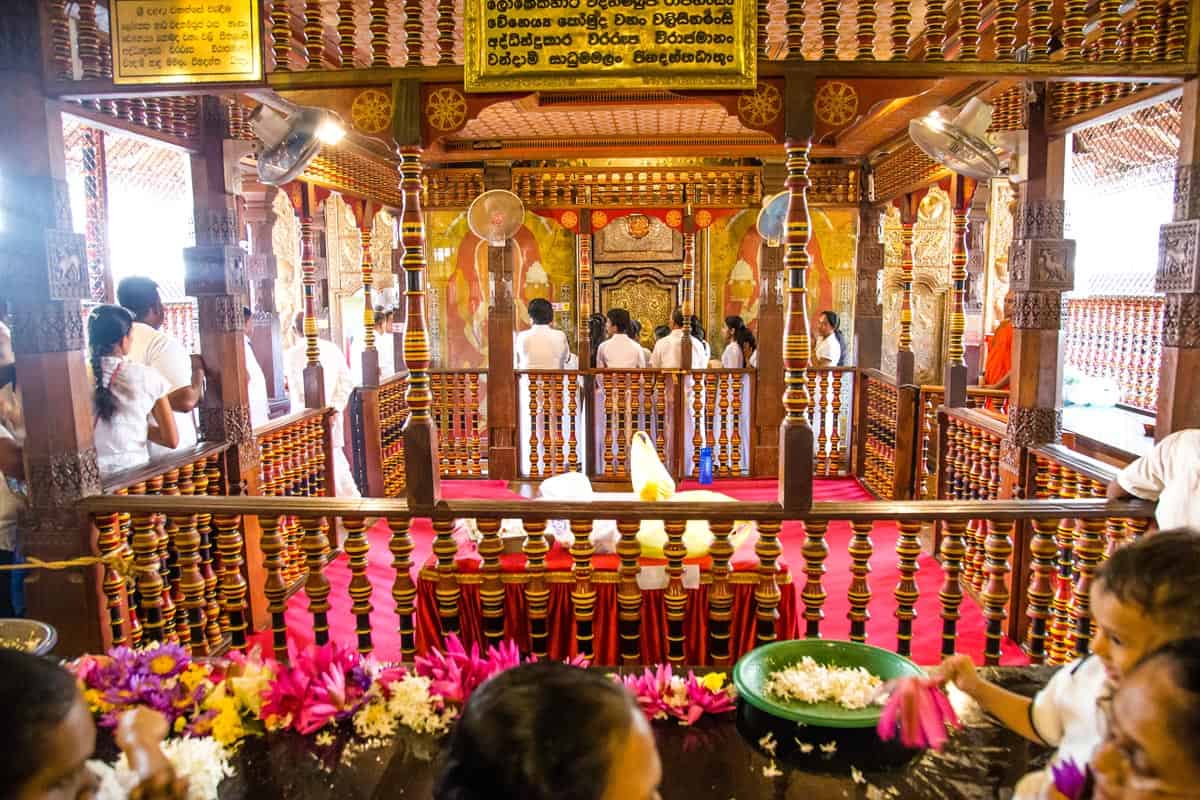
The temple was alive with activity.
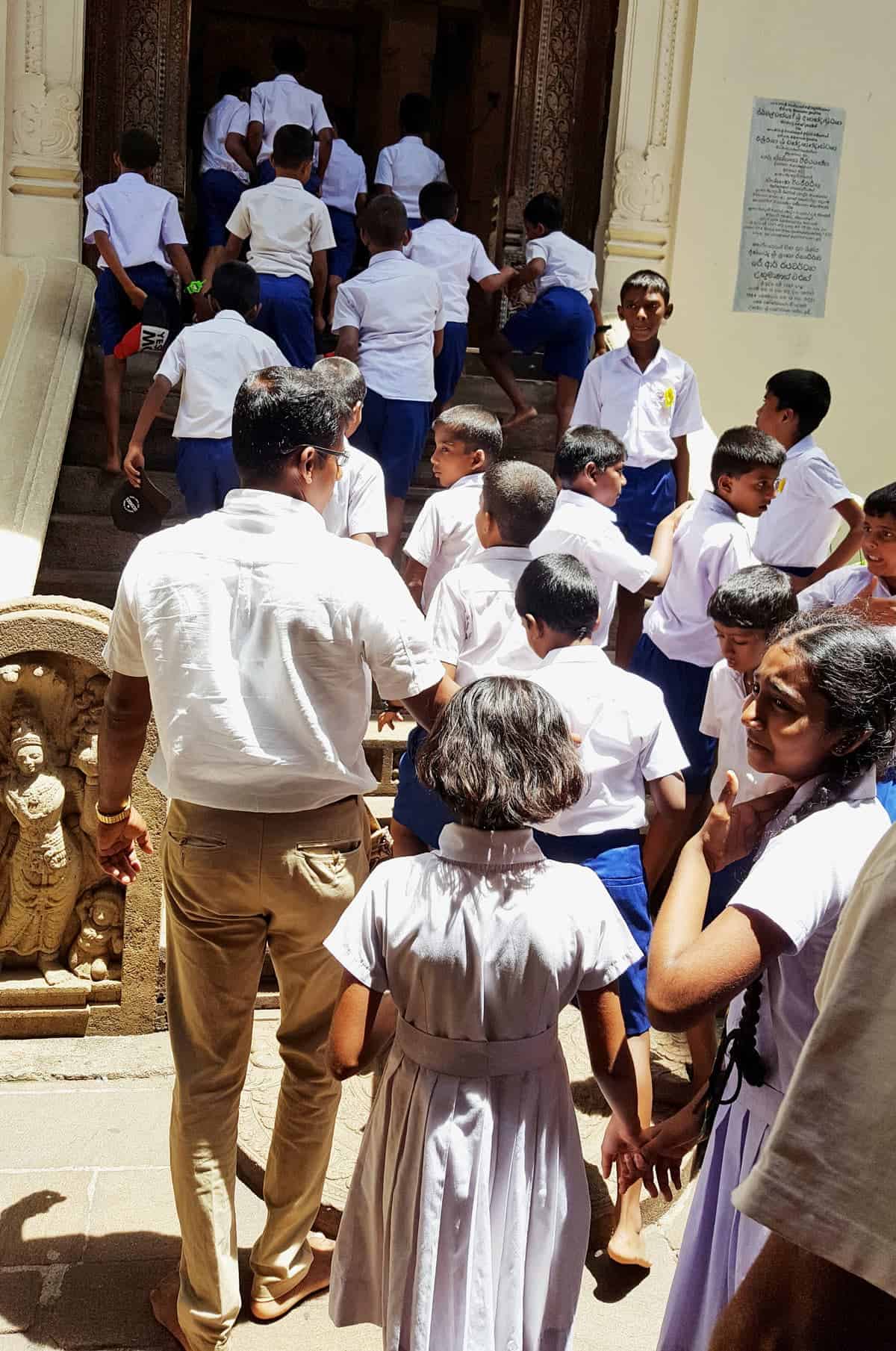
We watched throngs of local pilgrims and foreign visitors stream through the temple, mixed in with gaggles of giggling Sri Lankan school children dressed in crisp white uniforms.
Some worshippers meditated quietly in corners. Others carried pink and white lotus flowers, laying them in great fragrant piles as offerings in front of the tooth relic shrine.
A few simply found a patch of marble floor and sat.
We joined them for a while, enjoying the cool reprieve from the tropical heat outside and breathing in the mingled fragrance of incense and flowers.
The shrine housing the tooth
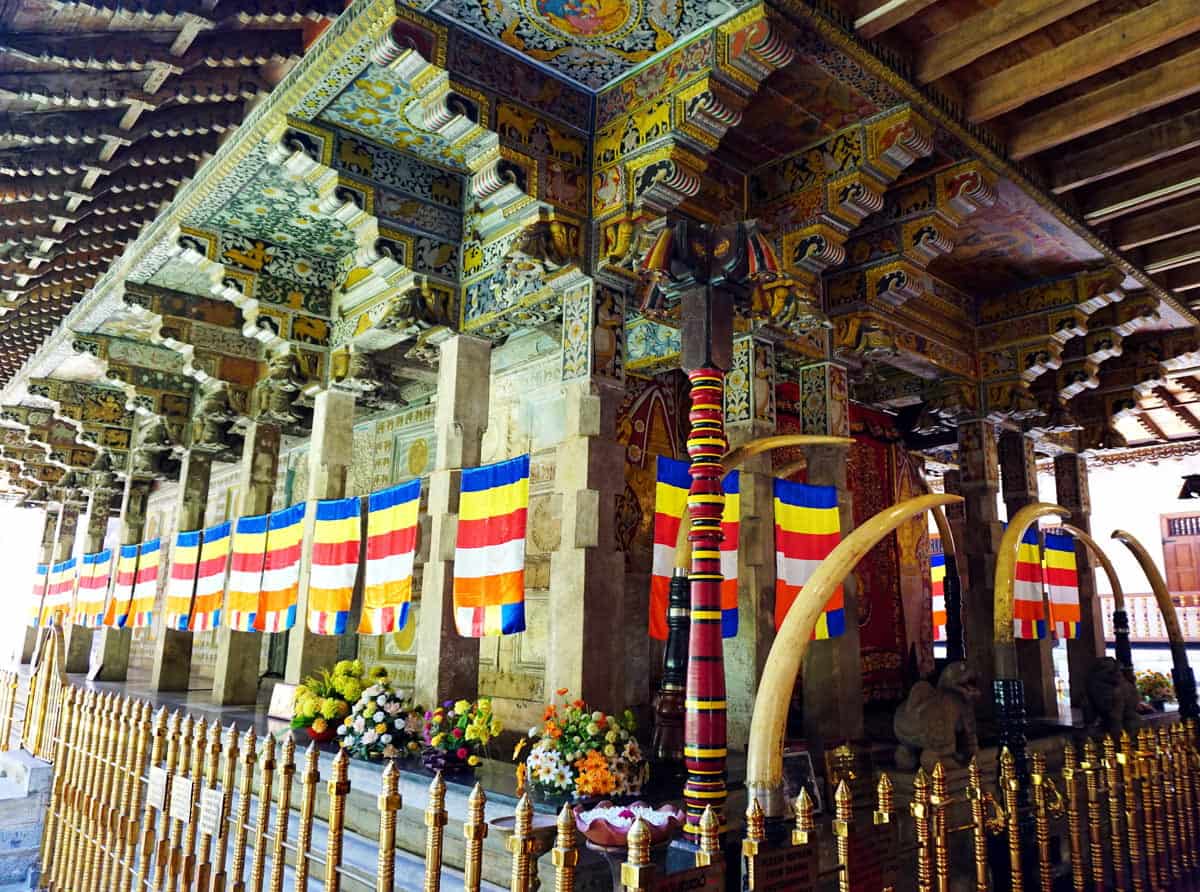
You can’t actually see the Buddha’s tooth itself.
It’s tucked away inside the smallest of seven nested golden caskets. Shaped like stupas and encrusted with gems, the caskets are kept inside a large locked chamber, flanked by huge elephant tusks.
You can visit the shrine where the sacred relic is kept, but the famous tooth remains hidden from view.
New Palace (Alut Maligawa)
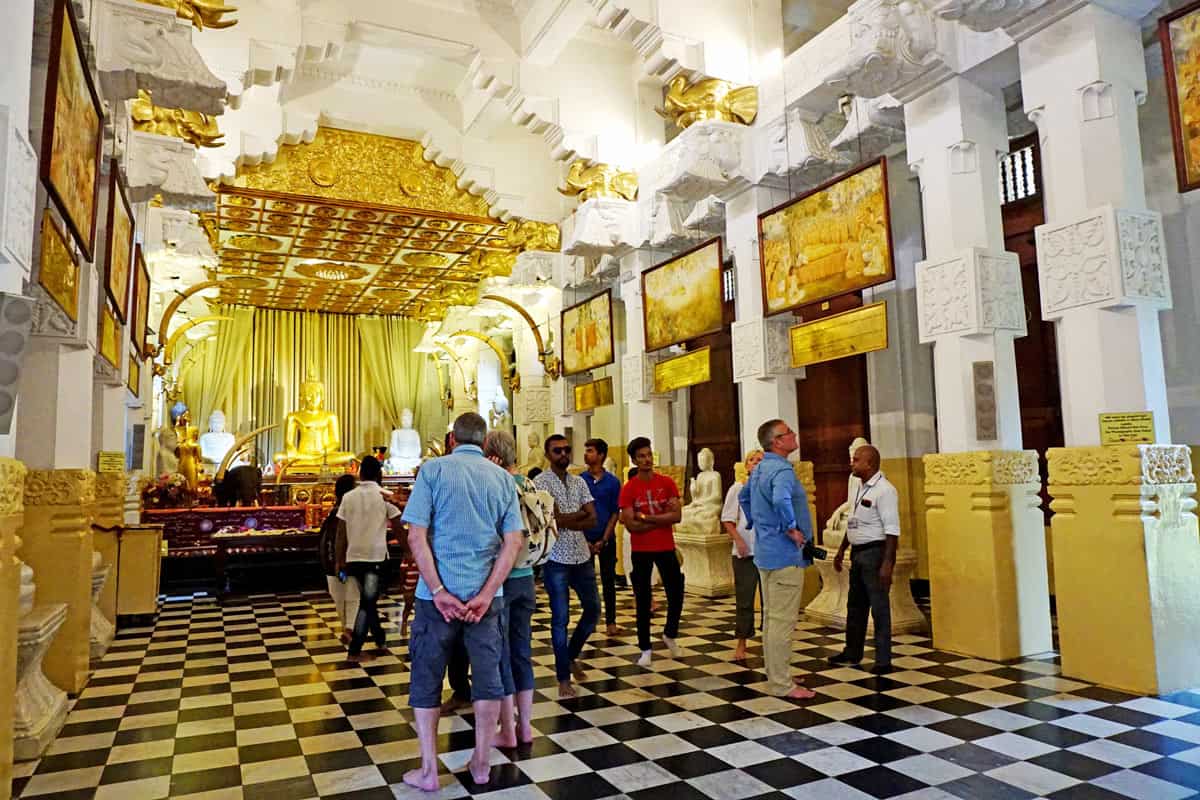
Beyond the shrine room, we entered the Alut Maligawa, usually translated as the “New Palace” or “New Shrine.”
Despite the name, it’s not a palace where royalty lived. It’s a three-story addition to the temple, with a huge shrine hall filled with Buddha statues and other religious treasures.
Made from ivory and other materials, many of the life-size seated Buddhas were donated by Thailand, Japan and other Buddhist countries around the world.
What particularly caught our eye was the huge gleaming gold Buddha at one end of the hall, created in the Thai (or Siamese) style.
Paintings on the walls also tell the story of the tooth and its travels over the centuries.
Meet Raja, the temple’s famous elephant
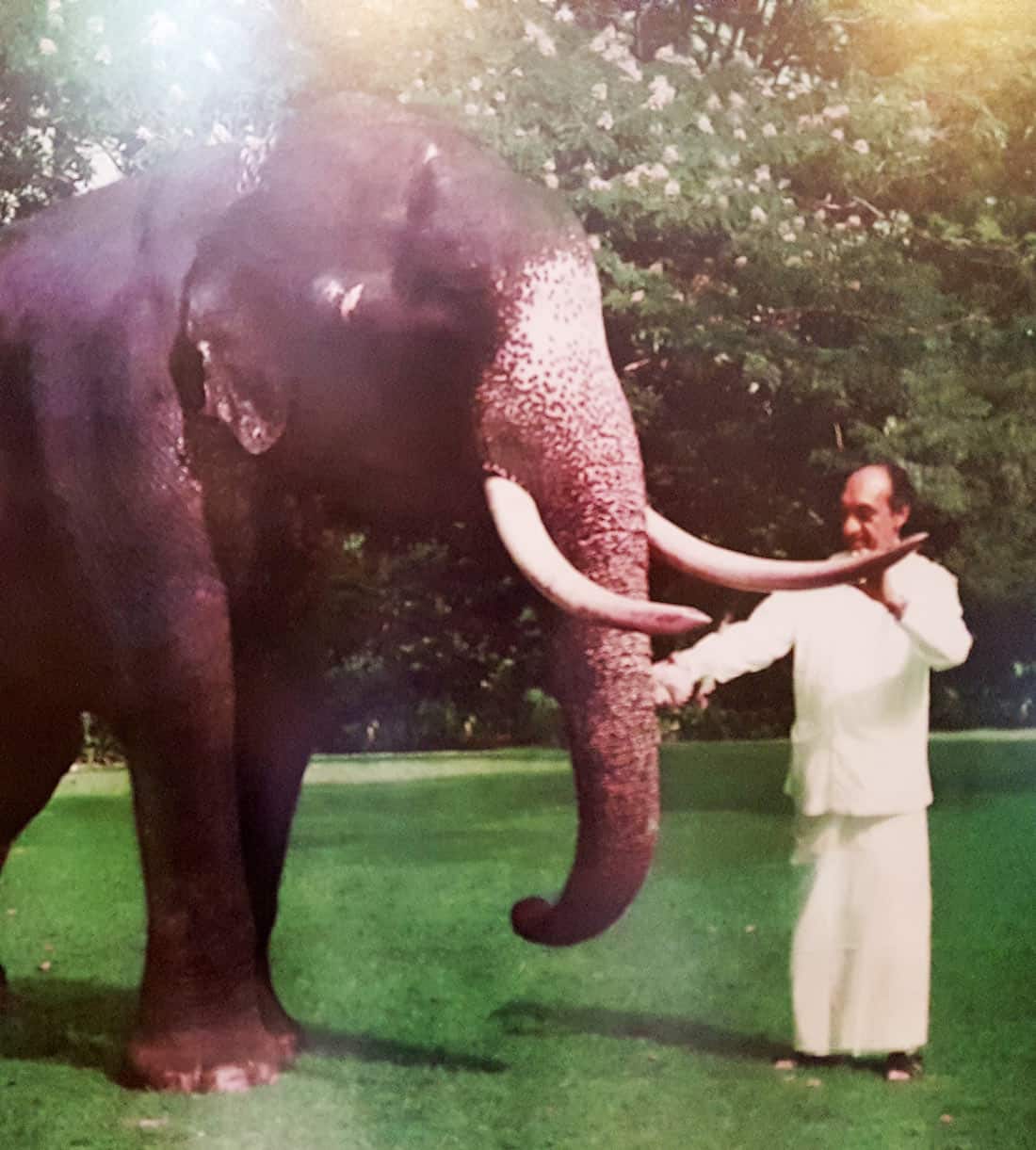
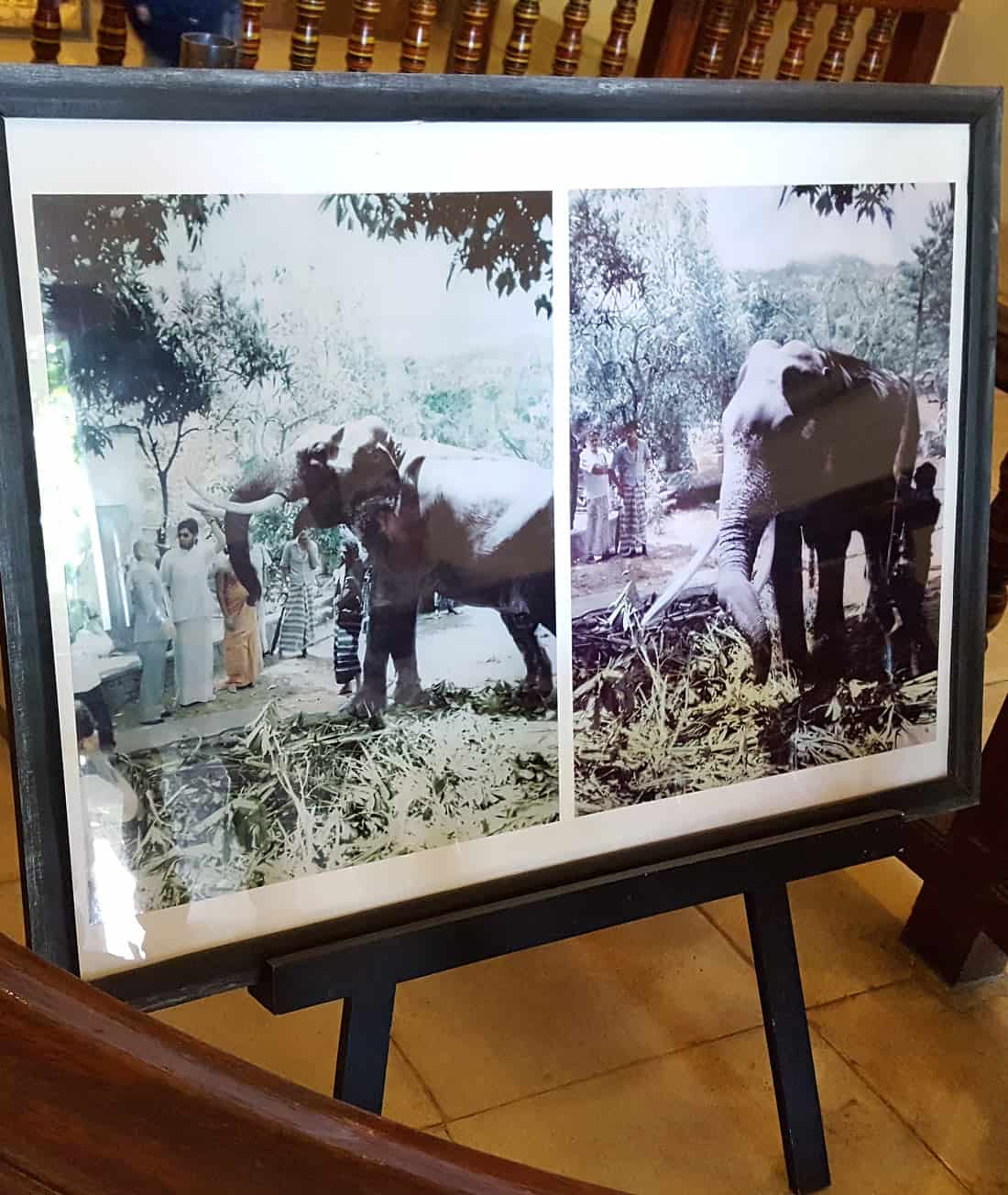
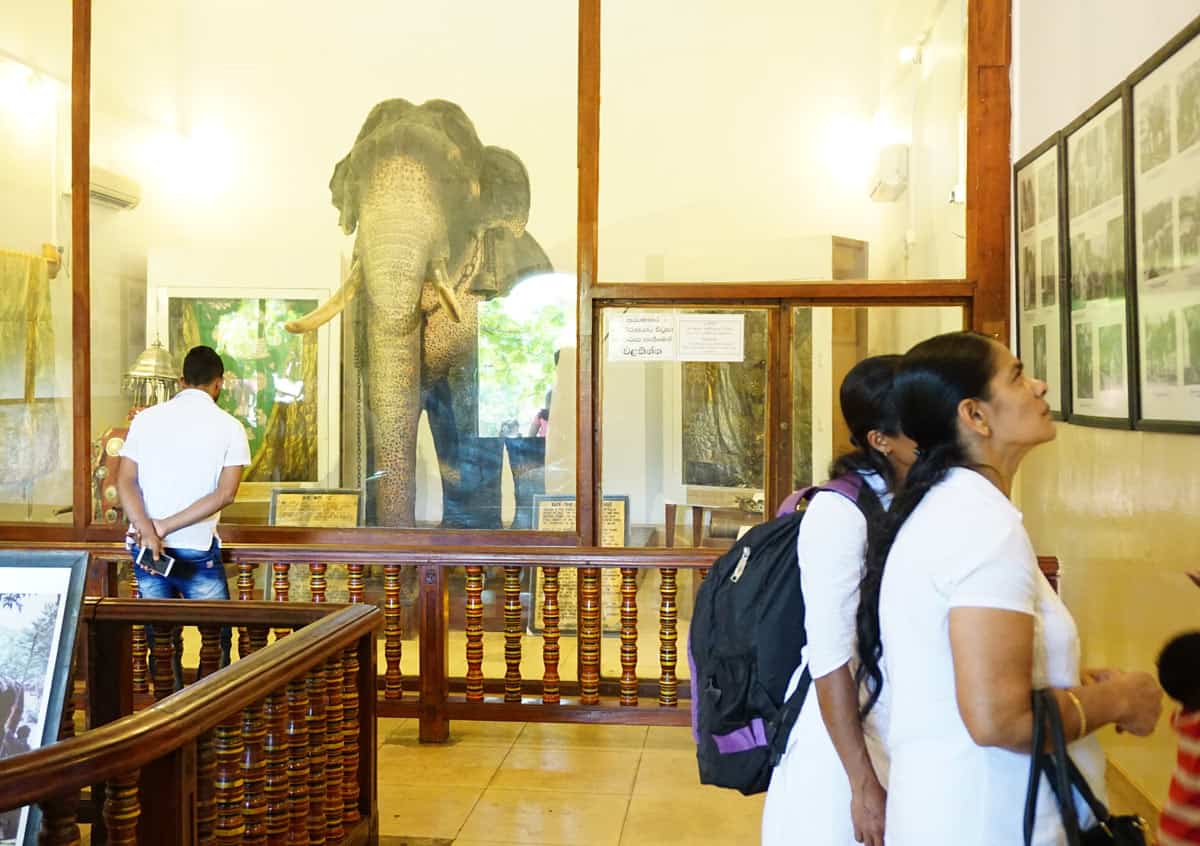
Before leaving, we popped into the small memorial museum dedicated to Raja the Tusker.
Raja is the celebrated elephant who served at the temple for about 50 years.
For decades, he had the great honor of carrying the sacred relic casket during the magnificent annual Kandy Esala Perahera (Festival of the Tooth) procession.
Raja died in 1988 at the grand old age (for an elephant) of 75. He was so loved and revered that the government declared a national day of mourning.
Then, to preserve his memory, he was stuffed and put on display in his own little museum.
He now stands behind glass, surrounded by old photographs. Some show Raja beside prime ministers proudly holding on to his tusk; others show him resplendent in his ceremonial gold coverings when out in the annual procession.
And apparently, he’s one of only a handful of elephants who have ever been taxidermied!
We love elephants, so we found the vintage photos and Raja’s story fascinating.
Visitor tips
Where is the Temple of the Tooth?
The temple is located right in the heart of Kandy, beside Kandy Lake, so it’s easy to visit on foot if you’re already sightseeing in the center.
You may want to combine your temple visit with a stroll around the lake.
How long do you need?
We’d budget about 1½ to 2 hours.
That gives you enough time to see the main temple, attend a puja (covered next) and poke around the surrounding complex without rushing.
Best time to visit
We recommend timing your visit for one of the temple’s three daily puja ceremonies.
This is when the doors to the inner shrine are opened and worshippers file past the sacred golden caskets containing the tooth relic. You still won’t see the tooth itself, though.
Yes, it’s busier. But watching worshippers arrive with flowers and hearing the temple fill with rhythmic drumming adds to the experience.
If crowds aren’t your thing, visit between ceremonies instead.
What to wear
You’ll need to cover your shoulders and knees. Men might find it easier to wear pants (or you can tie a sarong around your waist, like George did). Women should wear a long skirt, pants or capris.
And remember that you’ll need to remove your shoes and sunhat before entering the sacred areas.
You might want to wear socks, so you’re not going barefoot. (Just be careful not to slip on the polished floors.)
Opening hours and entrance fee
- Hours – Daily, 5:30 am to 8:00 pm.
- Puja times – 5:30 to 7:00 am, 9:30 to 11:00 am and 6:30 to 8:00 pm.
- Foreign visitor admission – LKR 3,000 (about $9 USD) for most foreign adults.
- Security – Expect to go through a security check before entering the temple complex. Bags may be inspected.
FAQs about visiting the Temple of the Tooth
Can you see the Buddha’s tooth?
No. The sacred tooth itself isn’t displayed to visitors.
Even during the daily puja ceremonies, when the doors to the inner shrine are opened, you only get a glimpse of the shrine where the golden caskets containing the relic are kept.
So don’t go expecting to actually eyeball the Buddha’s tooth!
What is the Festival of the Tooth?
The Esala Perahera (also known as the Festival of the Tooth) is Kandy’s spectacular annual Buddhist festival, usually held in July or August.
Over several nights, elaborate processions fill the streets with drummers, dancers, fire performers and lavishly adorned elephants.
A replica of the sacred tooth relic casket is carried in the procession on a ceremonial elephant – an honor that Raja, the temple’s famous elephant, performed for many years.
Can you take photos?
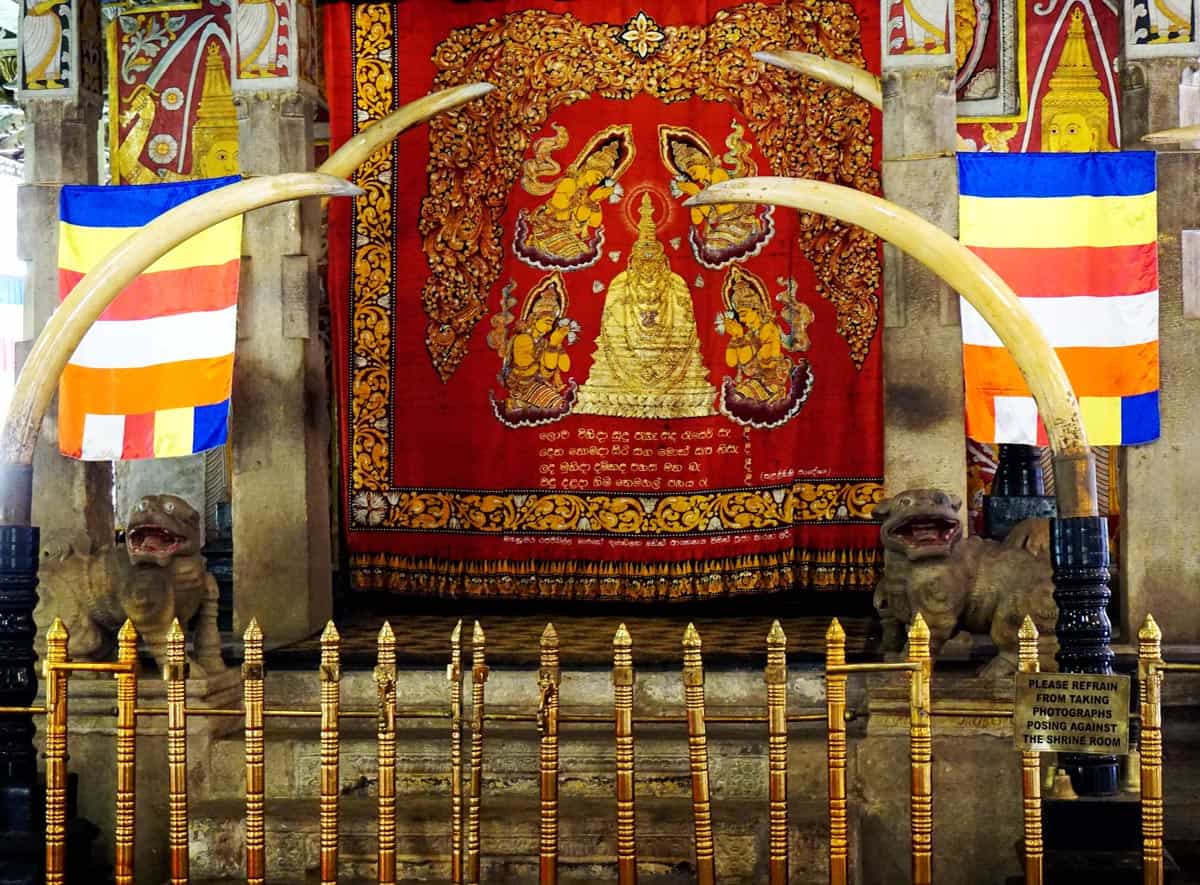
Yes, photography is allowed in much of the temple.
But remember this is an active place of worship, not just a tourist attraction. So be discreet when photographing worshippers and obey any no-photography signs.
And this one’s important.
Don’t pose for photos with your back to a Buddha statue or image. It’s considered disrespectful in Buddhist tradition. Also don’t pose for photos against the tooth relic shrine itself.
Is the Temple of the Tooth in Kandy worth visiting?
That’s a big yes!
Even if you’ve already visited (or plan to visit) Anuradhapura and the Golden Temple of Dambulla, you’ll want to see this temple too. It’s very different – with worshippers coming to pray and daily ceremonies that have taken place here for centuries.
And while it may be called the Temple of the Tooth, visiting isn’t really about trying to see the tooth itself (which you can’t).
It’s the whole temple experience that makes the visit – the richly decorated shrine, the elephant tusks, the rhythmic drumming, the worshippers bearing lotus flowers and the extraordinary story of a tooth once smuggled into Sri Lanka in a princess’s hair.
We found the Temple of the Tooth one of the most interesting places to visit in Kandy.
And really, how often do you get to visit a temple built around a tooth that helped determine who got to rule a country?
Read more about Kandy and Sri Lanka
- How to Spend 2 Perfect Weeks in Sri Lanka
- 15 Gorgeous Luxury Hotels in Sri Lanka
- From Fort Chic to Beach Bliss: 5 Gorgeous Galle Hotels
- Ride the Gloriously Scenic Kandy to Ella Train
- High on Ella: 5 Luxury Hotels in the Hills
- 7 Treasures of Sri Lanka’s Cultural Triangle
- Kandy Travel Guide: Stay, Play, Eat
- 5 Lovely Places to Stay in Kandy
Our top travel tips and resources
→ Hotels | Booking.com is our go-to for scoring a “wow” hotel – or at least a decent one – often at lower rates than the hotel’s own website. (We especially like Booking.com’s flexible cancellation policy!) You can also find excellent discounted rates on Expedia, especially for hotels in the U.S. and Mexico.
→ Vacation homes, condos and rentals | We prefer and use Vrbo (Vacation Rentals by Owner).
→ Flights | For the best flights, we search on Google Flights first. Expedia and Kayak are then perfect for snagging the cheapest tickets. (They’re often non-refundable, though, so for more flexibility, we book directly with the airline, even if it costs more.)
→ Airport lounge access | We love (and have) Priority Pass for comfy lounge seats, free snacks and drinks, complimentary WiFi and sometimes even showers and spa services!
→ Tours | For the best local food, walking and other guided tours, plus skip-the-line tickets to attractions, check out Viator (a TripAdvisor company) and GetYourGuide.
→ Car rental | Renting a car can be a great way to explore off the beaten path. Discover Cars searches car rental companies for the lowest rates.
→ Travel insurance | SafetyWing is designed for frequent travelers, long-term adventurers and digital nomads. It covers medical expenses, lost checked luggage, trip interruption and more. We also have and recommend Medjet for global air medical transportation.
→ Travel gear | See our travel shop to find the best luggage, accessories and other travel gear. (We suggest these comfy travel sandals for city walking, the beach and kicking about.)
→ Need more help planning your trip? | Check out our travel tips and resources guide for airline booking tips, ways to save money, how to find cool hotels and other useful trip planning info.
If you make a booking or purchase through our site, we may earn a small commission (at no cost to you). Thanks!
About the authors
