
Sri Lanka’s Cultural Triangle: 7 Fascinating Places to See
This post may contain affiliate links. If you make a purchase through them, we may earn a small commission (at no cost to you).
Yes, Sri Lanka has seductive beaches, gorgeous hotels and the impossibly scenic, hang-your-head-out-the-window Kandy-to Ella-train ride.
But some of the country’s greatest treasures lie inland – in Sri Lanka’s Cultural Triangle.
We spent a month traveling around the country, and this history-rich region was a highlight of our trip.
Here, ancient capitals are studded with enormous stupas and stone Buddhas. Centuries-old cave temples glow with jewel-toned paintings. And great rock fortresses rise dramatically above a sea of green jungle.
Several are UNESCO World Heritage Sites. Some date back more than 2,000 years – and we tackled a fair number of steps to see them!
But they’re worth every step.
From climbing up to Sigiriya’s palace ruins to oohing and aahing over Kandy’s Temple of the Tooth, you won’t want to miss these seven amazing places in the Cultural Triangle.
Cultural Triangle in Sri Lanka: Mini-guide
What is the “Cultural Triangle” of Sri Lanka?
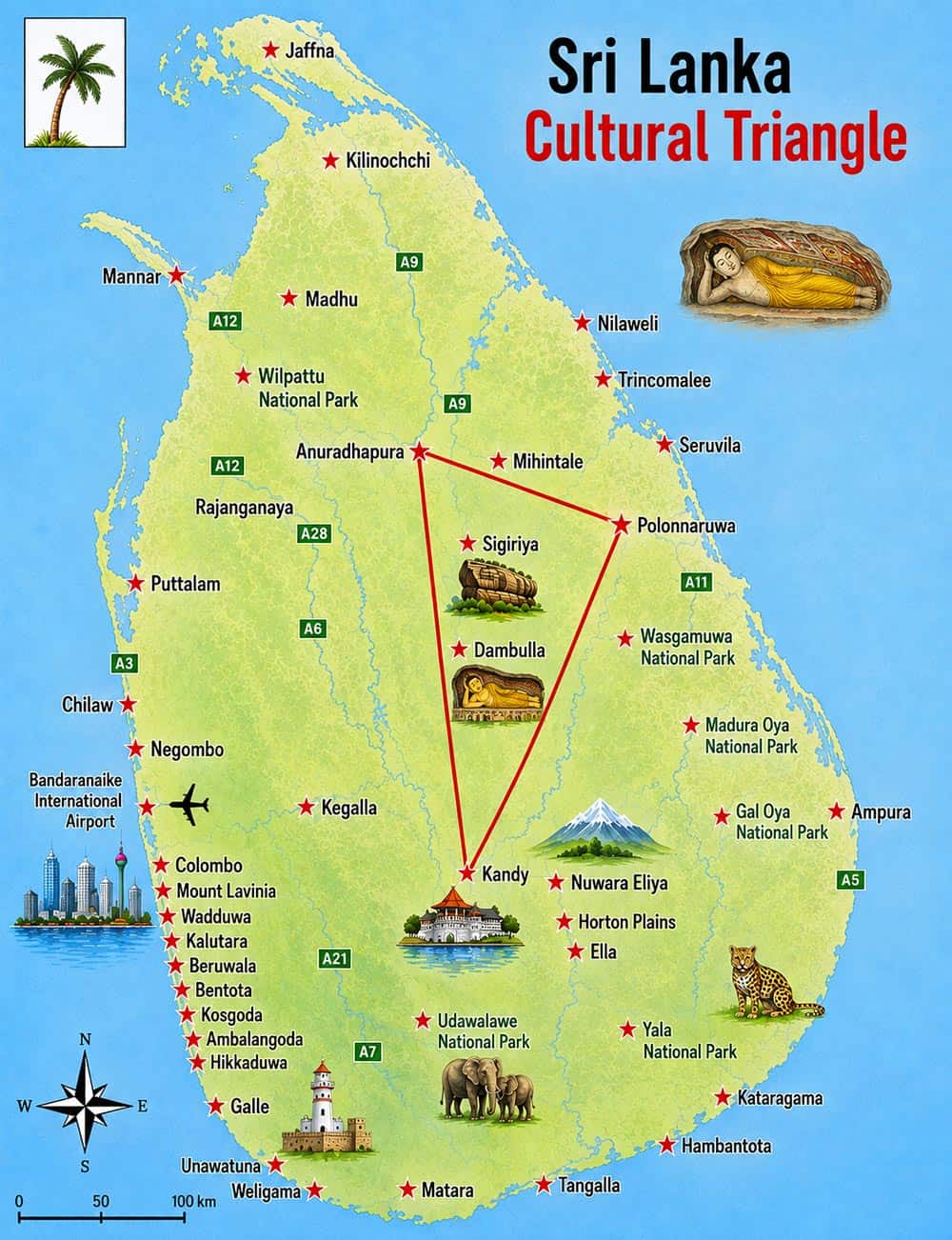
It’s a region packed with royal ruins, giant stupas, rock fortresses and some of Sri Lanka’s most dazzling UNESCO sites. The ancient cities of Anuradhapura (#2), Polonnaruwa (#5) and Kandy (see #6) form the triangle’s three points.🛕
How many days do you need?
Allow 4 to 5 days to see the highlights without rushing. The three cities are roughly 2 to 3 hours’ drive from one another.
What’s the best way to visit?
A private car and driver (not expensive by North American standards) is the easiest and most comfortable way to get around the region – the main sights are pretty spread out.
Within Anuradhapura, Polonnaruwa and the vibrant city of Kandy, you can hop around by tuk-tuk.
Easy sightseeing combos
- Anuradhapura + Mihintale (#3)
- Sigiriya (#1) + Dambulla (#4)
- Polonnaruwa (or Sigiriya) + an elephant safari in Minneriya or Kaudulla National Park
Give Kandy at least a full day, as there’s plenty to see.
3 Top day tours
- Private city day tour of Anuradhapura – 4 to 5 hours (460+ reviews and a perfect 5-star rating!)
- Kandy city tour by tuk-tuk – 10 hours (Viator Badge of Excellence)
- Polonnaruwa and Minneriya elephant safari – 8 to 9 hours (recommended by 100% of travelers)
Deluxe stays in the Cultural Triangle
- Anuradhapura → Uga Ulagalla (thatched roof villas with private plunge pools)
- Sigiriya and Polonnaruwa → Water Garden Sigiriya (chic villas overlooking tranquil waterways) and Taru Villas Maia-Habarana (stylish jungle hideaway)
- Kandy → The Elephant Stables and Kings Pavilion Luxury Hotel (two of our favorite boutique retreats around Kandy)
1) Ancient City of Sigiriya
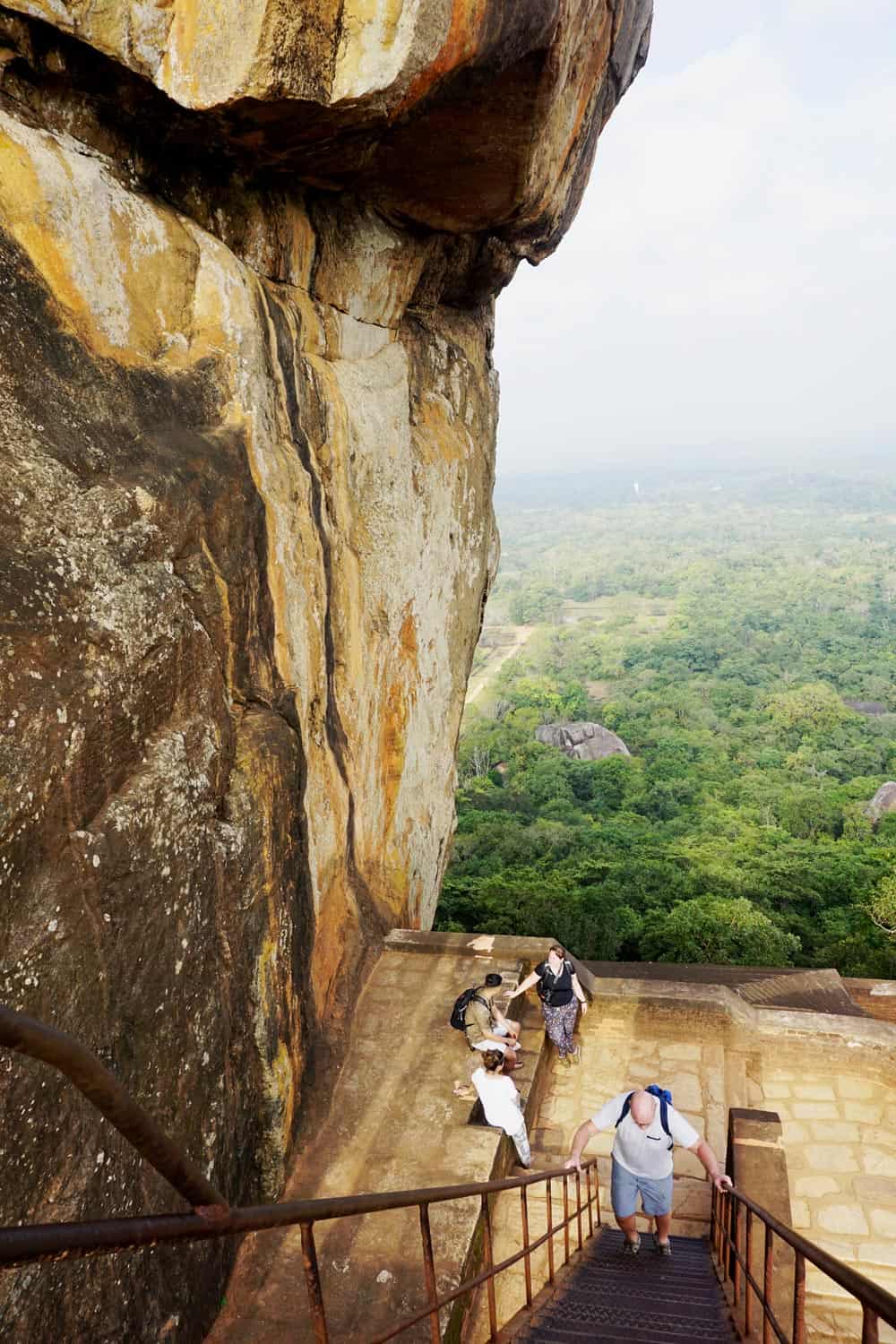
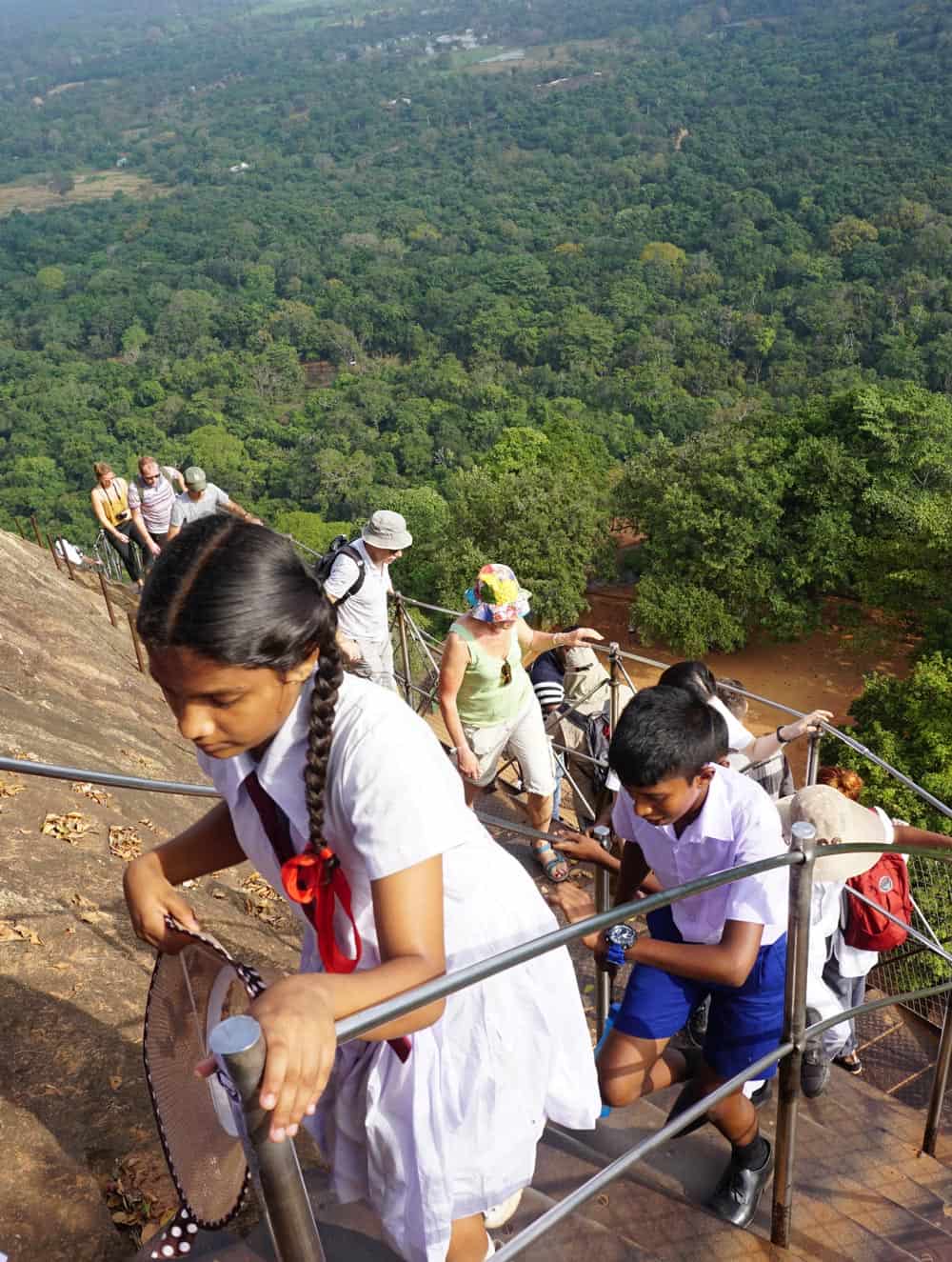
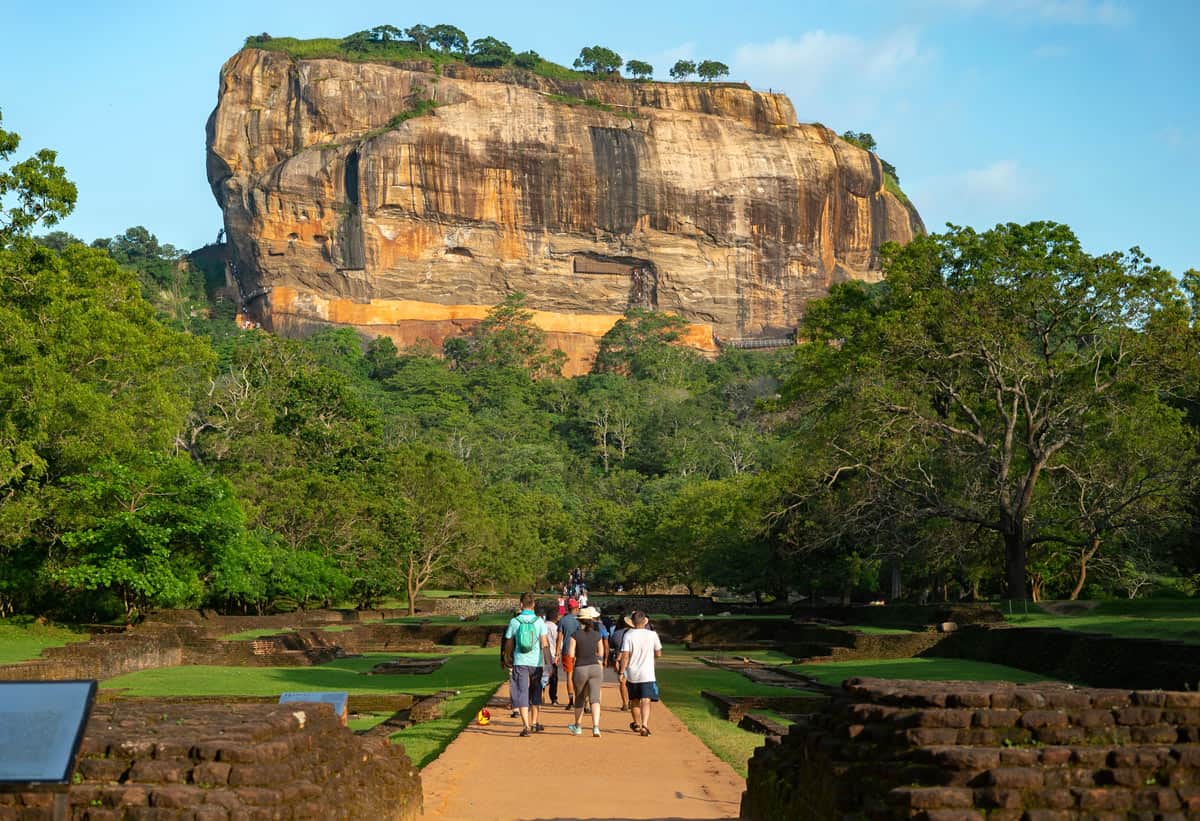
Climb 1,202 steps up the side of a gargantuan rust-colored rock, and you reach the 5th century royal palace and fortress of King Kashyapa I, perched improbably on top.
This is Sigiriya – UNESCO-listed and every bit as dramatic as it sounds.
Don’t fret about climbing up all in one go. There are terraces and platforms along the way where we could stop, catch our breath and take in the increasingly fabulous views.
Meet the ladies of Sigiriya
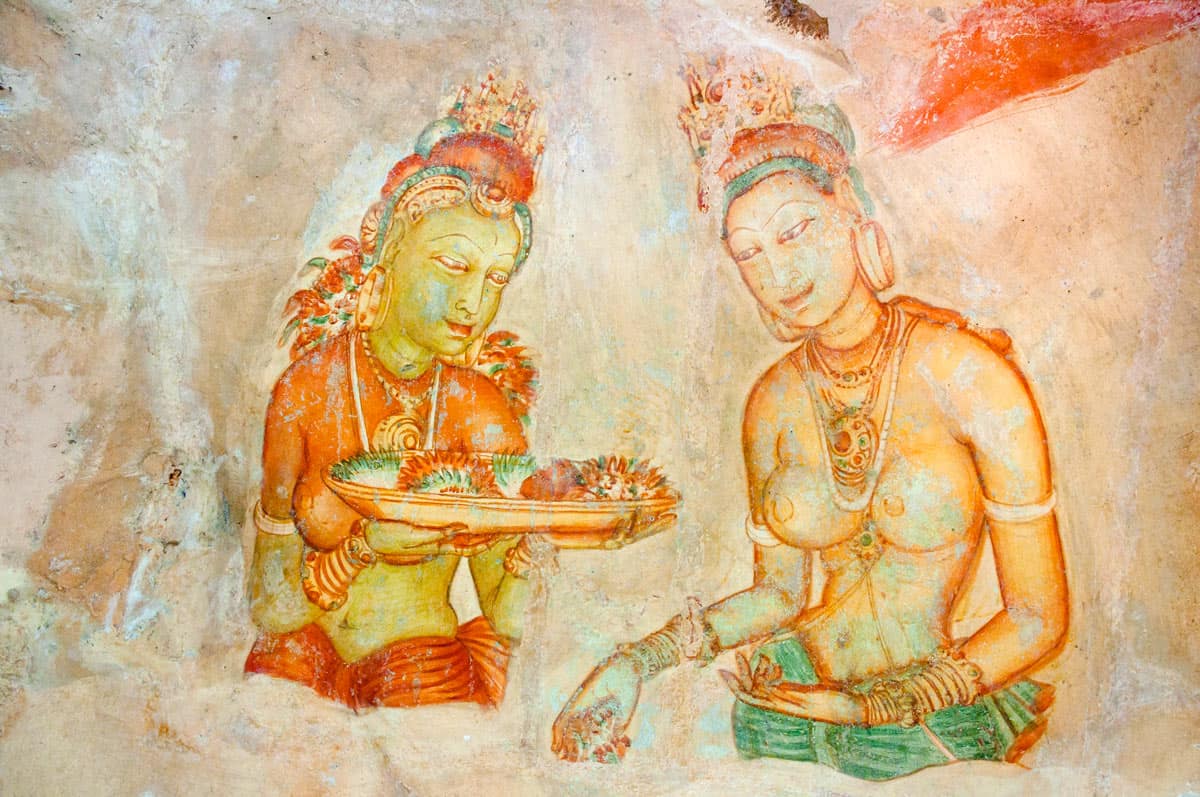
About halfway up, a spiral metal staircase leads to a sheltered rock face, painted with beautiful frescoes of bare-breasted women (believed to have belonged to the king’s harem).
At one time, 500 of these beguiling ladies – holding flowers and baskets of fruit – decorated the rock’s “waistband.” But only 19 are visible today.
Just past the colorful Sigiriya frescoes, there’s the Mirror Wall. It was polished so highly in ancient times that the king supposedly could see his reflection in it.
Through the lion’s gate
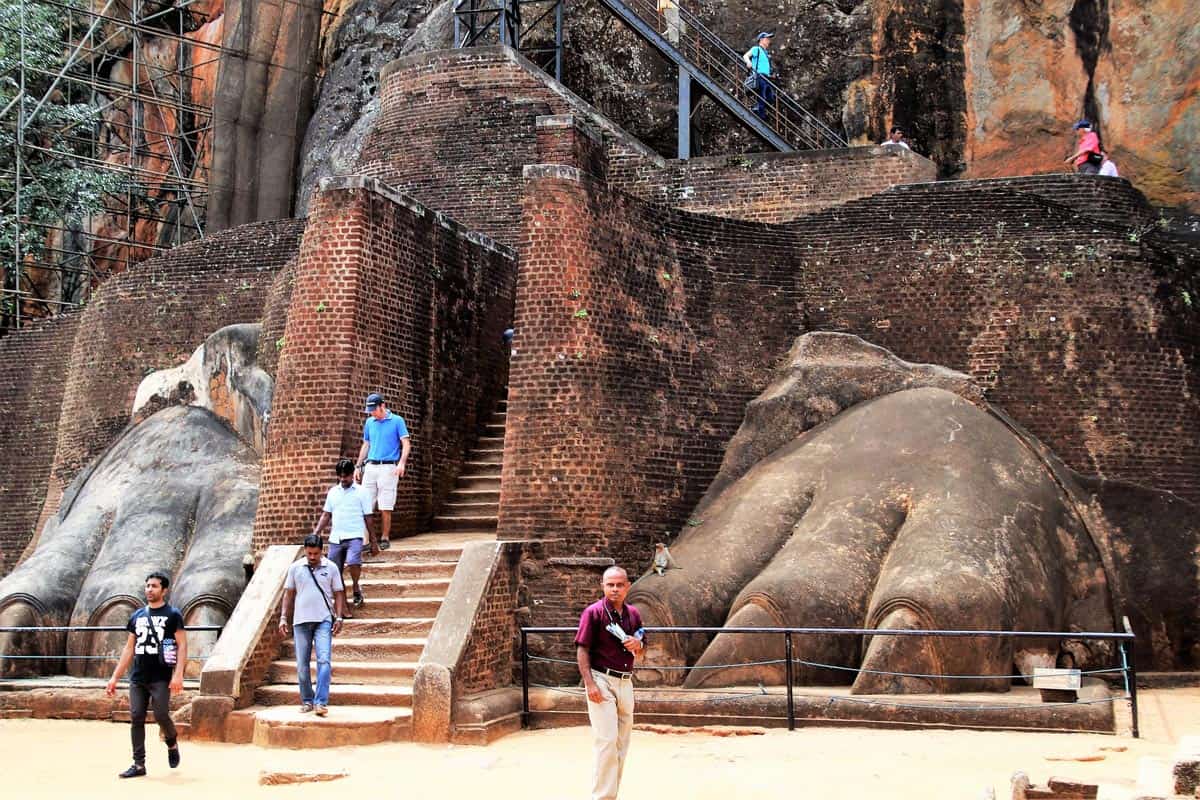
Keep climbing and you eventually reach a large plateau with two enormous stone lion’s paws. They guard the final staircase to the summit.
The last climb between the lion’s paws – up through what was once the mouth of a gigantic lion – is the most challenging bit, especially if heights make you nervous. (Many people turn around here.)
The reward at the top
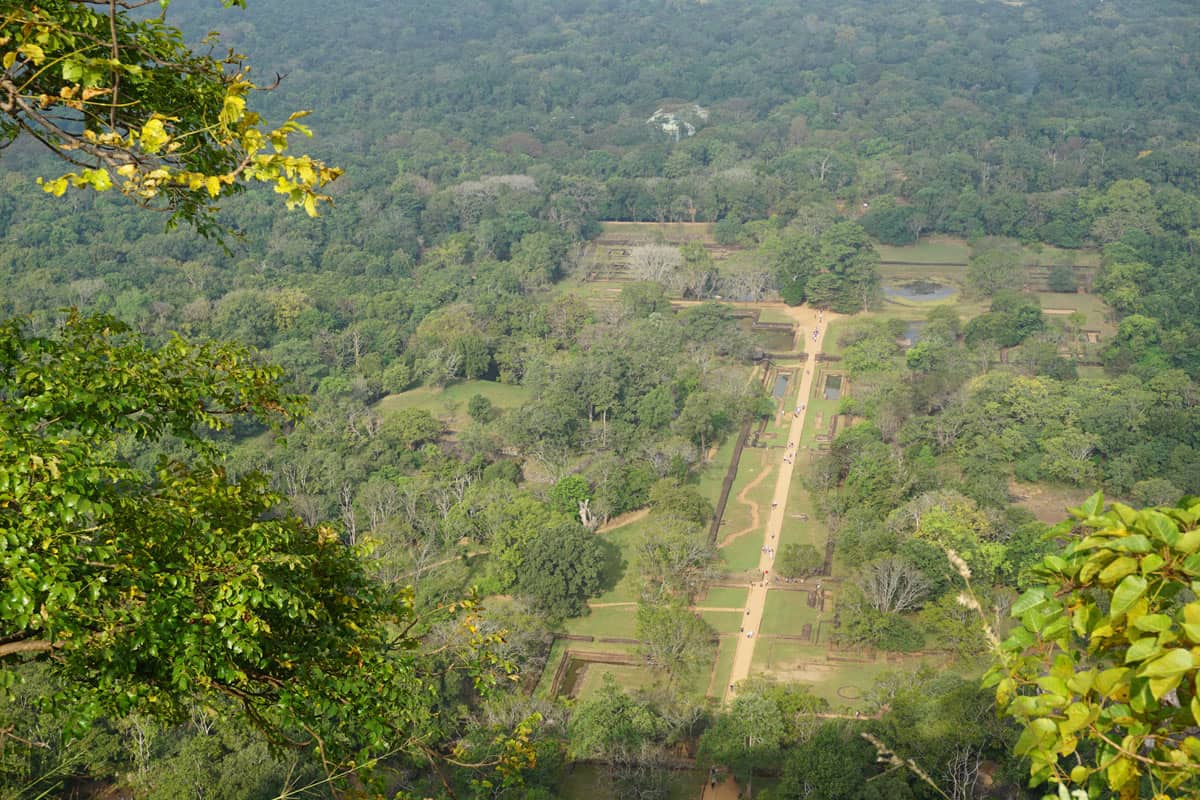
Once we reached the summit, we were so high above the emerald plains below, it seemed we could touch the cloudless sky. Perhaps that’s how Kashyapa felt? No wonder he wanted his Sky Palace up here!
But no one knows for sure why the king built his palace on top of Sigiriya. Some believe it was meant to symbolize a gateway to the heavens. Others think it was primarily a fortress.
Today, only red-brick foundations and a vast pool remain. But we could imagine the splendor of the palace that once crowned the rock.
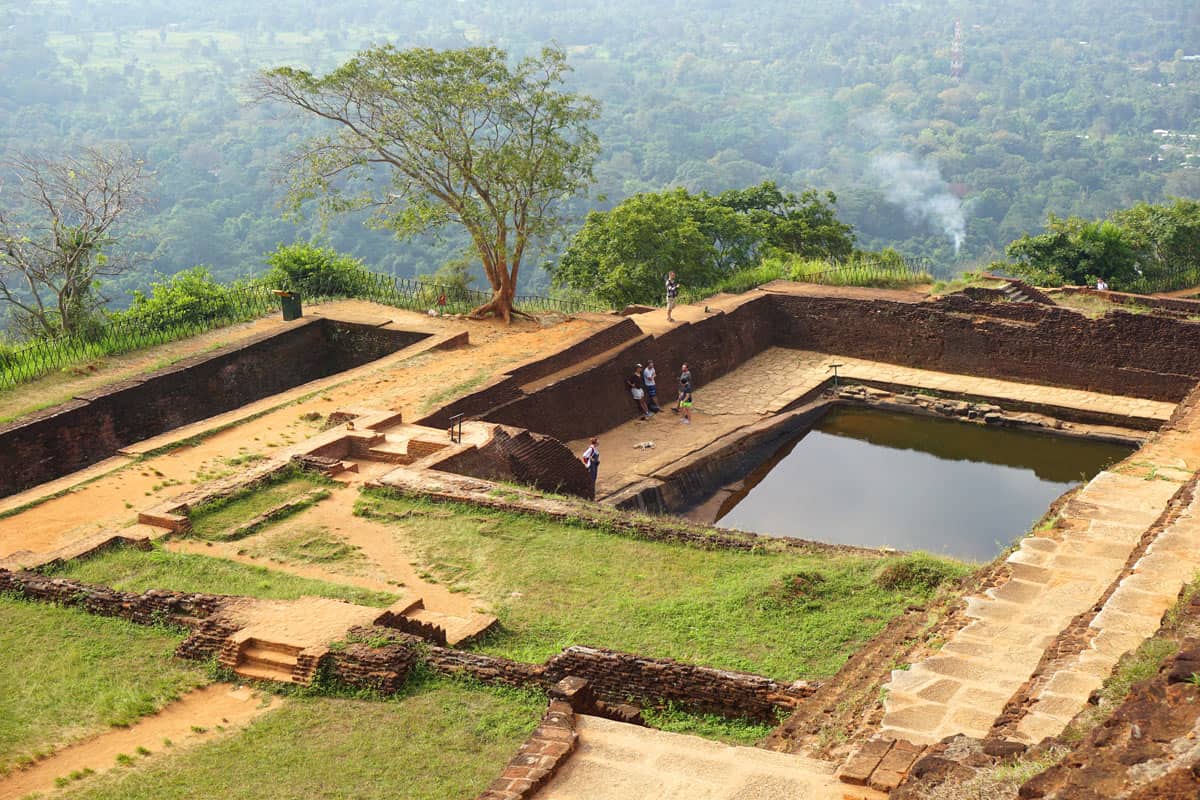
Sigiriya has sometimes been called the “Eighth Wonder of the World.” And really, hauling all the materials up this massive rock to create such an architectural marvel – complete with elaborate landscaped water gardens at its base – still seems almost impossible.
Then there are the views.
Beyond the palace ruins, a sea of green jungle stretches seemingly forever in every direction.
It was one of those views that made us linger longer than planned – until we saw the conga line of people making their way up below. That was our cue to make a beeline back down before we had to squeeze past too many of them on the stairs.
Tip
Go early in the morning or late in the afternoon, when it’s cooler. And wear comfortable shoes, not flip-flops.
We went early, before the day heated up, and were back at our nearby hotel (Water Garden Sigiriya) in time for a late breakfast. But we hear the Sigiriya paintings are especially beautiful in the late-afternoon light.
2) Sacred city of Anuradhapura
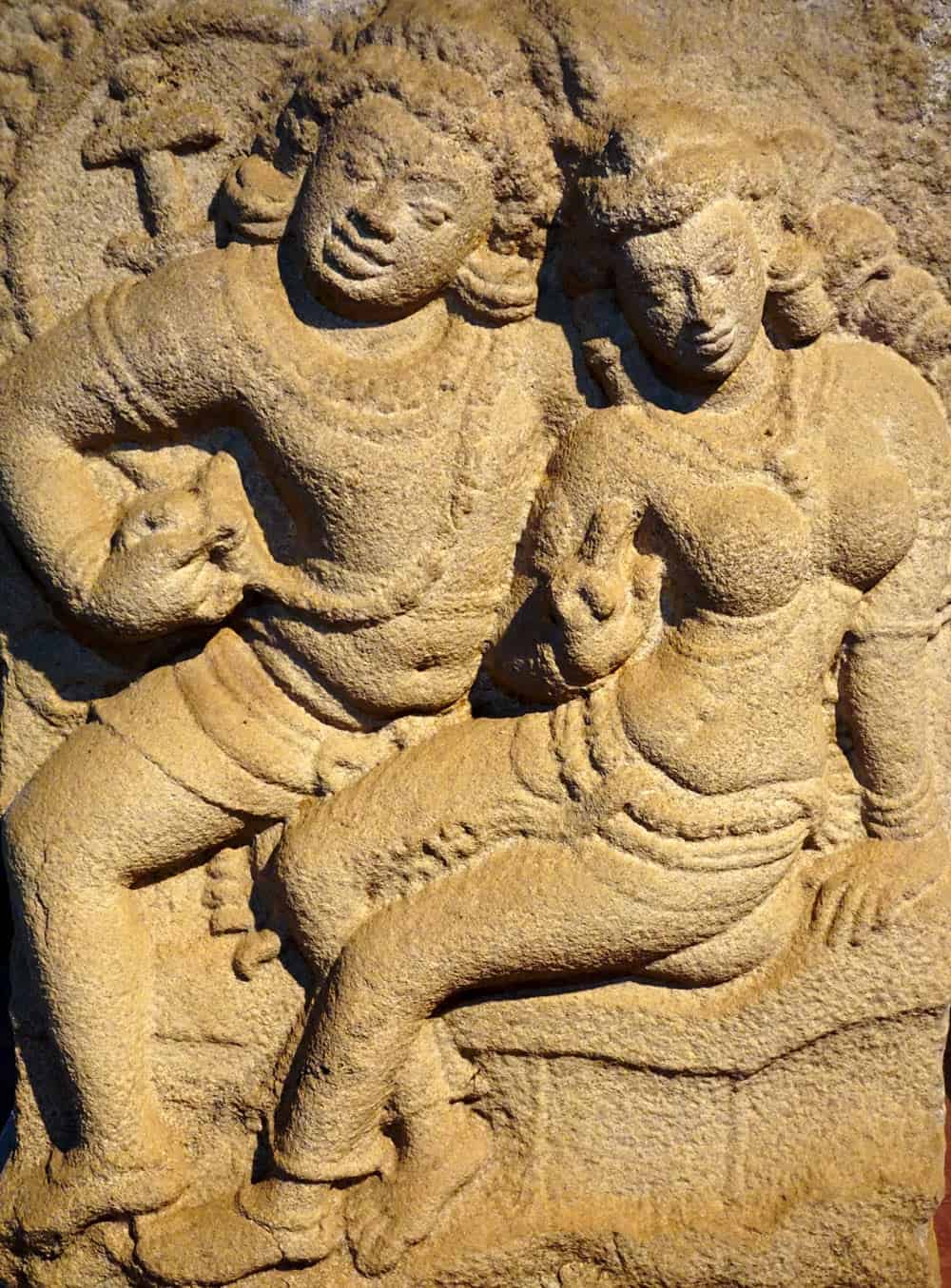
Anuradhapura feels less like an archaeological site and more like an entire lost city – which it is.
It was Sri Lanka’s first great capital. And it flourished for more than 1,000 years, from the 4th century BC to the 11th century AD.
It’s enormous. Ancient monasteries, bathing ponds, crumbling temples and colossal stupas are scattered across some 16 square miles of leafy countryside.
The “Great Stupa”
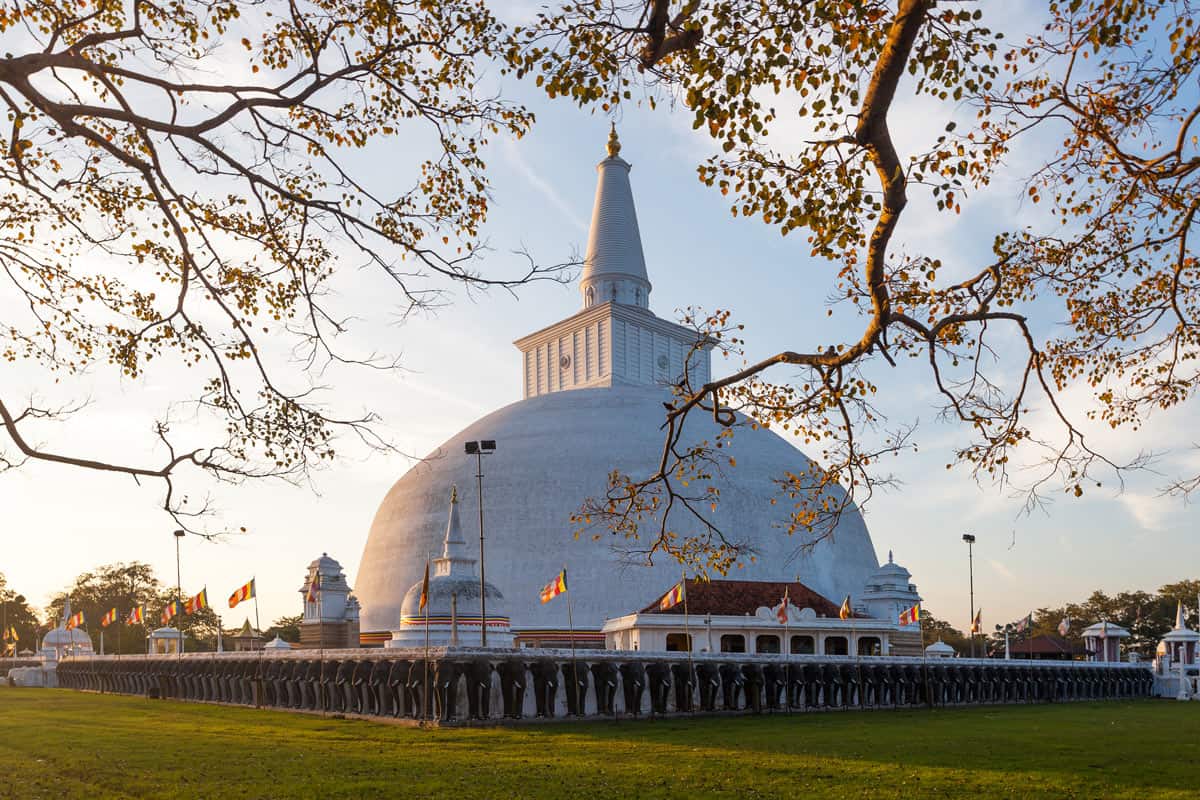
We were particularly struck by the Great Stupa (or Great Dagoba), Ruwanwelisaya. (“Dagoba” is the traditional Sri Lankan term for a stupa.)
This huge white stupa rises almost dreamily above the trees, encircled at its base by some 1,900 sculpted stone elephants.
Originally built in the 2nd century BC – and once one of the largest manmade structures in the world (rivaling Egypt’s Pyramids!) – it’s still an important place of worship today.
That’s one of the things we loved about Anuradhapura.
These aren’t ruins that have simply been roped off and preserved for tourists. Buddhist pilgrims still come dressed in white, lighting incense candles and making offerings of lotus flowers.
The world’s oldest tree
We also saw the sacred Sri Maha Bodhi tree. It’s believed to have grown from a cutting of the original Bodhi tree in India under which the Buddha attained enlightenment.
Planted more than 2,000 years ago, it’s considered the oldest living human-planted tree in the world (with a known planting date).
Tip
Anuradhapura is the largest of Sri Lanka’s ancient cities, so don’t expect to see it all on foot.
You can bicycle between many of the sights – which is how we got around. Or you can explore the sprawling archaeological area by tuk-tuk or with a car and driver (like on this private 4- to 5-hour Anuradhapura tour).
3) Mihintale
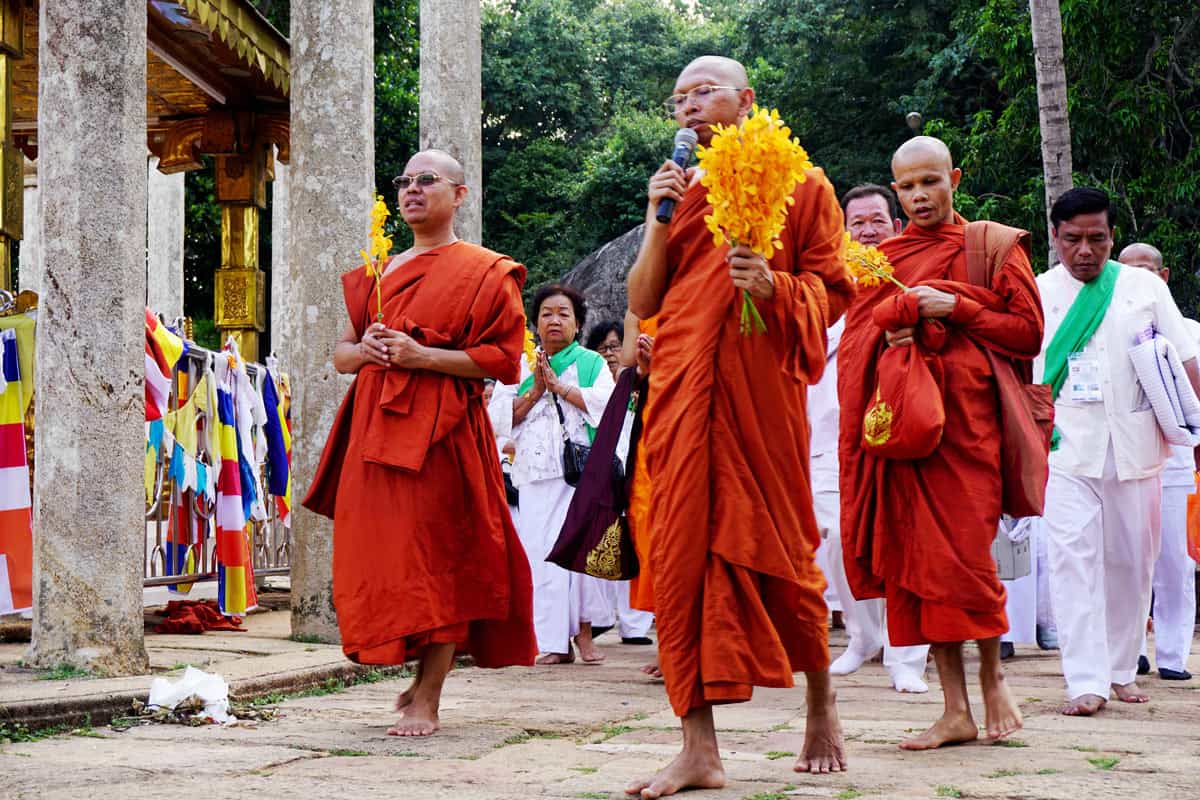
Just outside Anuradhapura, we visited Mihintale – one of the most peaceful ancient sites in Sri Lanka.
It’s also one of the country’s most sacred.
Where Buddhism took root
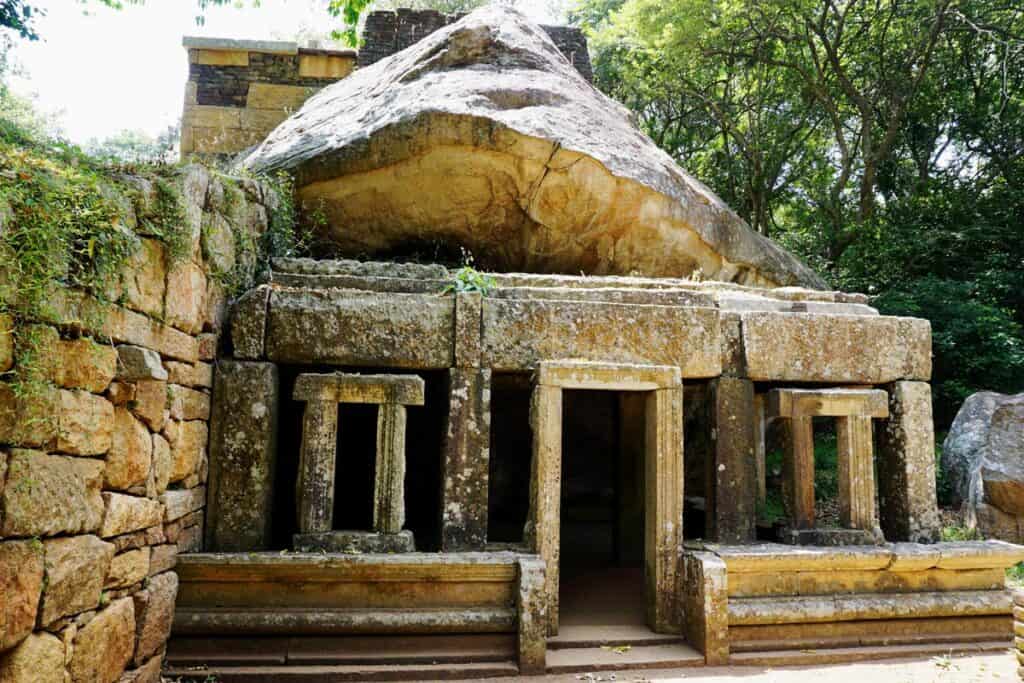
Mihintale is regarded as the birthplace of Buddhism in Sri Lanka.
Legend has it that in the 3rd century BC, Emperor Ashoka of India sent his son, the Buddhist monk Mahinda, to Sri Lanka to spread the Buddha’s teachings.
Here on Mihintale’s frangipani-forested hill, Mahinda came across King Devanampiyatissa while the king was hunting. He persuaded him not to kill a stag. The king eventually converted to Buddhism and established a monastery on this spot. Buddhism then spread across Sri Lanka.
Today, the hillside is sprinkled with white stupas, shrines, caves and the remains of that ancient monastery.
Getting to them involves climbing – again!
A long stone staircase leads up through the trees, and the higher we climbed, the more beautiful the views became.
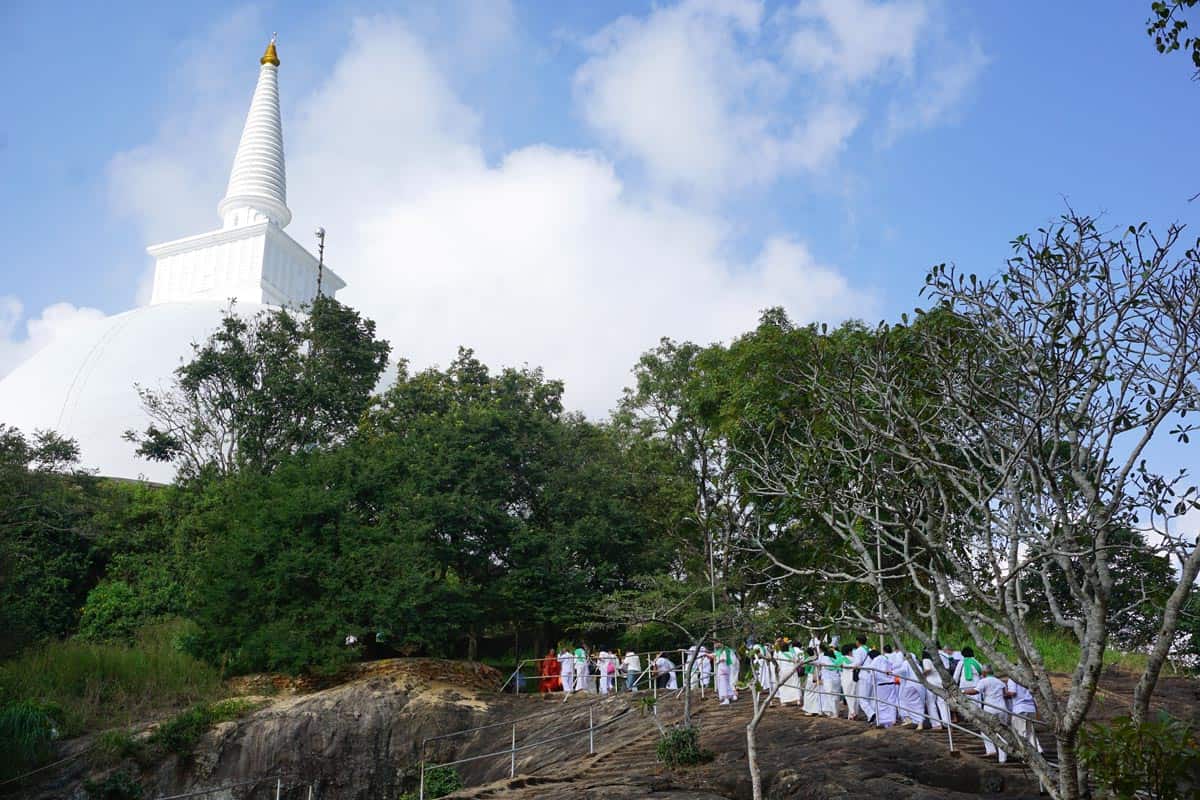
The monastery ruins
One of the most intriguing ruins of the monastery’s refectory our guide showed us? The “rice boat.”
We sometimes have difficulty cooking just for the two of us. This stone trough – at least 30 feet long – was used to make enough rice to feed 2,000 monks, twice a day!
We also stopped at the ruins of the monastery hospital to look at a peculiar coffin-like structure.
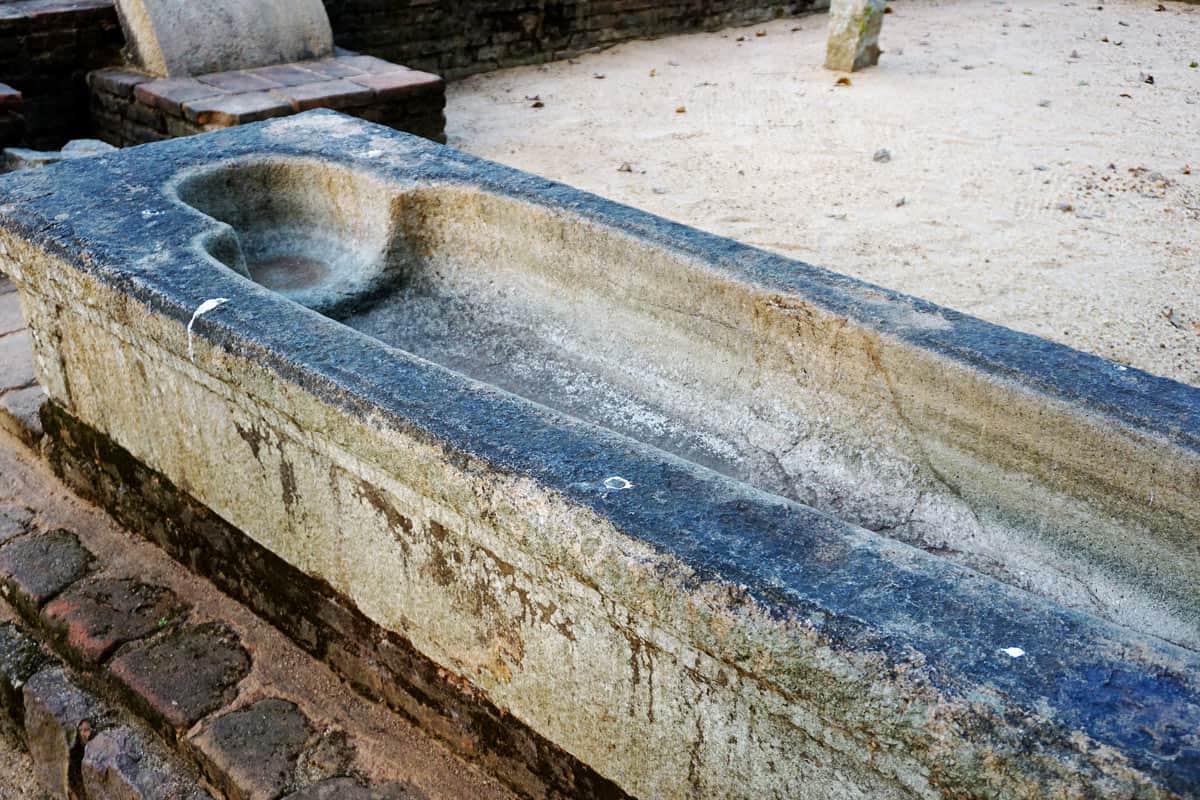
The inside of this granite medicinal trough is carved in the shape of a human body. A patient would lie inside and soak in healing oils – its body-hugging shape meant less of the precious oil was needed.
Who knew! Some 400 years before the earliest hospital appeared in Europe, monks were caring for the sick in hospitals in Sri Lanka.
Climbing Aradhana Gala
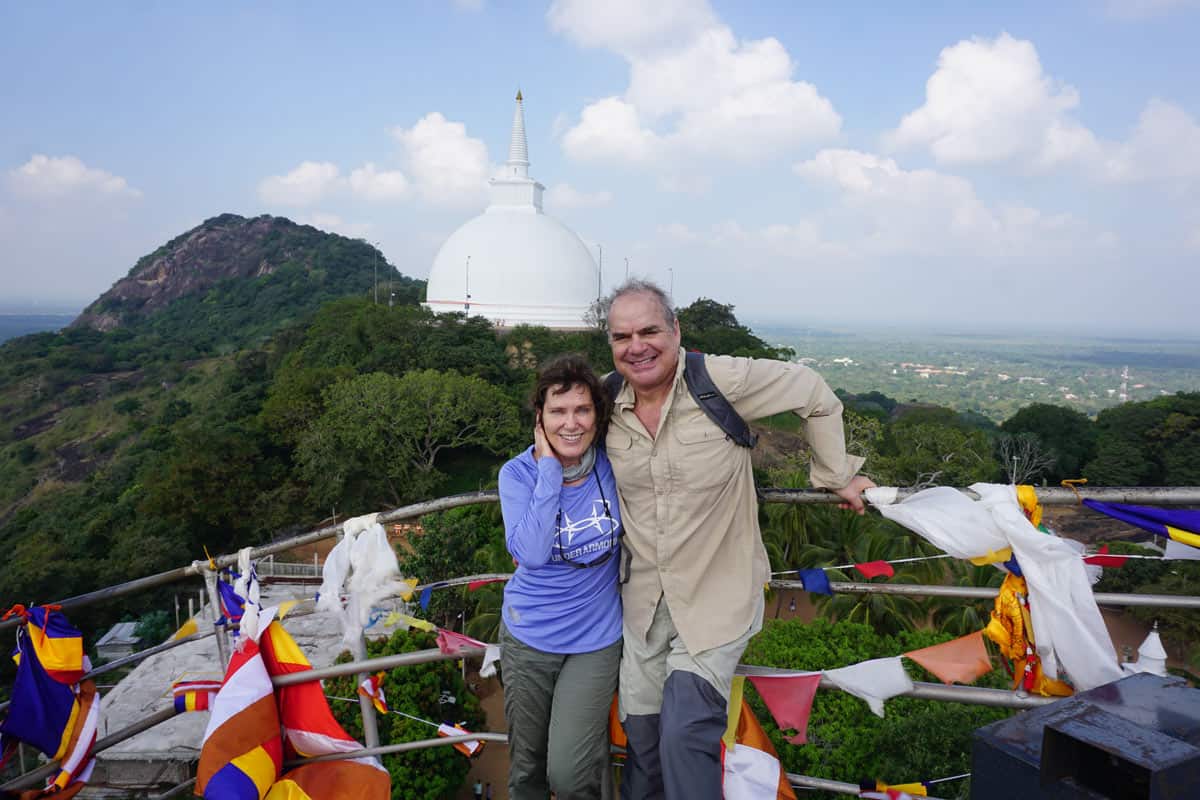
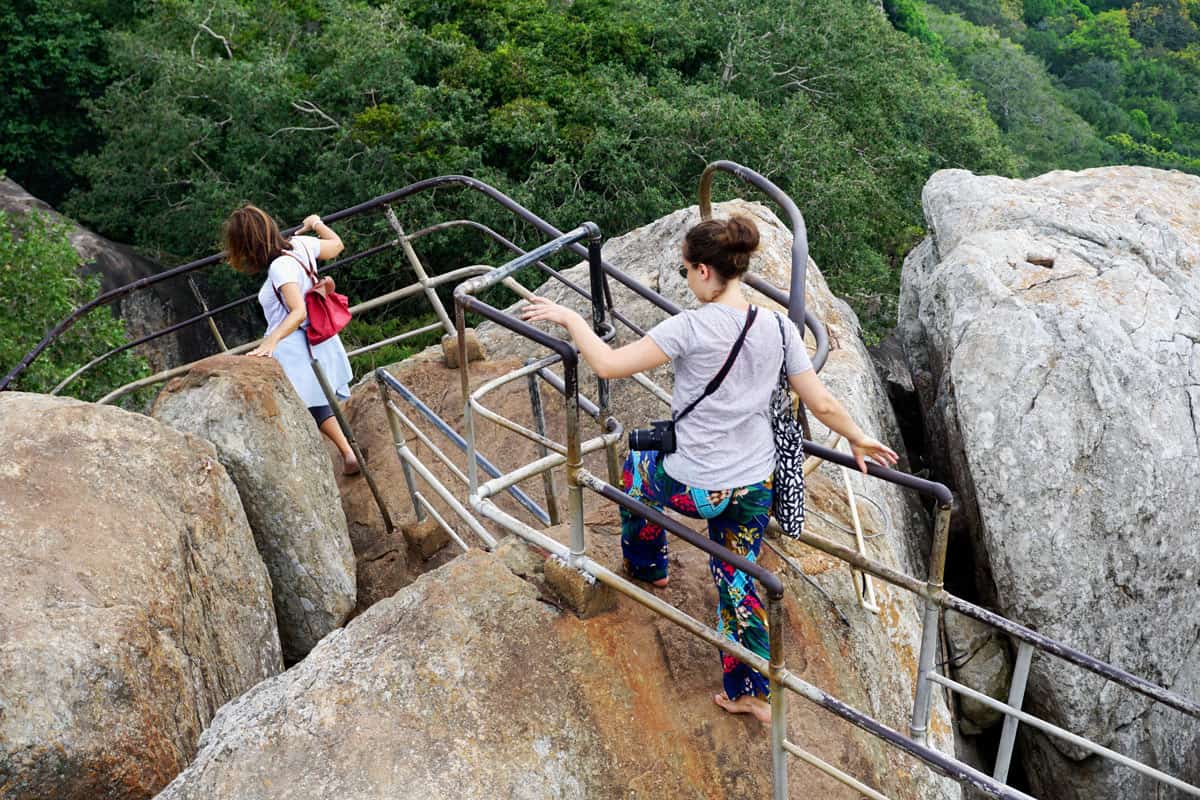
We also climbed Aradhana Gala, the rocky outcrop that rises above the monastery complex.
Because it’s a sacred Buddhist site, we had to leave our shoes behind and make the final climb barefoot. Handrails help on the steeper sections, but scrambling over sun-warmed rock in bare feet certainly made the climb memorable!
At the top, we were wowed with sweeping views over the surrounding countryside, including the sight of the brilliant white Maha Seya stupa, standing out against the green forest.
Tip
Combine Mihintale with Anuradhapura rather than making a separate trip. They’re only about 8 miles apart.
And don’t come expecting another Sigiriya. Mihintale doesn’t have quite the same monumental wow factor – and we liked it for precisely that reason.
It feels serene and spiritual, especially when you find a quiet corner away from other visitors. It was much less busy than Sigiriya when we visited too, adding to that sense of tranquility.
4) Golden Temple of Dambulla
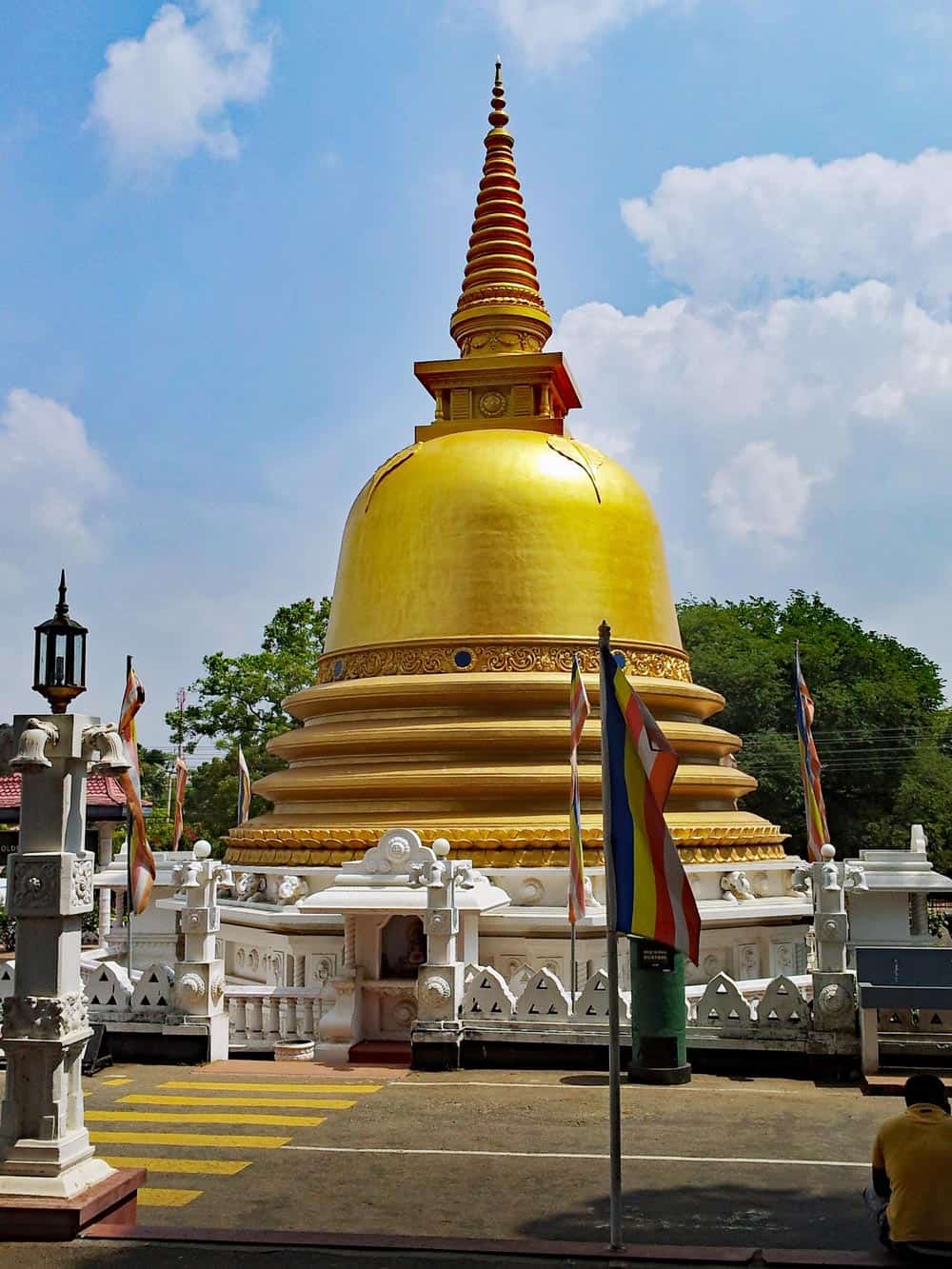
We’d seen plenty of Buddhist temples before visiting Sri Lanka.
But Dambulla is different.
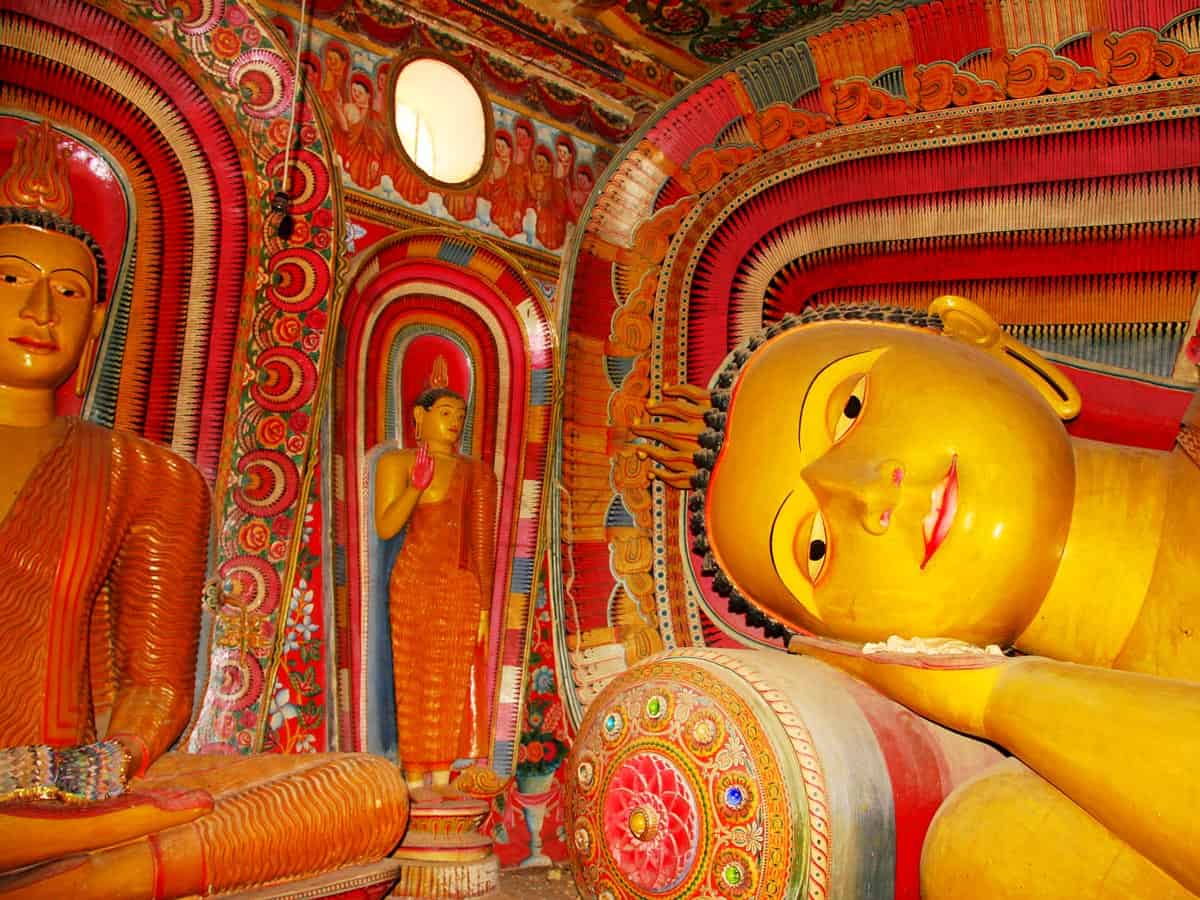
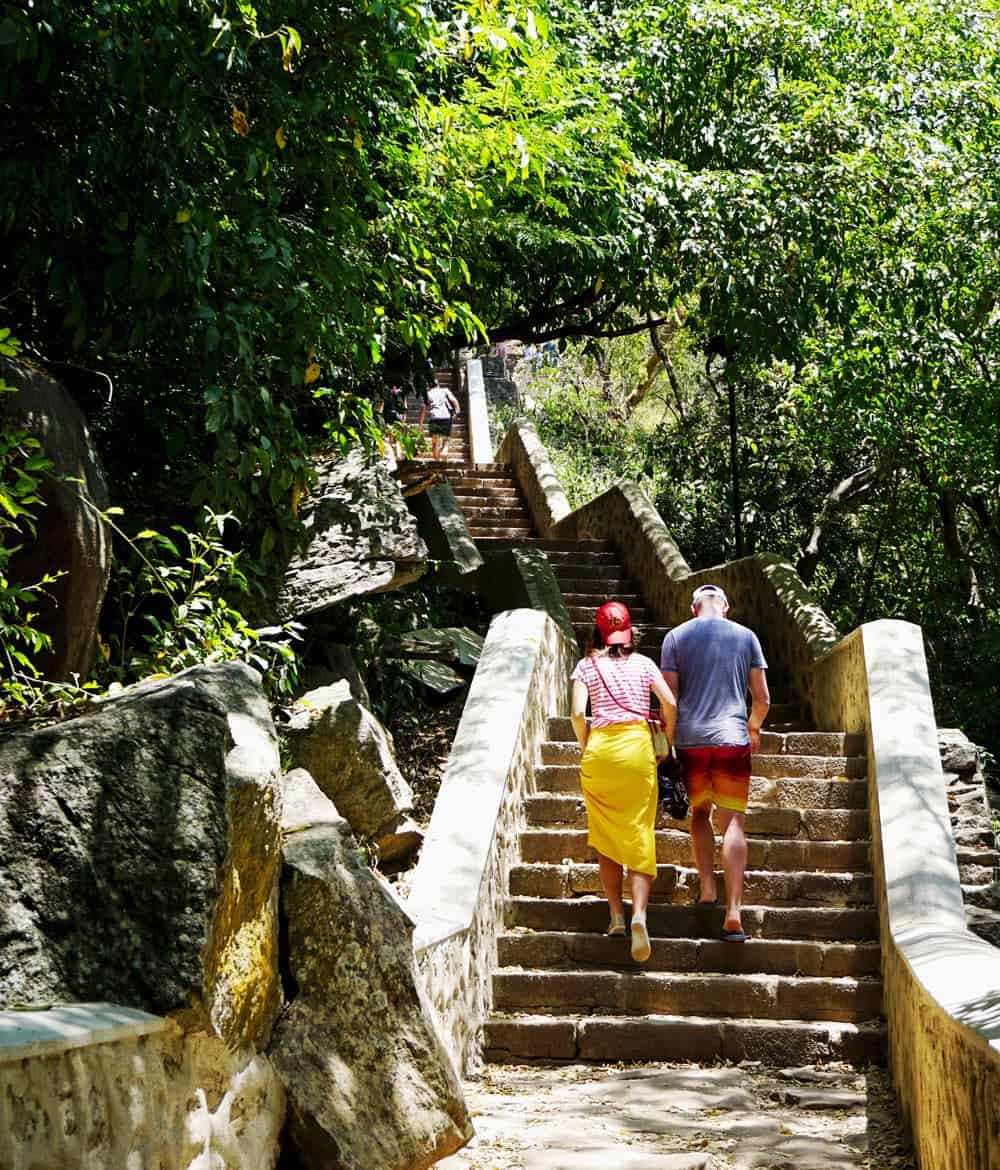
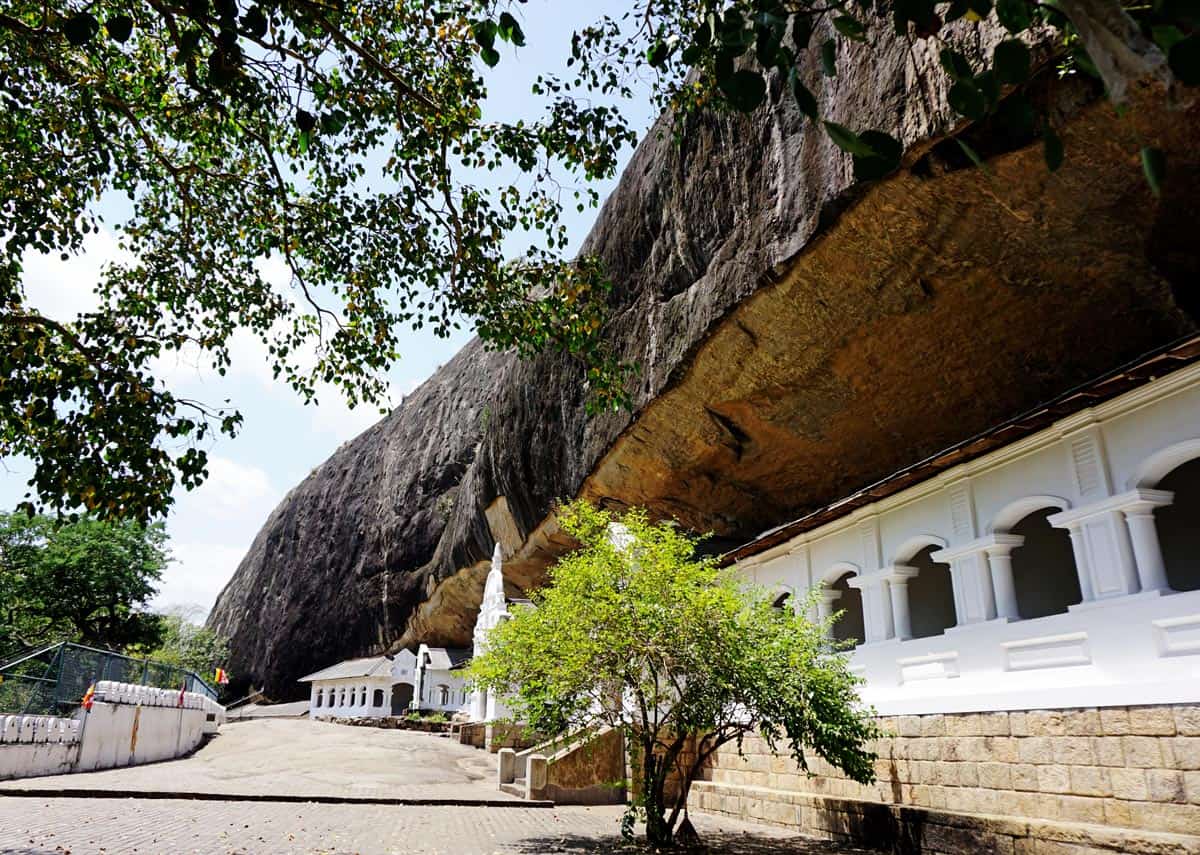
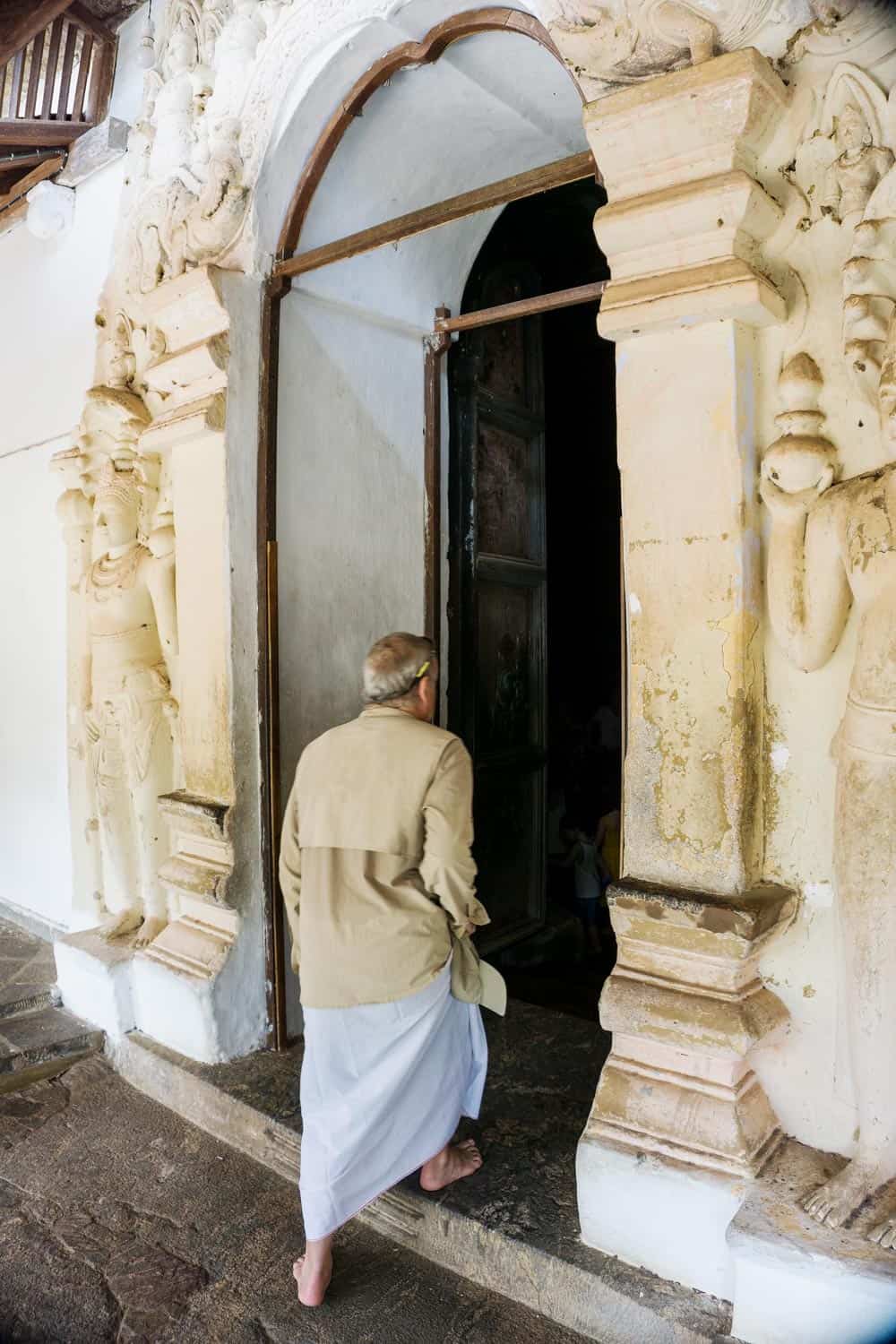
Instead of one grand temple, you climb a rocky hillside to discover a series of ancient caves filled with Buddha statues and brilliantly painted walls and ceilings.
The sacred Dambulla cave temple complex (and UNESCO World Heritage Site) dates back more than 2,000 years, although much of what you see today was restored and embellished by later Sri Lankan kings.
There are 80 documented caves in all, but five are the ones you come to see. Together, they contain some 150 Buddha statues, along with statues of Sri Lankan kings and Hindu deities.
But it’s the sheer richness of the interiors that grabbed us.
Almost every surface is decorated – reclining Buddhas, seated Buddhas, standing Buddhas and intricate paintings in deep reds, golds and ochres covering the cave ceilings.
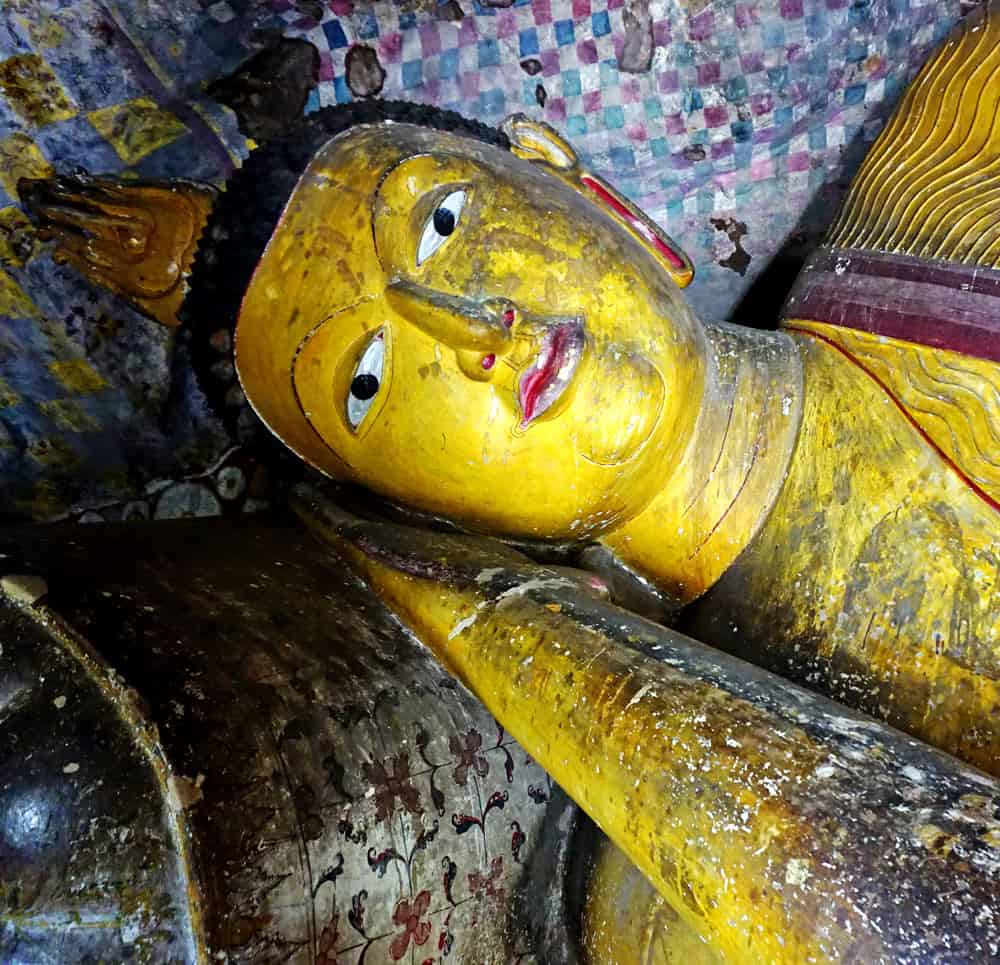
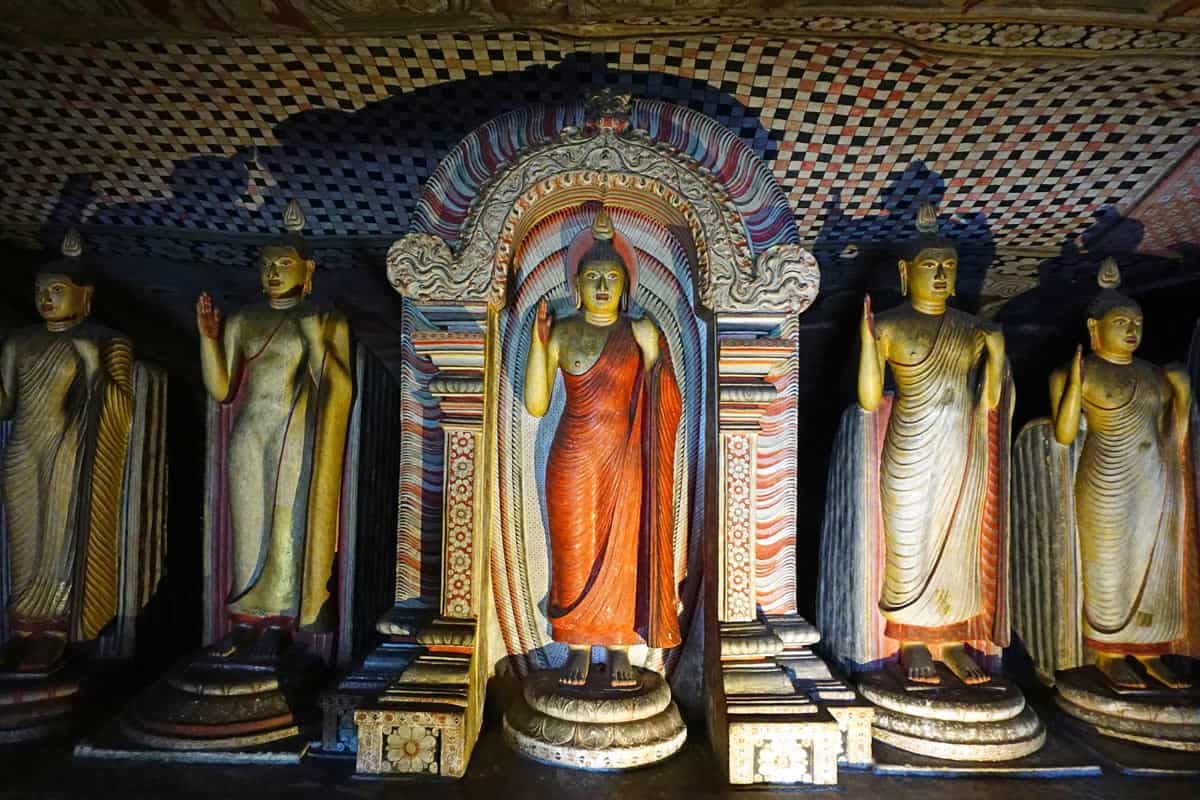
Cave No. 2, Maharaja Viharaya, was our favorite.
It’s the largest and most elaborate cave. And the tall Buddha standing inside on a stone lotus pedestal, beneath an ornate dragon archway, really stopped us in our tracks.
And, this being Sri Lanka, there were cheeky monkeys hanging about outside too!

Tip
You have to remove your shoes or sandals before entering the caves. So bring socks to wear. The stone outside gets seriously hot under the tropical sun for bare tootsies!
And if you visit in the late afternoon, when crowds tend to thin, you might even have some of the caves almost to yourself.
Around dusk, keep an eye out for hundreds of swallows that swoop around the cave entrances.
5) Ancient city of Polonnaruwa
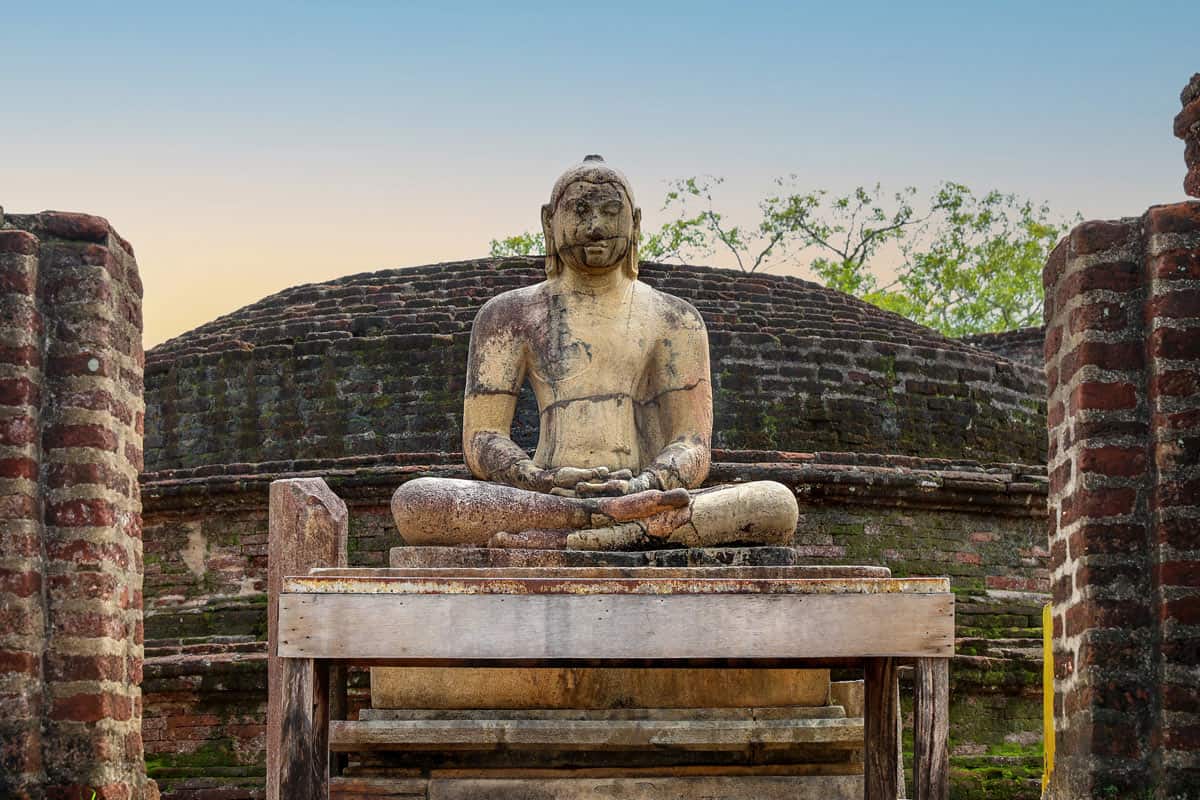
Polonnaruwa is the prettiest of all the ancient cities in Sri Lanka. It isn’t as spread out as Anuradhapura either, which makes it easier to explore.
Polonnaruwa took over Anuradhapura as Sri Lanka’s capital and reached its golden age in the 12th century.
Today, hundreds of ruins remain within the UNESCO-listed archaeological park.
What to see in Polonnaruwa
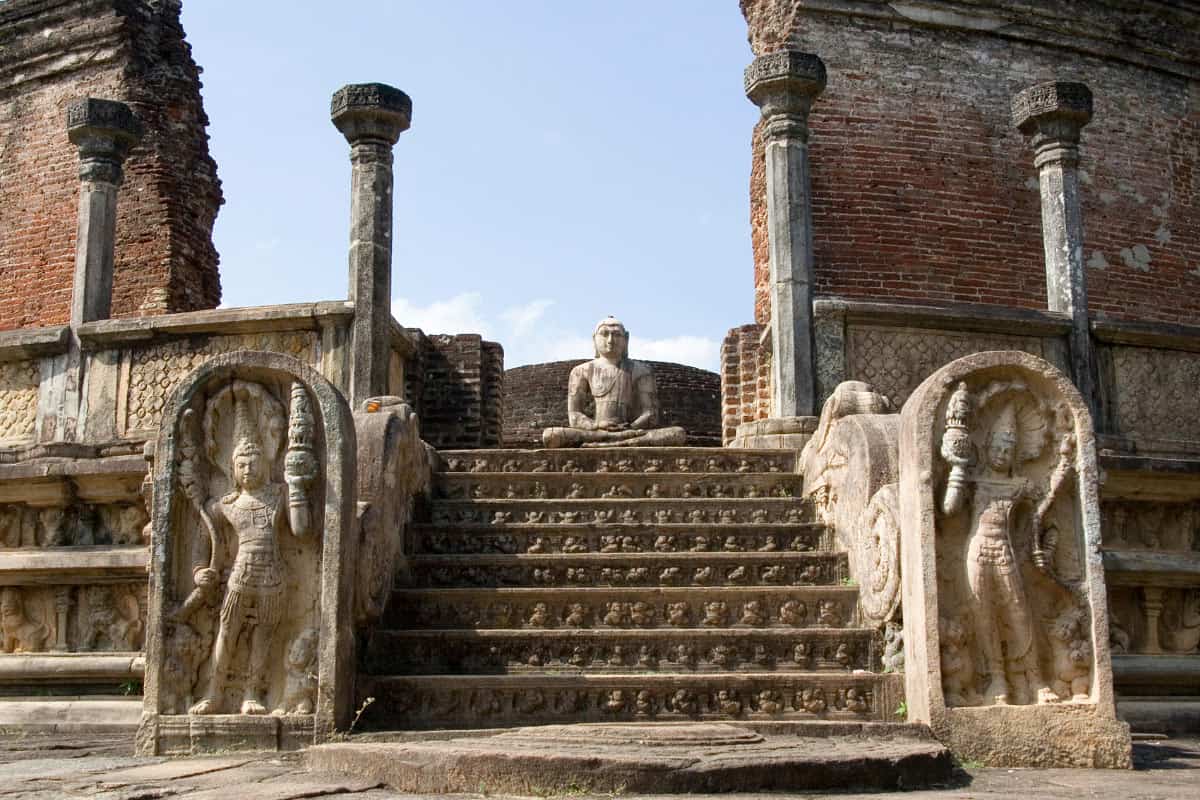
One highlight is the Sacred Quadrangle. It’s a collection of some of Polonnaruwa’s most impressive religious buildings.
At its heart sits a circular relic house ringed by carved stone walls, decorated with lions and lotuses. Four ornate stone staircases lead inside to four seated Buddha statues.
Other must-see Polonnaruwa ruins?
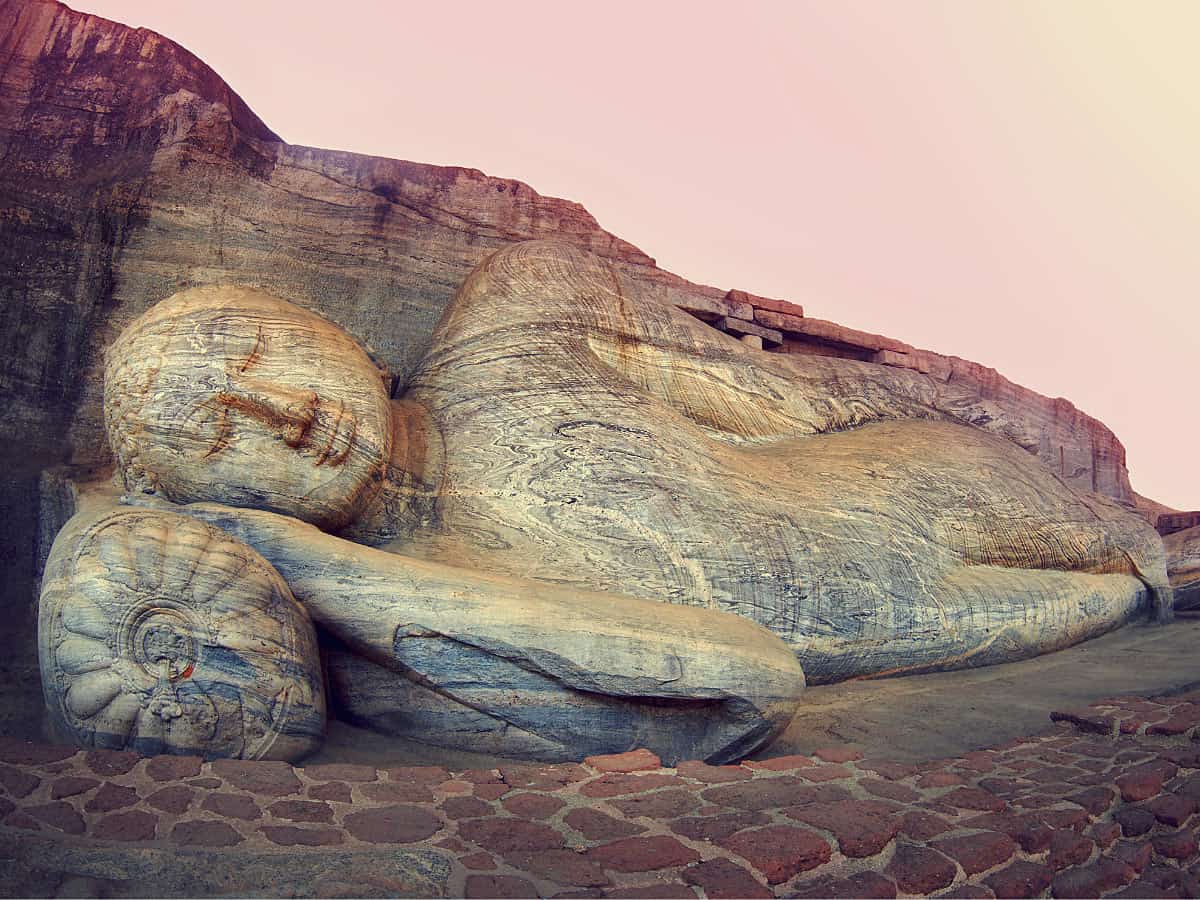
- Gal Vihara – Four magnificent Buddha figures carved directly out of a single granite rock face. (The enormous reclining Buddha, stretching 46 feet, is particularly stunning!)
- Kiri Vihara – A beautiful milk-white stupa dating back to the 12th century.
- The Royal Palace – Brick wall ruins of what was once a grand multi-story palace.
- Audience Hall – Garded by rows of carved stone elephants.
- Kumara Pokuna – The king’s bathing pool, complete with crocodile-mouth water spouts. Even ancient royalty apparently appreciated a good pool!
Bike or drive?
Because the site is mostly flat, bicycles are a popular way to explore. But remember it’s hot! And there isn’t much shade when you’re pedaling between the ruins.
We suggest driving between the main areas in an air-conditioned vehicle, hopping out as needed to explore each cluster of ruins on foot. (Tuk-tuks are also available.)
Tip
If your itinerary already includes Sigiriya and Dambulla, Polonnaruwa fits nicely into the same Cultural Triangle trip.
And if you’re short on time, we’d skip Anuradhapura.
Combining Polonnaruwa, Sigiriya and Dambulla cuts down on driving – and helps avoid a little ancient-temple overload – while still giving you a fabulous mix of rock fortress, cave temples, giant Buddhas and atmospheric ruins.
6) Kandy’s Temple of the Tooth
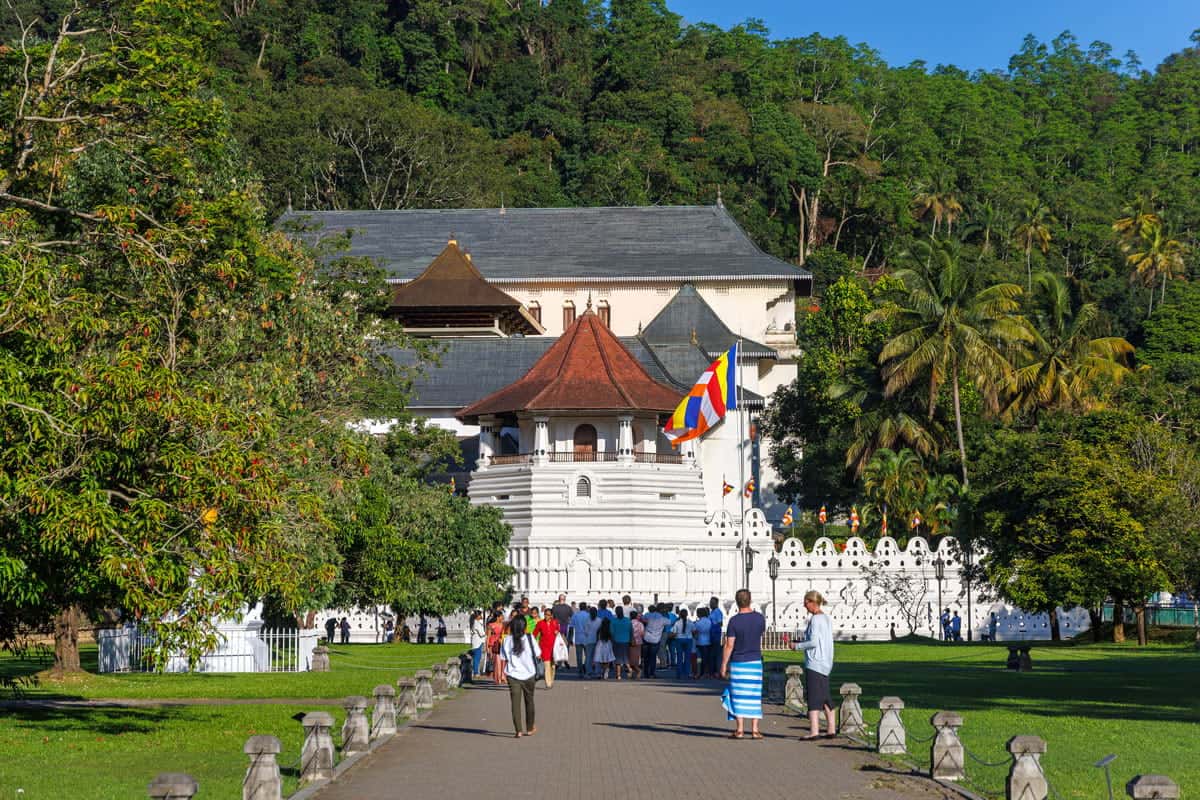
Sri Lanka’s last royal capital, Kandy is a bustling and somewhat scruffy modern city today. But it’s worth visiting, if only for the Temple of the Sacred Tooth and its golden canopy over the inner shrine room
The story behind the sacred tooth
The temple supposedly houses one of Buddha’s teeth, brought to Sri Lanka in the 4th century AD, hidden in a princess’s hair.
This wasn’t just any sacred relic. Whoever possessed the tooth was believed to have the right to rule the country.
You can’t actually see the tooth itself.
It’s tucked away inside the smallest of seven nested golden caskets. The gem-encrusted caskets are shaped like stupas and kept inside an inner locked chamber, its entrance flanked by huge elephant tusks. Over the sacred shrine gleams a gold-plated canopy.
Inside the temple
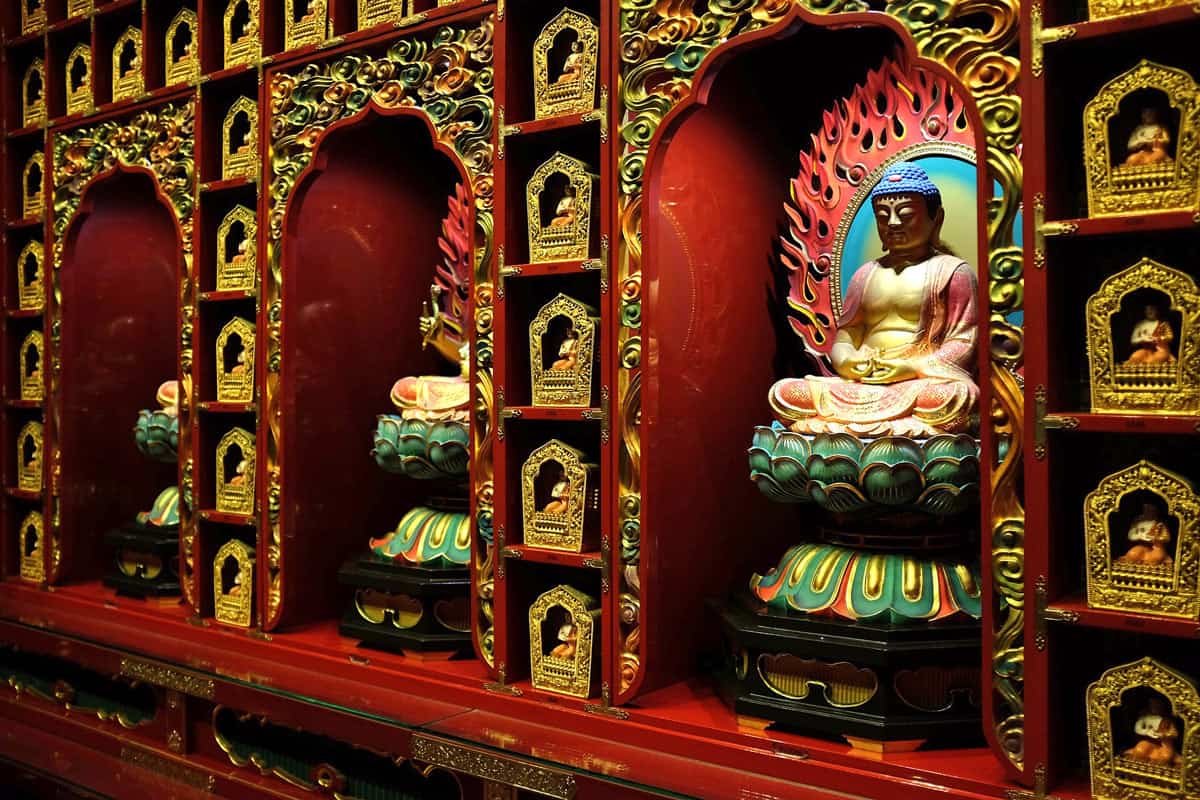
The temple itself is gorgeous. We spent more than an hour, admiring its elaborately carved woodwork, painted ceilings and beautiful ivory, lacquer and metal details.
Mingling with the flow of worshippers carrying lotus blossoms and other offerings, we found the whole experience wonderfully atmospheric.
Meet a beloved elephant
Before leaving the temple, slip inside the tiny museum preserving Raja the Tusker, one of Sri Lanka’s most famous ceremonial elephants. For decades, he carried the sacred tooth relic casket during Kandy’s spectacular Festival of the Tooth.
Tip
Try to visit the temple during one of the three daily puja ceremonies, when drummers announce the ceremonial opening of the chamber housing the tooth relic.
It’s busier, but this is when the temple really comes alive. Worshippers crowd inside to file past and see the outermost golden casket enshrining the tooth.
7) Royal Botanical Gardens, Peradeniya
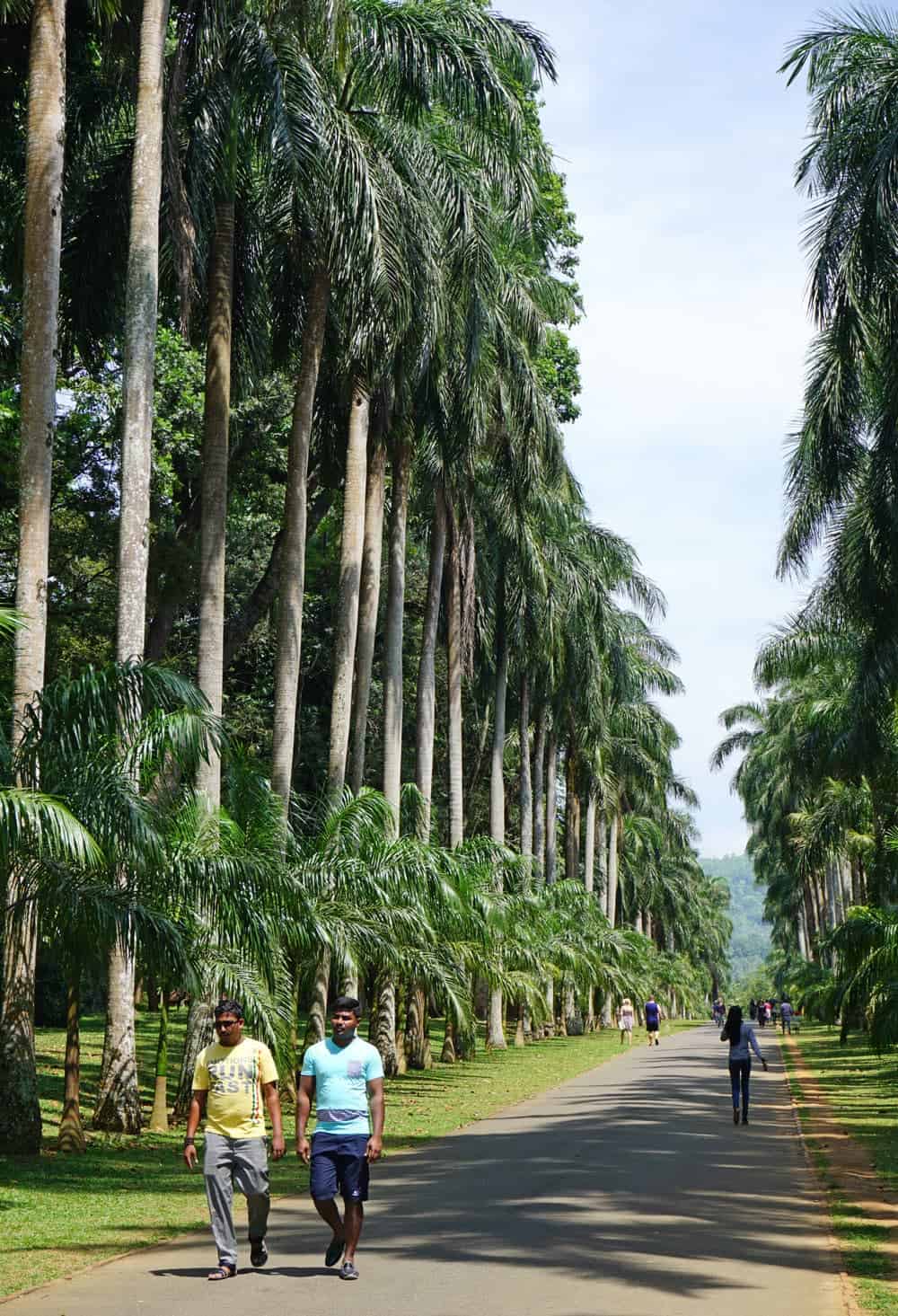
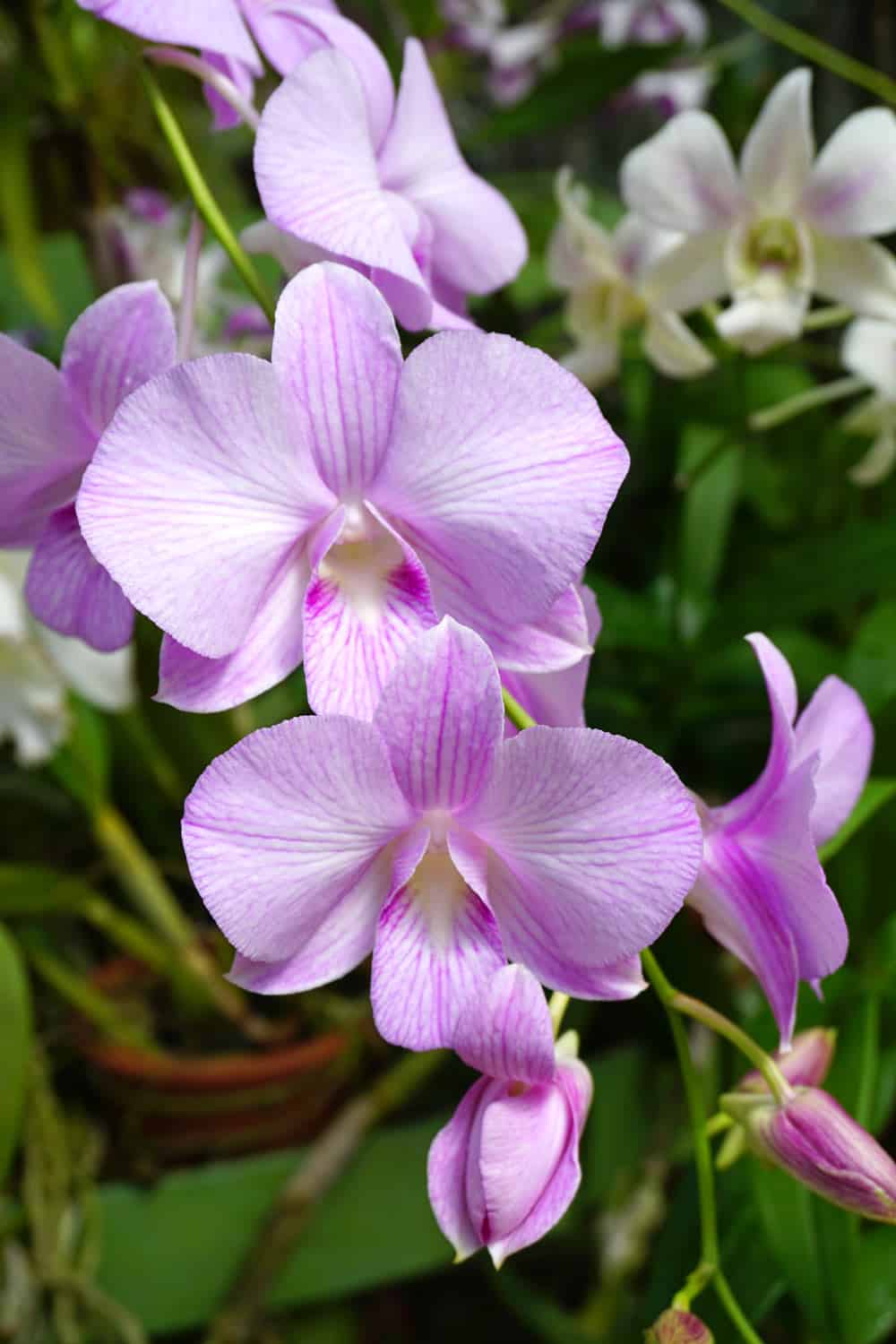
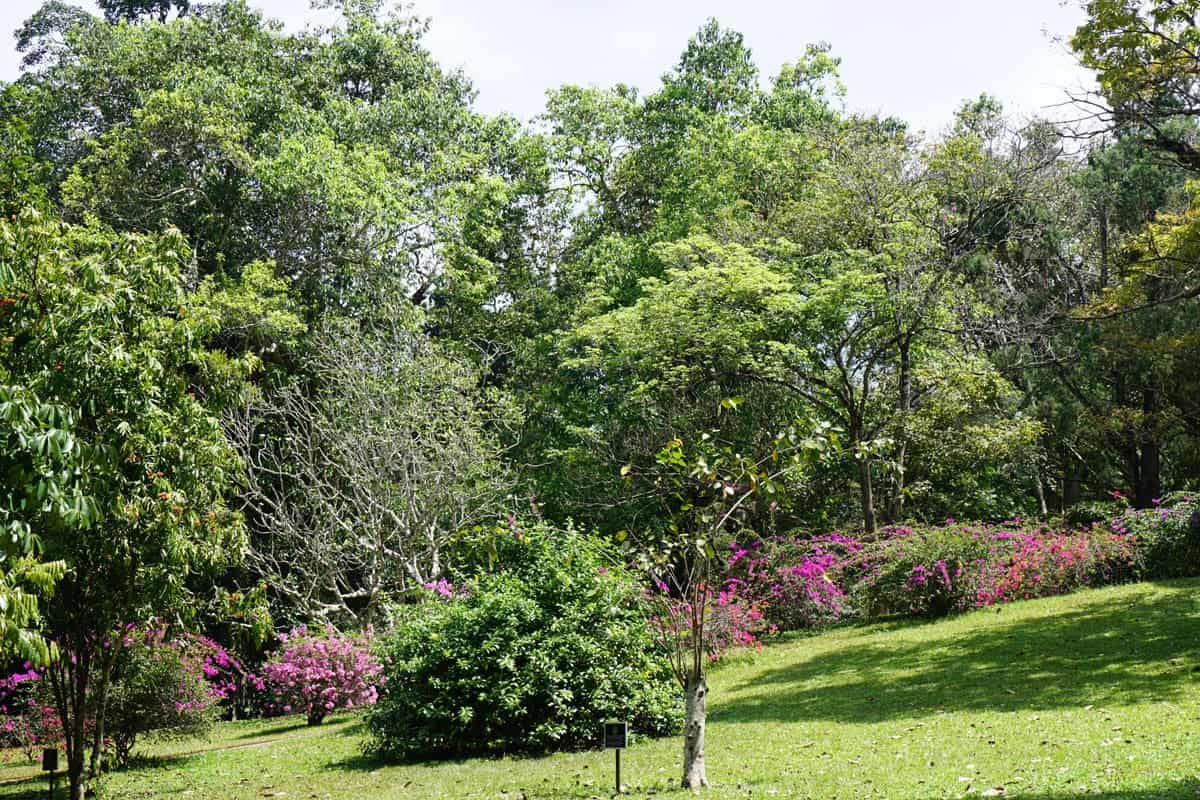
Not all historical places in Sri Lanka involve crumbling ruins and ancient stupas.
Some come with towering palms, tropical flowers and lawns made for lingering.
As we spent three days in Kandy, we had lots of time to visit the Royal Botanical Gardens, a short tuk-tuk drive from the city center.
The gardens were once reserved for Kandyan royalty. Later, under British rule, they were turned into a botanical garden. Today, they spread across 147 lush acres beside the Mahaweli River.
We happily wandered around for several hours.
What to see in the gardens
There’s plenty to make you stop and stare – orchids, enormous tropical trees, brilliantly colored flowers, extraordinary cannonball trees (named for their huge round fruit) and the impressive Avenue of Royal Palms.
Oh, and there are monkeys too!
And because we adore them, we naturally spent too much time watching moms and babies scampering about, munching fruit and generally getting up to monkey business.
Tip
Allow at least two hours. Better yet, give yourself half a day and soak it up slowly.
Seven stops, one fascinating triangle
Ancient cities, sacred temples, grand ruins, gardens and more than a few steps – these are some of the best places to visit in Sri Lanka for history and culture lovers. (Actually, for anyone who likes a little adventure with their sightseeing!)
Have you visited any of them? What did you think? Tell us in the Comments section below.
Read our other Sri Lanka travel guides
- The Perfect Itinerary for Two Weeks in Sri Lanka
- 15 Gorgeous Luxury Hotels in Sri Lanka
- Visiting Kandy? Here’s What to See and Do
- 5 Gorgeous Galle Hotels for a Seriously Stylish Stay
- Ride the Gloriously Scenic Kandy to Ella Train
- A Tooth, a Temple and a Very Famous Elephant
- 5 Kandy Hotels That Are Something Special
Pin this Cultural Triangle travel guide
Our top travel tips and resources
→ Hotels | Booking.com is our go-to for scoring a “wow” hotel – or at least a decent one – often at lower rates than the hotel’s own website. (We especially like Booking.com’s flexible cancellation policy!) You can also find excellent discounted rates on Expedia, especially for hotels in the U.S. and Mexico.
→ Vacation homes, condos and rentals | We prefer and use Vrbo (Vacation Rentals by Owner).
→ Flights | For the best flights, we search on Google Flights first. Expedia and Kayak are then perfect for snagging the cheapest tickets. (They’re often non-refundable, though, so for more flexibility, we book directly with the airline, even if it costs more.)
→ Airport lounge access | We love (and have) Priority Pass for comfy lounge seats, free snacks and drinks, complimentary WiFi and sometimes even showers and spa services!
→ Tours | For the best local food, walking and other guided tours, plus skip-the-line tickets to attractions, check out Viator (a TripAdvisor company) and GetYourGuide.
→ Car rental | Renting a car can be a great way to explore off the beaten path. Discover Cars searches car rental companies for the lowest rates.
→ Travel insurance | SafetyWing is designed for frequent travelers, long-term adventurers and digital nomads. It covers medical expenses, lost checked luggage, trip interruption and more. We also have and recommend Medjet for global air medical transportation.
→ Travel gear | See our travel shop to find the best luggage, accessories and other travel gear. (We suggest these comfy travel sandals for city walking, the beach and kicking about.)
→ Need more help planning your trip? | Check out our travel tips and resources guide for airline booking tips, ways to save money, how to find cool hotels and other useful trip planning info.
If you make a booking or purchase through our site, we may earn a small commission (at no cost to you). Thanks!
About the authors

I’m itching to go to Sri Lanka too!
However, India keeps calling instead! I’ve been to India and will be going again in a few months, but people do tell me that both Sri Lanka and Nepal are better, and quite unique!
Hopefully, we’ll find out!
Oh, you’ll have to let us know. India is also on our travel wish list… So many places in the world to go!
Sri Lanka is a beautiful place to explore and your pictures say everything… It was very nice to read your blog on the best heritage sites in Sri Lanka. Thanks for posting.
Glad you enjoyed our post :-).