
Kandy Travel Guide: 9 Best Things to Do and Travel Tips
This post may contain affiliate links. If you make a purchase through them, we may earn a small commission (at no cost to you).
Kandy is a city that jolts your senses – sometimes rather rudely!
One minute, we were strolling beside serene Kandy Lake, watching ducks paddle across the water. The next, we were plunged into a whirl of tuk-tuks, exhaust fumes and honking horns.
A bustling hill city of about 100,000 in central Sri Lanka, Kandy is a curious mix of beauty and chaos, old British colonial influences and deeply rooted Buddhist traditions.
We spent several days exploring the city – and found there’s a lot to draw you in beyond the initial bustle.
Chances are UNESCO-listed Kandy will feature on your Sri Lanka itinerary too. It’s part of the island’s fascinating Cultural Triangle and the traditional starting point for the famously scenic Kandy-to-Ella train journey.
And then there’s its star attraction – the extraordinary Temple of the Tooth.
So what should you see and do while in town?
Here’s our Kandy travel guide to the temples, gardens, cultural experiences and other places we think are most worth your time.
Kandy at a glance
The quick scoop
- HOW MANY DAYS? → We recommend 3 nights (2 full days) in Kandy
- DON’T MISS → Temple of the Tooth and the Royal Botanic Gardens
- HOW TO GET AROUND → By tuk-tuk! This customizable one-day private Kandy city tour with a licensed English-speaking guide gets rave reviews
- BEST AREA TO STAY → In the leafy hills, just outside the busy center
- WHEN TO VISIT → December to March
- IS KANDY WORTH VISITING? → Yes, but expect traffic and urban chaos along with the cultural treasures
Cook up a Sri Lankan feast!
This 5-star-rated Kandy village cooking class takes you from a local market to an open-air countryside kitchen, where you make rice and curries, coconut milk, crispy papadams and sweet pancakes. Then comes the best part – eating it all! 😋
- WHEN → Choose a lunch or dinner class
- GETTING THERE → Kandy hotel pickup is included
Sleep in style
Of our 5 favorite Kandy hotels, these two peaceful boutique hideaways are the closest to the city – both tucked into the leafy hills:
- FOR COLONIAL CHARM | The Elephant Stables → A restored colonial bungalow with just 7 rooms (plus a luxury tent!) and an infinity pool
- FOR CONTEMPORARY STYLE | Kings Pavilion Luxury Hotel → Stylish rooms with view balconies or secluded gardens, plus a jewel-box pool
Contents: What to do in Kandy, plus travel tips
9 Best things to do in Kandy
1) Visit the Temple of the Tooth
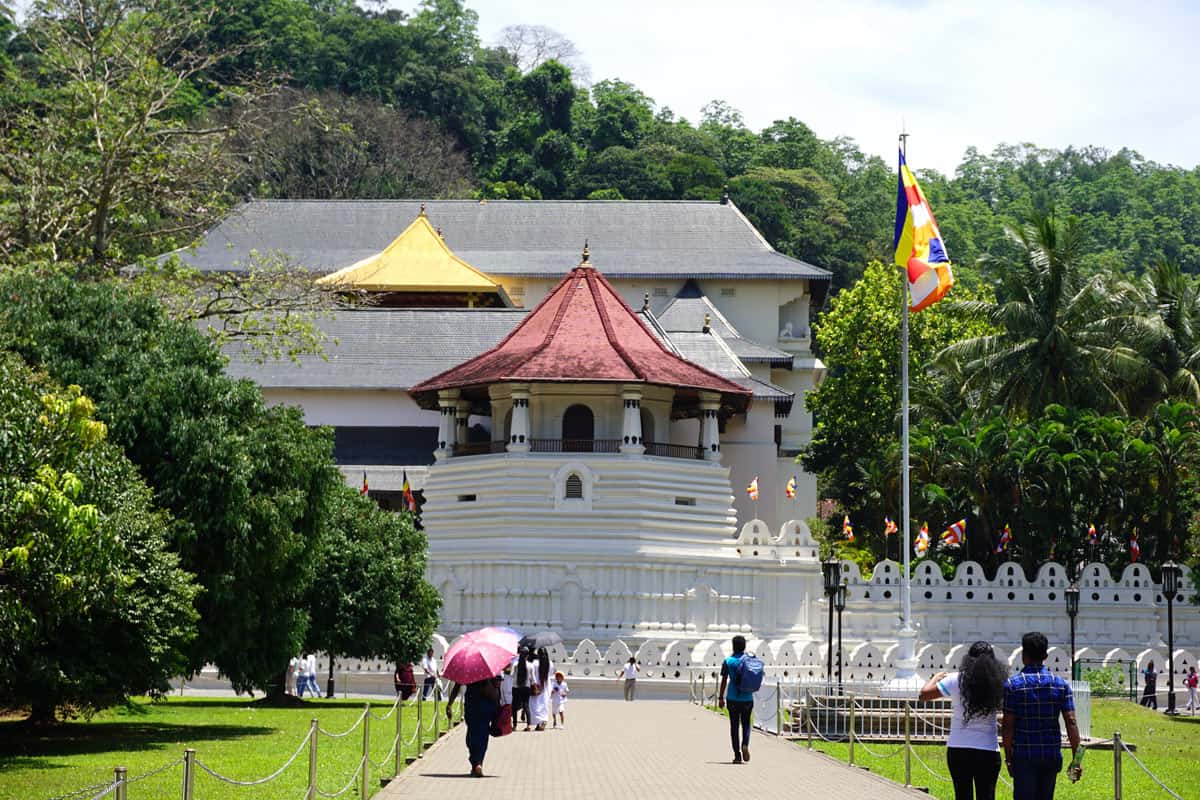
You can’t visit Kandy without seeing the magnificent Temple of the Sacred Tooth Relic (Sri Dalada Maligawa).
Easily one of the best places to visit in Kandy, it houses what’s believed to be the Buddha’s left canine tooth. Historically, whoever possessed the relic was said to have the right to rule Sri Lanka.
You don’t actually see the tooth. It’s kept inside a series of nested golden caskets in the inner shrine.
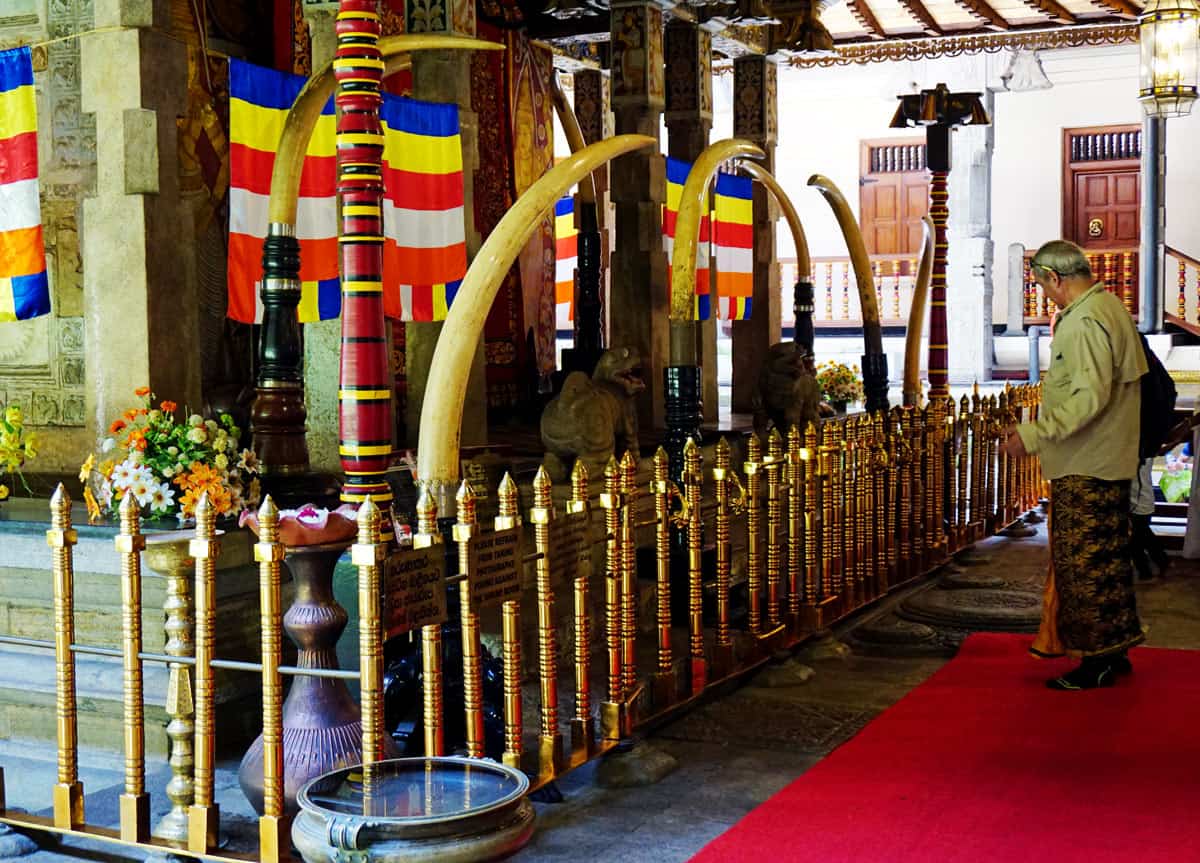
But for us, the real fascination was everything happening around it.
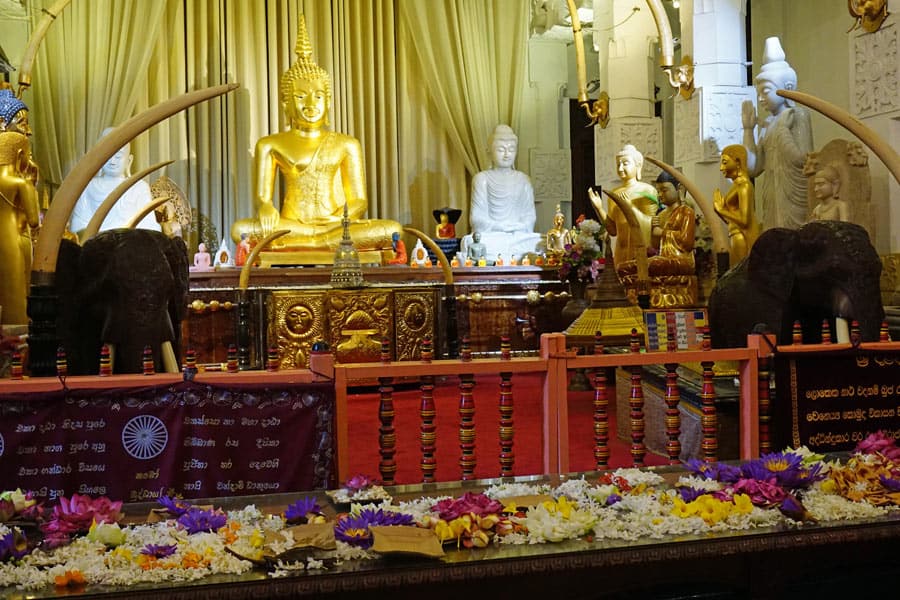
White-clad worshippers streamed through the temple carrying lotus flowers. Some meditated quietly in corners, while others found a spot on the marble floor to sit amid the fragrance of incense and flowers.
And then there are the enormous elephant tusks flanking the shrine room, the drumming during the daily puja ceremonies, and the richly decorated New Palace with its Buddha statues and paintings.
Before leaving, we popped into the little museum honoring Raja, the temple’s celebrated elephant.
For 50 years, he carried the ceremonial tooth casket during the annual Festival of the Tooth procession. His taxidermied body now stands proudly behind glass. (We’d never seen a stuffed elephant before!)
Plan your temple visit
- Where – In the heart of Kandy, beside Kandy Lake
- Hours – Open daily year-round from 5:30 am to 8:00 pm
- Cost – LKR 3,000 (about $9 USD) for most foreign adults
- Best time to visit the temple – During one of the three daily puja ceremonies: 5:30 to 7:00 am, 9:30 to 11:00 am or 6:30 to 8:00 pm
- What to wear – Shoulders and knees must be covered, and you’ll need to remove your shoes before entering
Want to know more? See our complete guide to visiting Kandy’s Temple of the Tooth.
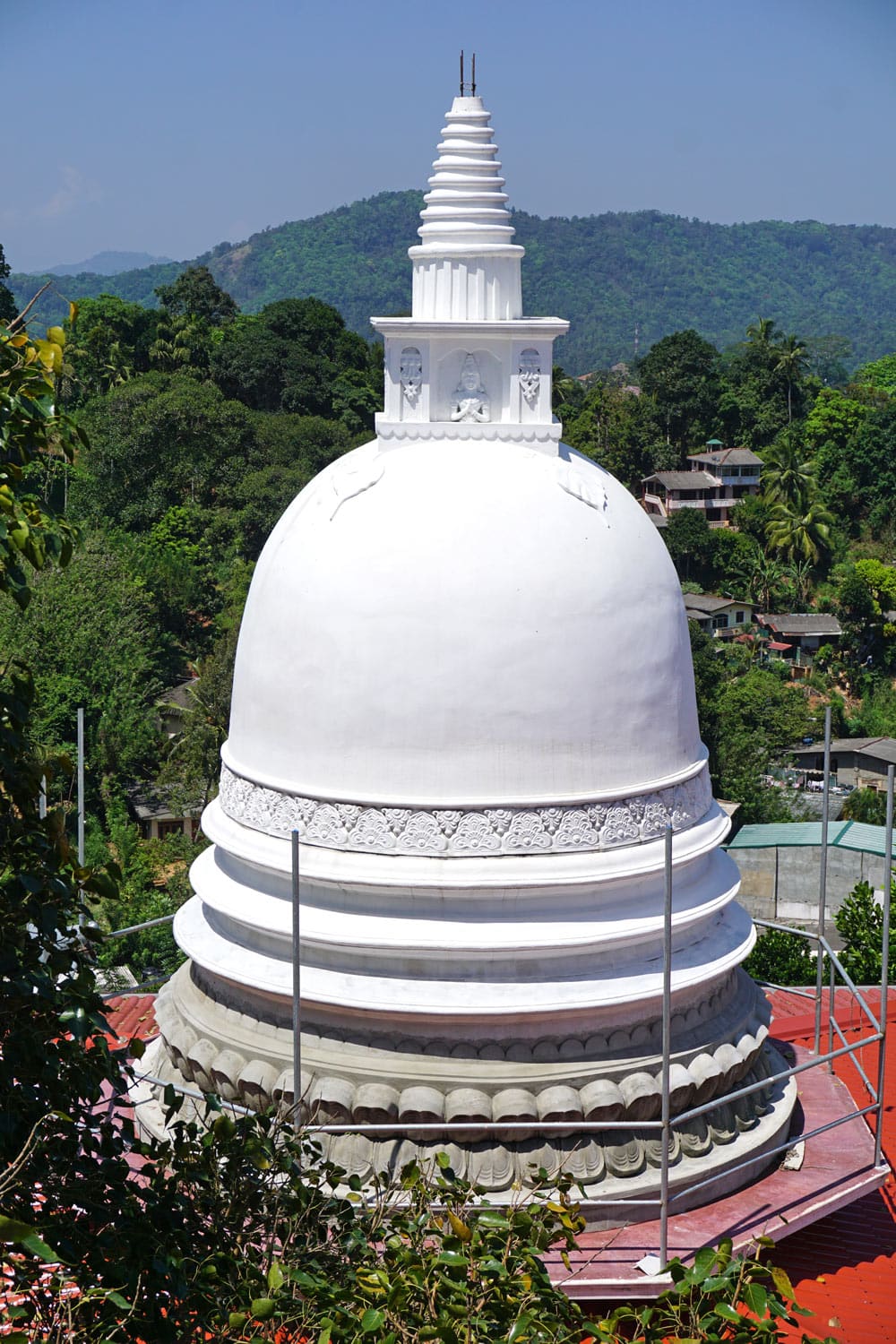
2) Admire the views from the giant Buddha
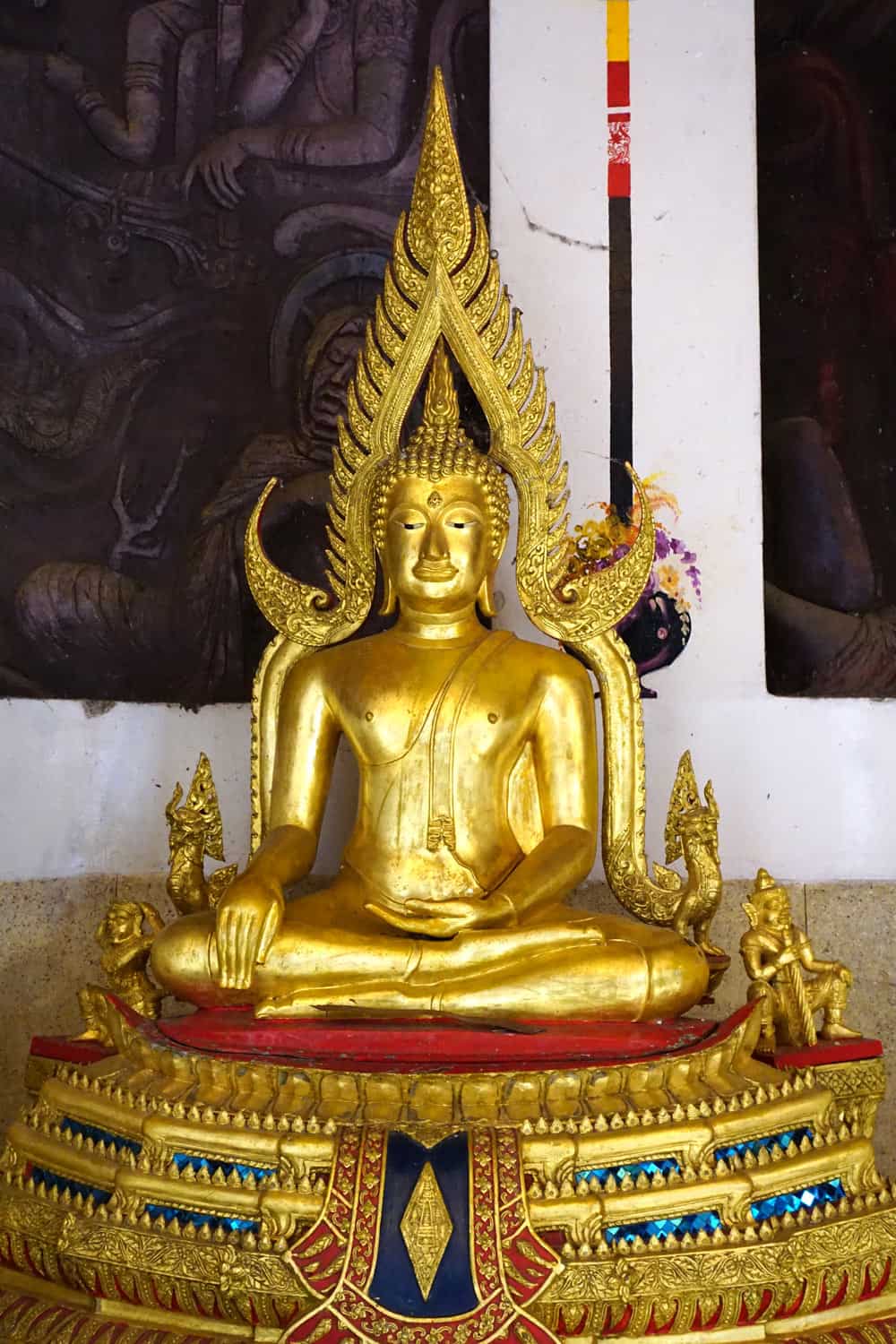
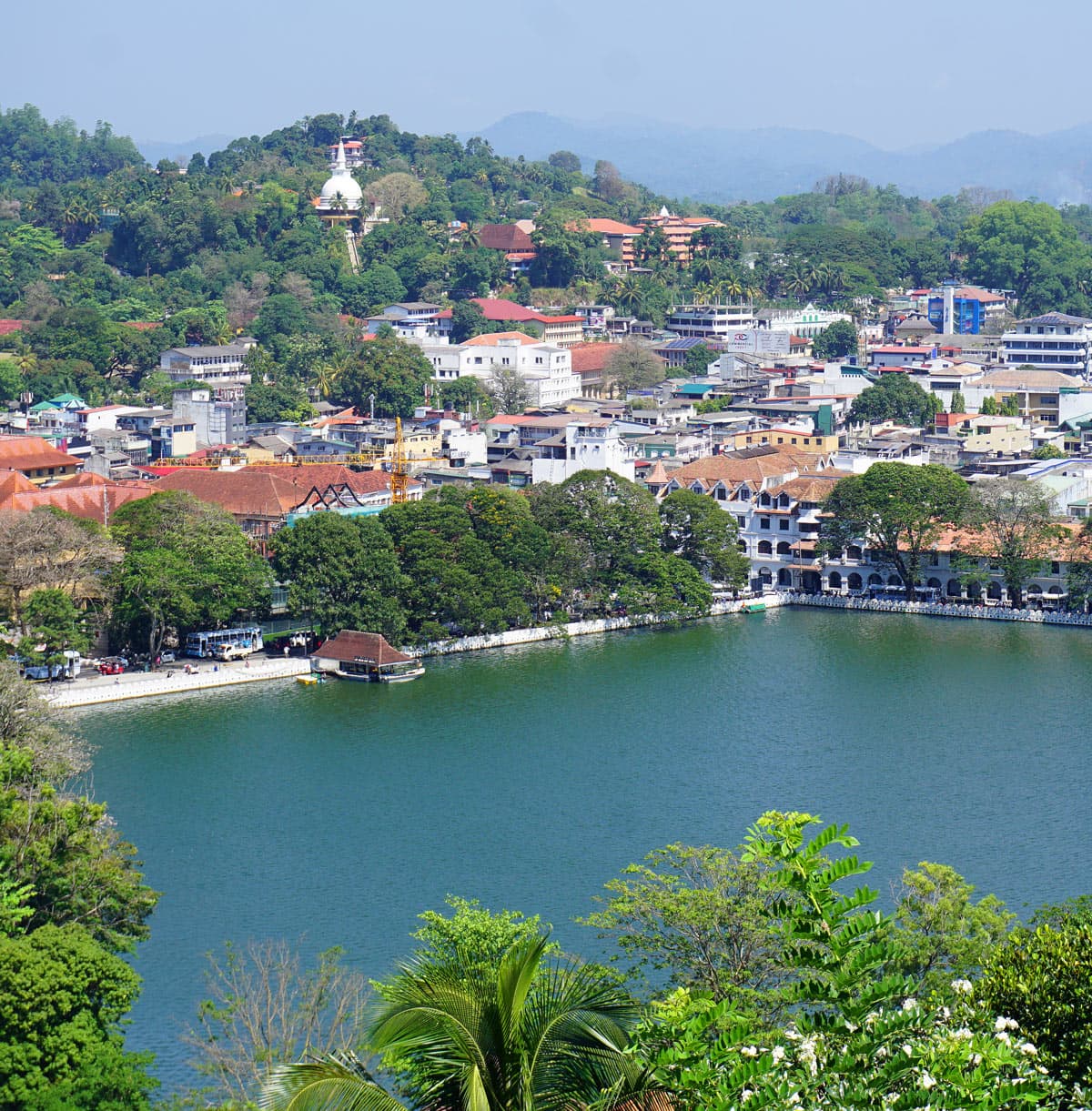
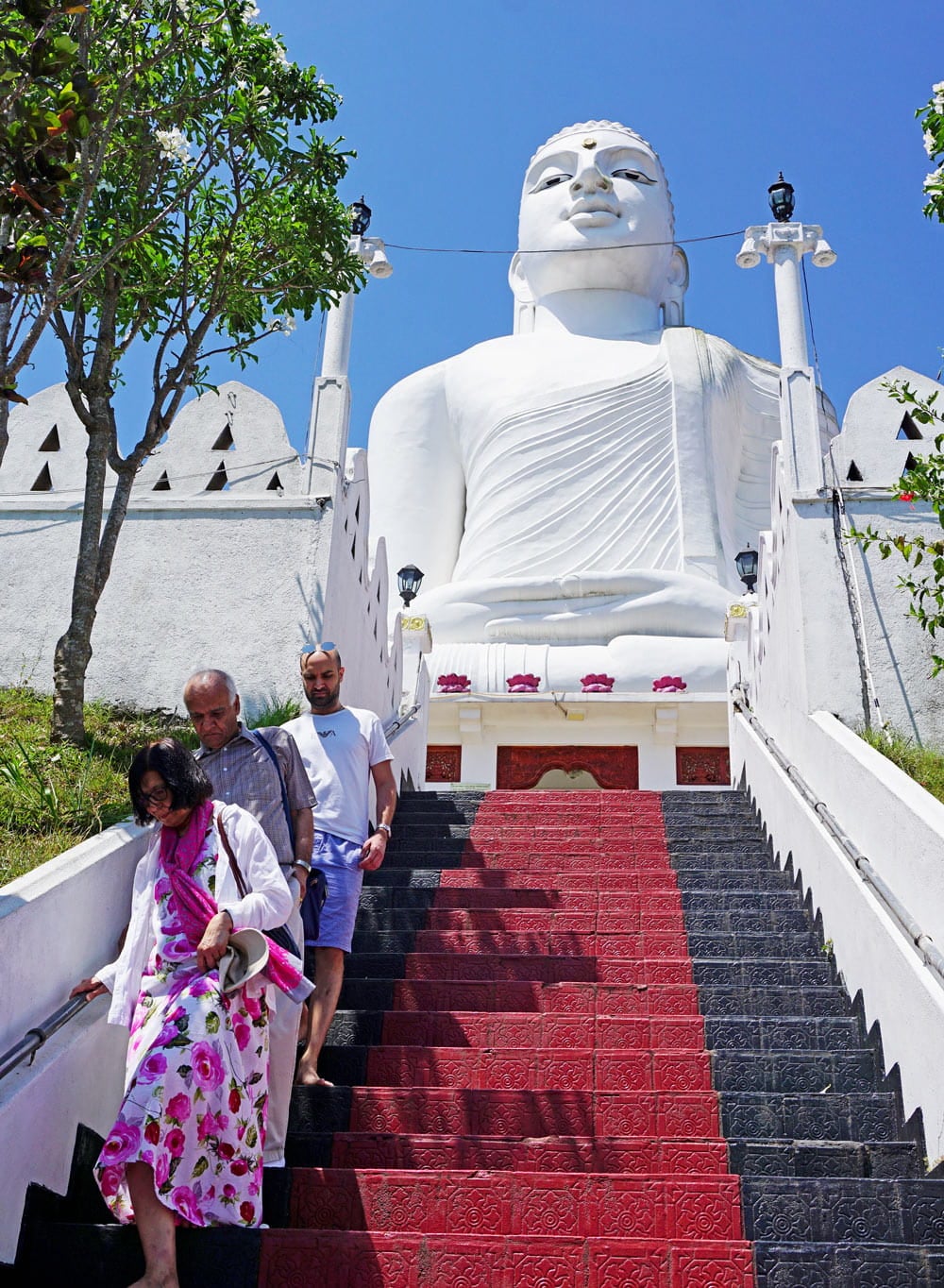
You can’t miss the enormous Bahiravokanda Vihara Buddha Statue towering over Kandy.
Built in 1992, the gleaming white Buddha stands more than 88 feet high beside the Sri Maha Bodhi Viharaya Buddhist monastery. It’s one of Kandy’s most recognizable landmarks.
The Buddha is impressive up close.
But the views are the best reason to visit. Climbing up the stairs behind the Buddha, we were treated to a glorious Kandy view point, with panoramic views of the city, its lake and the surrounding green hills.
Know before you go
- Hours – Generally open from early morning until evening
- Best time to go – Late afternoon is lovely for softer light and city views
- Entrance fee – 300 LKR (about US$1) per person
- Shoes off! – You’ll need to remove your shoes before approaching the Buddha
3) Wander the Royal Botanic Gardens, Peradeniya
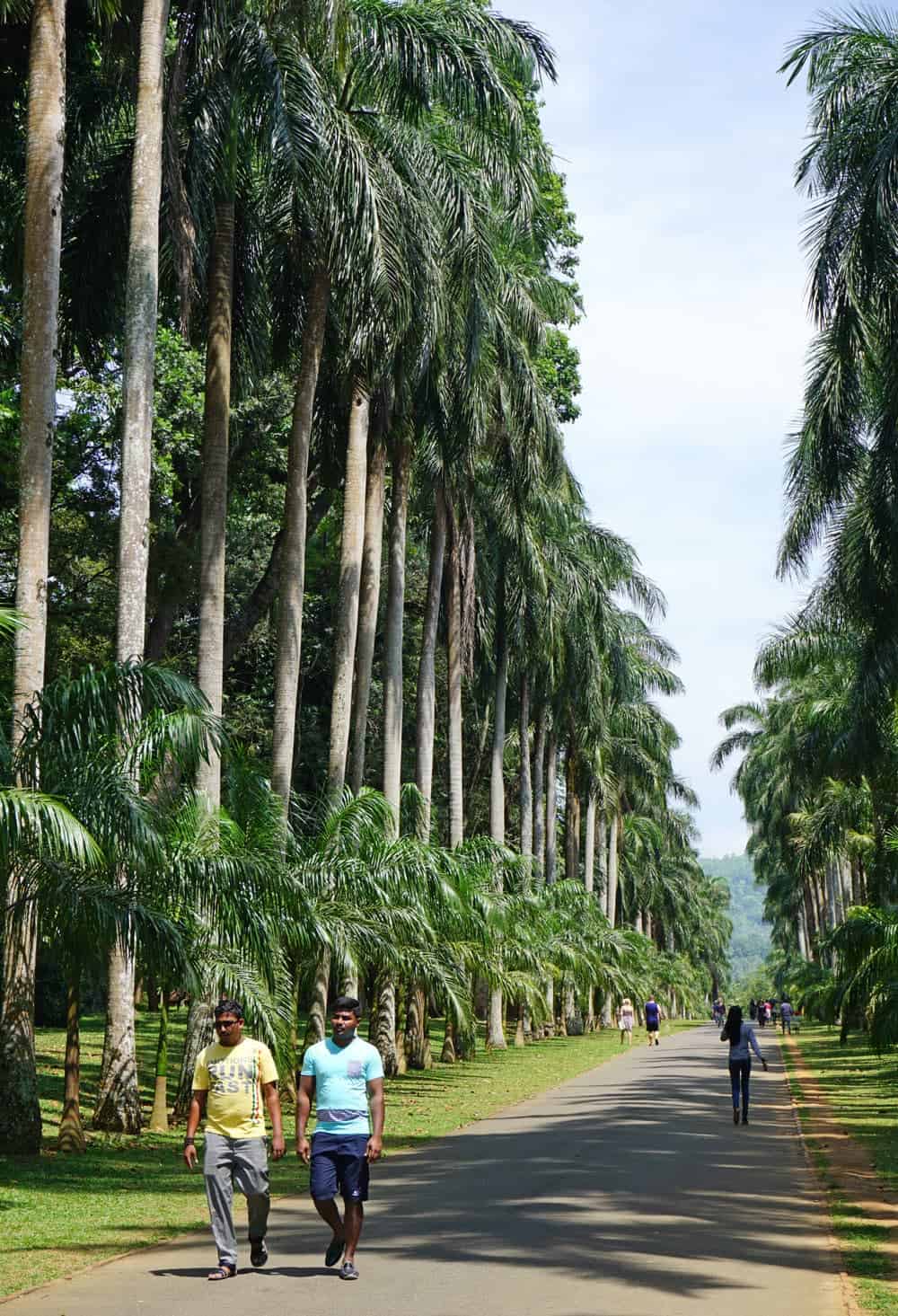
When you need an escape from the hustle and bustle of the city, head to the Royal Botanic Gardens, Peradeniya.
Located in the neighboring town of Peradeniya, the gardens are just a short drive from central Kandy – and they feel a world away from the traffic and tuk-tuks.
Dating back centuries, the gardens at one time could only be visited by Kandyan royalty.
Later in the 1800s during British colonial rule, plants were brought here from London’s famous Kew Gardens (one of the world’s finest gardens!). Kandy’s botanical gardens were formally established in 1843.
Today, they spread across a whopping 147 acres, so allow at least a couple of hours to explore.
Palms, orchids and 4,000 plant species
There’s a lot to see!
The gardens are home to some 4,000 plant species and more than 10,000 trees.
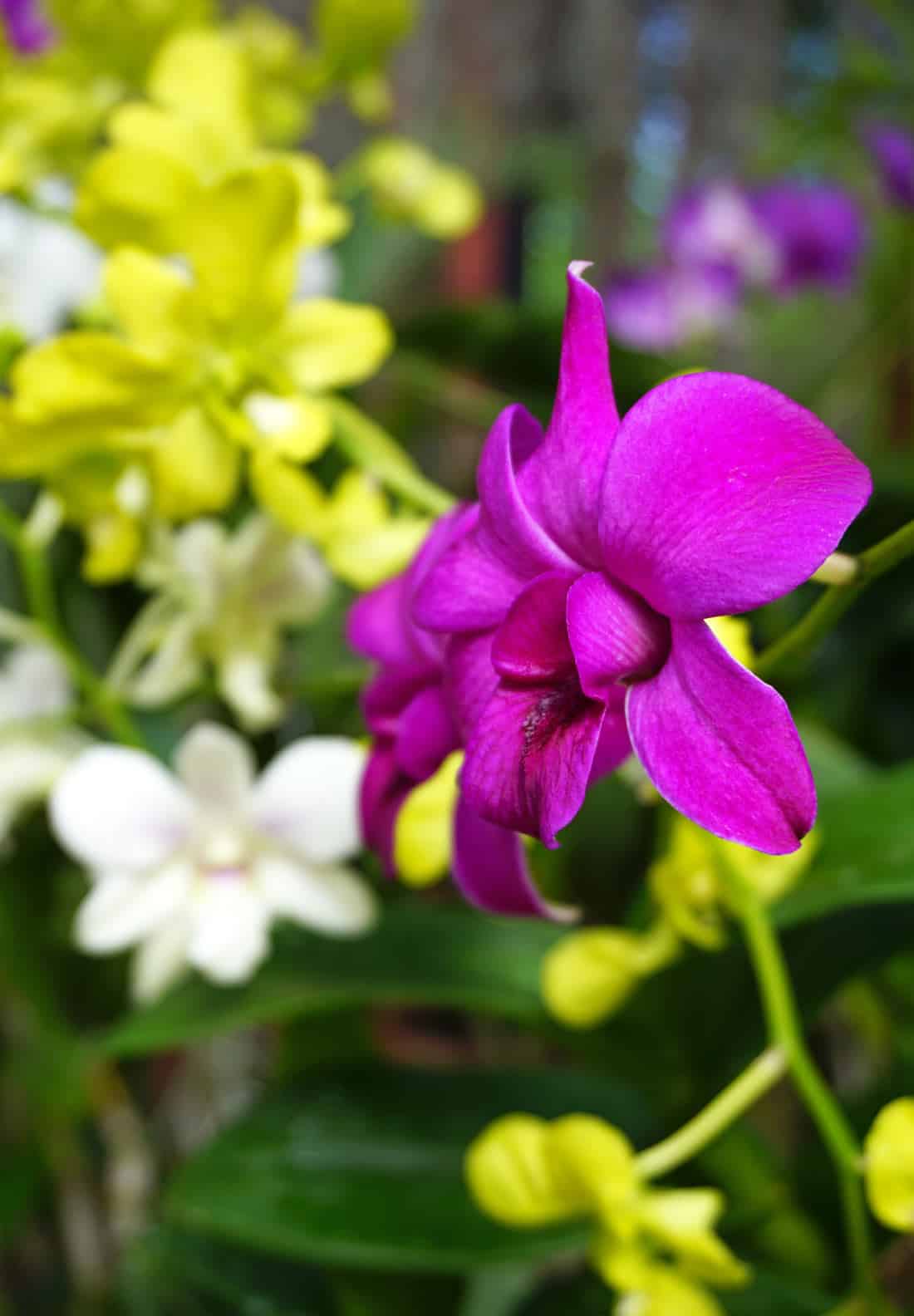
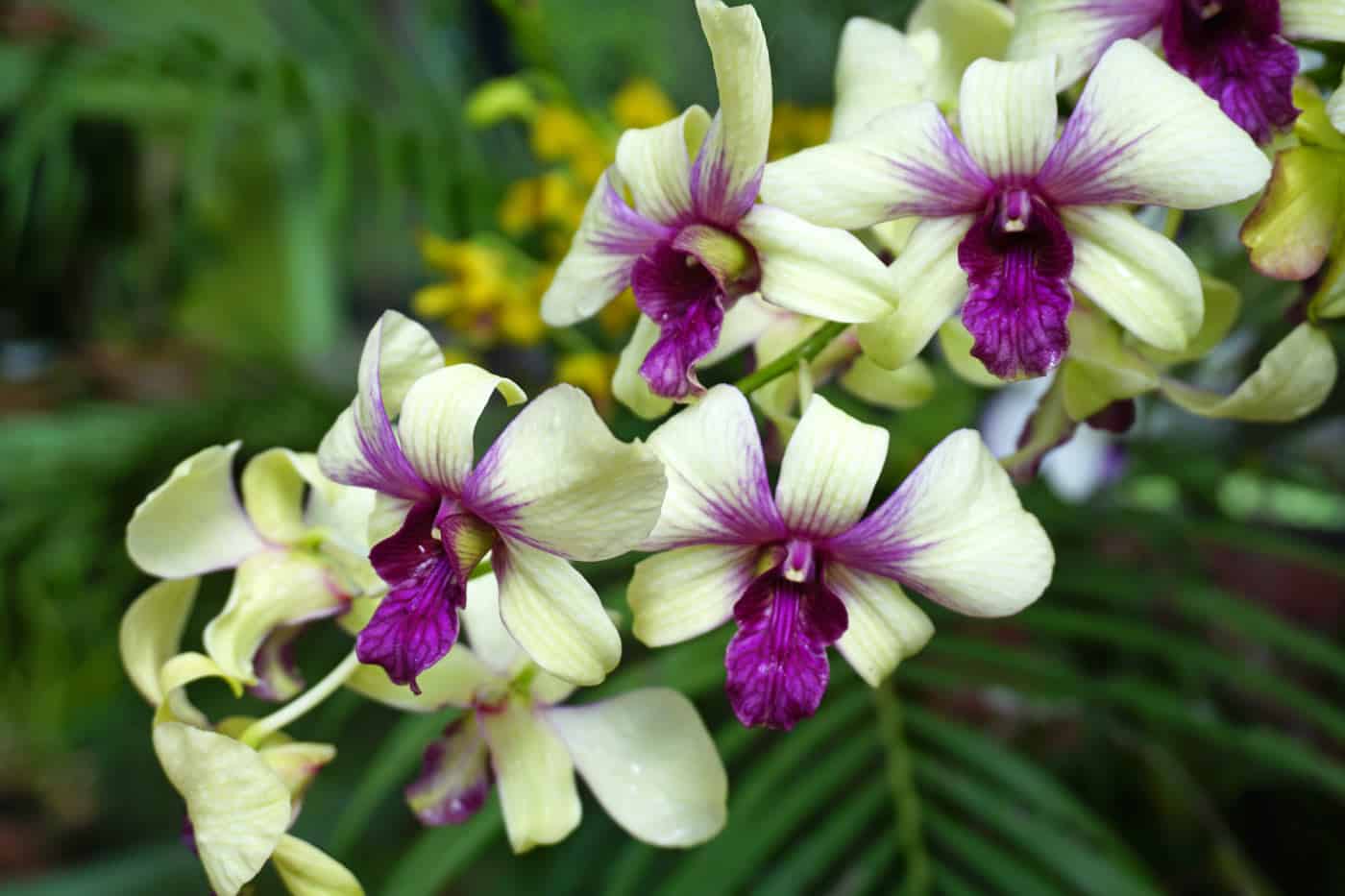
We wandered along grand avenues framed by towering palms, poked our noses into the orchid house and stopped to admire the weird cannonball tree, with its huge round fruits dangling from the trunk.
Monkeys and flying foxes
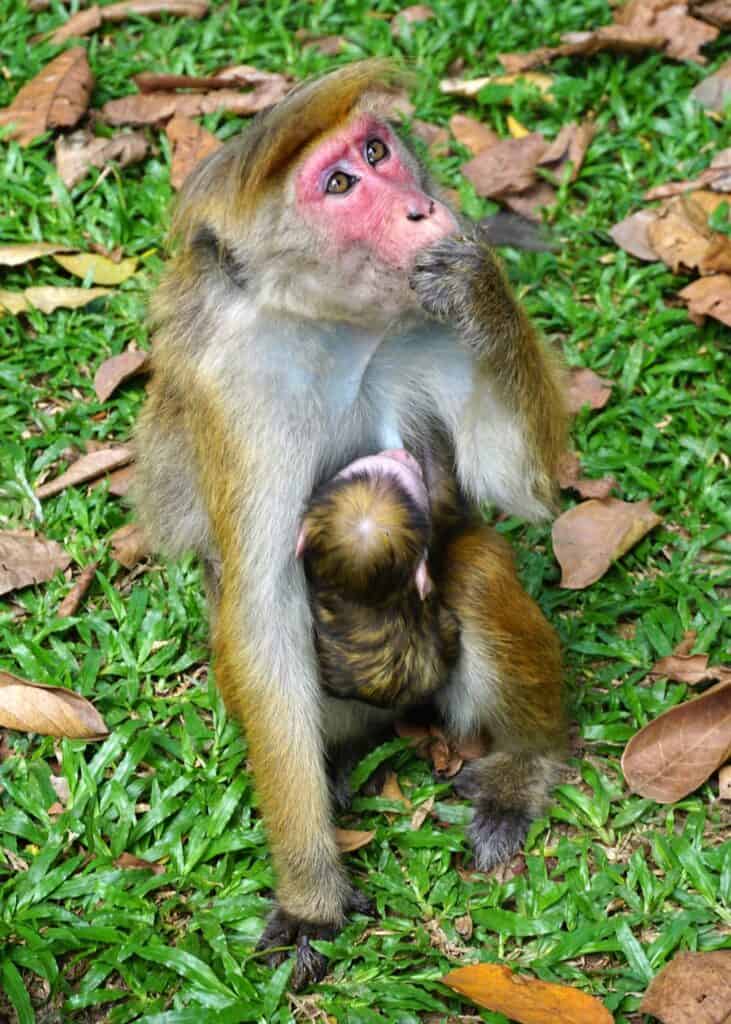
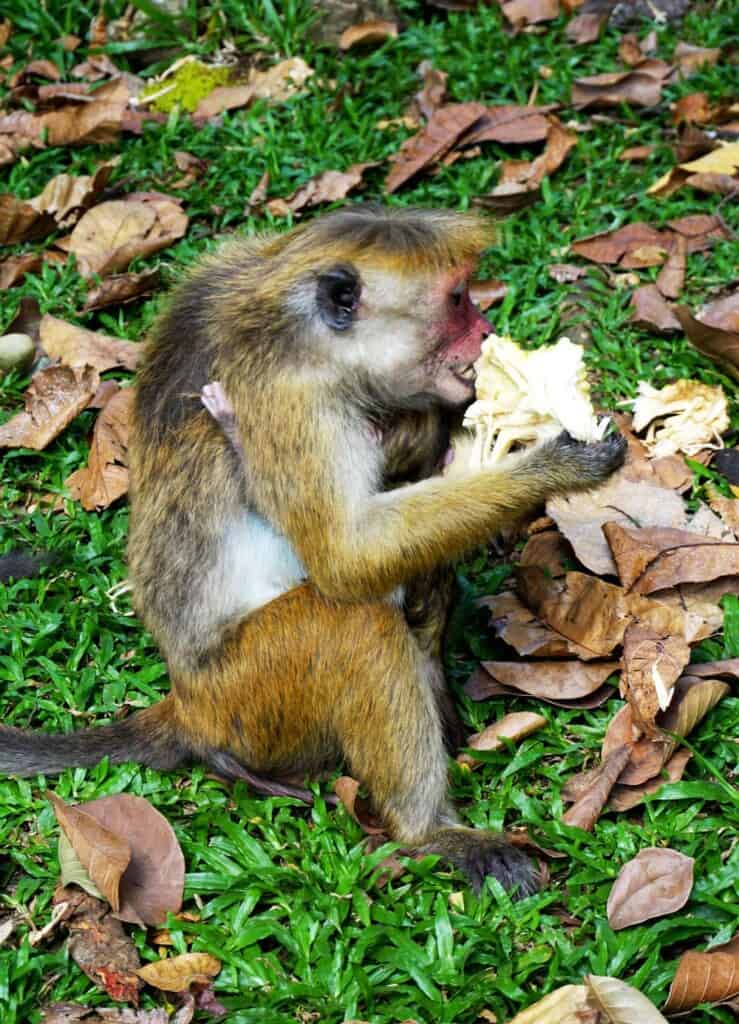
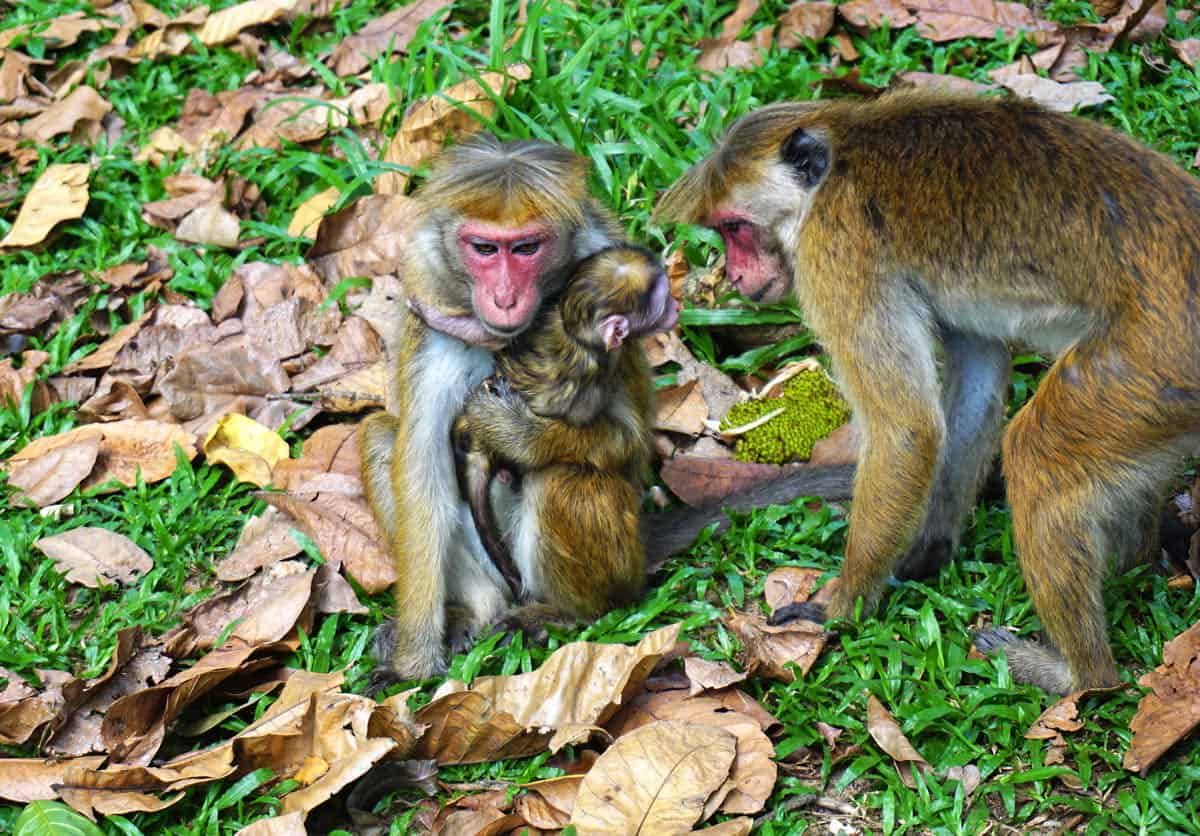
Some of our favorite garden residents weren’t plants at all.
Cute macaque monkeys entertained us with their antics, somersaulting across the lawns and swinging from tree branches.
We were engrossed watching how they worked together to get food. One mother, with her baby clinging to her chest, sat beneath a tree while another monkey high in the branches picked fruit and tossed it down to her.
Then there were the thousands of enormous fruit bats (flying foxes).
We watched them swoop through the sky in great black clouds before settling in the treetops, where they hung upside down, flapping their wings.
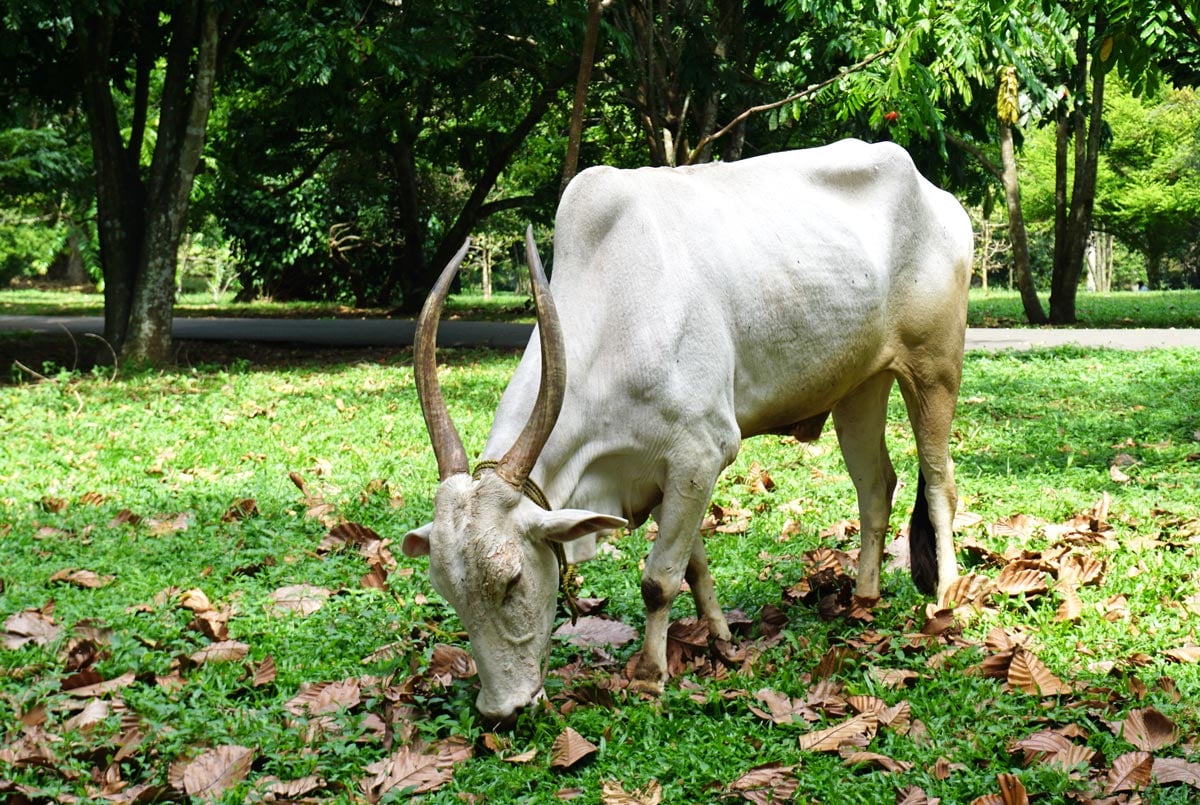
And then, rather unexpectedly, we came across a white cow placidly grazing on the lawn – just another resident of the gardens, apparently!
Tips for visiting the Peradeniya gardens
- Hours – Open year-round from 7:30 am to 5:00 pm
- Best time to visit – Ideally, go first thing in the morning when it’s still relatively cool. (We visited the gardens on our second day of sightseeing in Kandy – we were too pooped to squeeze them into our first day!)
- Cost – LKR 3,540 for foreign adults (about $12 USD)
4) Pay your respects at the Kandy War Cemetery
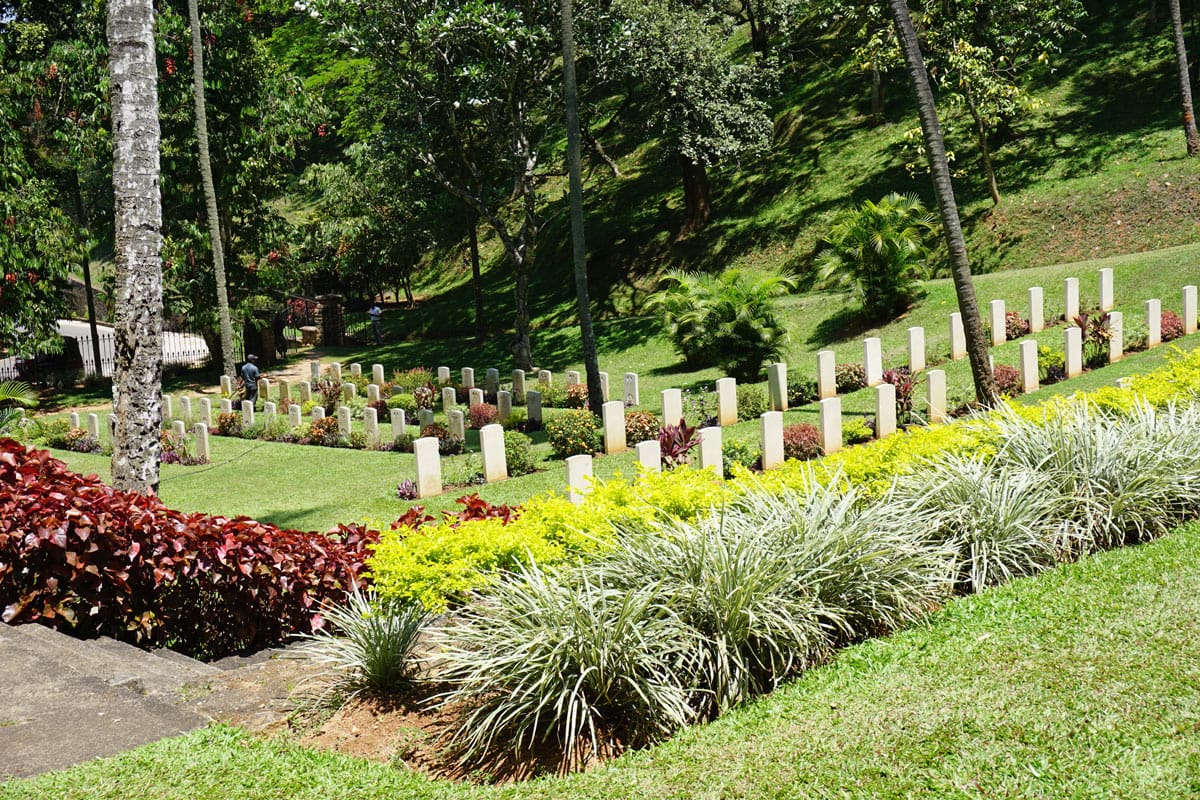
Immaculately maintained by the Commonwealth War Graves Commission, the Kandy War Cemetery is the final resting place of almost 200 servicemen and women, most of whom died during WWII.
Kandy played an important role during the war. From 1944, it was headquarters of the Allies’ South East Asia Command, led by Lord Mountbatten.
There are 198 identified war graves in the cemetery, including one from WWI.
Wandering around the peaceful flower-filled grounds, we found it quite moving to read the headstones of so many who died young – many only in their early 20s.
Most are British. But there are also East African, Sri Lankan, Italian, Indian and French tombstones. We spotted several Canadian gravestones too.
Plan your cemetery visit
- Where – In the hills of Kandy, about a 10-minute drive from the city center
- Hours – Open year-round between 7:00 am and 4:00 pm
- Cost – Free
5) Tour the Geragama Tea Factory

Tea and Sri Lanka go hand-in-hand – the country is one of the world’s biggest tea producers.
Interestingly, though, it was coffee, not tea, that first flourished here.
In the early- to mid-1800s, Ceylon coffee was hailed as the best in the world. But the coffee industry came to a grinding halt when a leaf disease known as “coffee rust” wiped out the coffee plantations.
And so tea plants were introduced – and the rest, as they say, is history!
Located just outside Kandy, the Geragama Tea Factory (also known as the New Giragama Tea Factory) is one of Sri Lanka’s oldest tea factories.
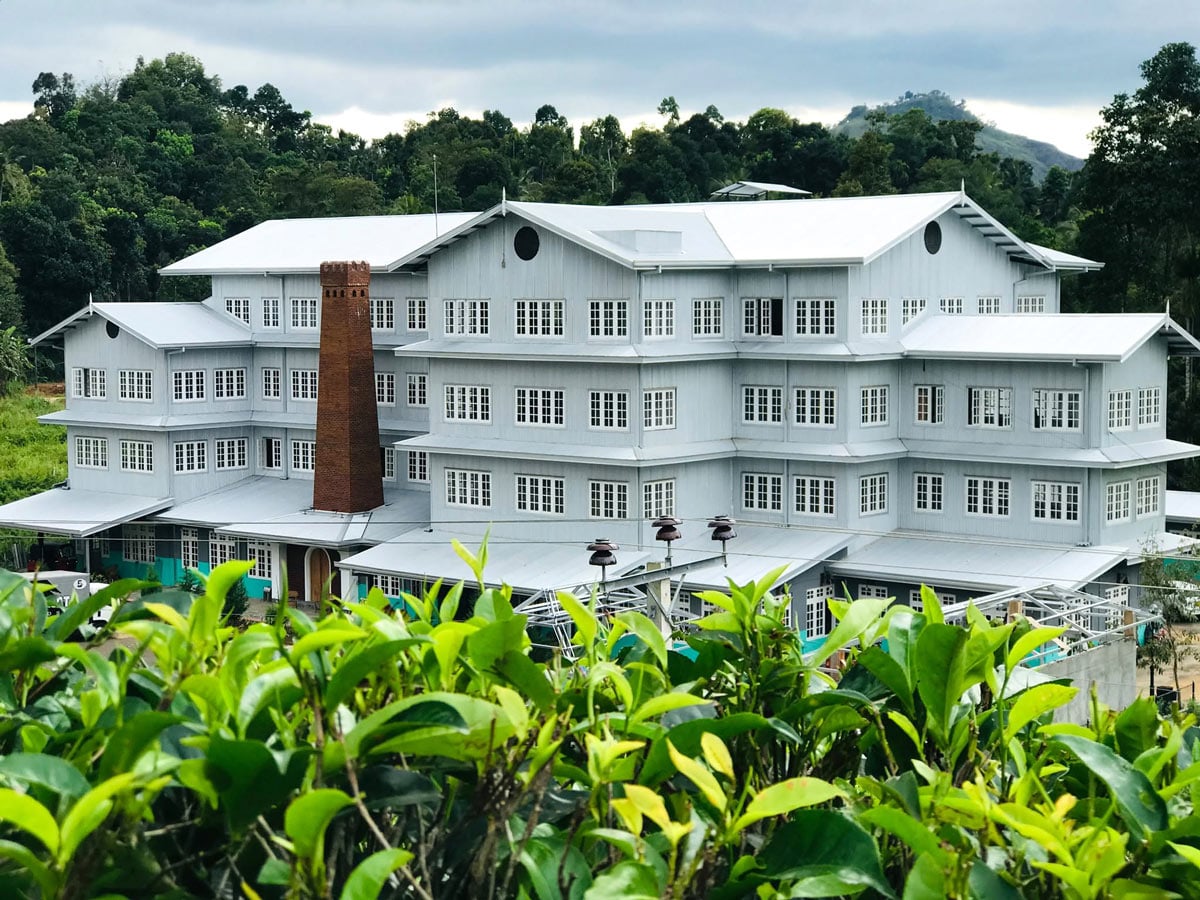
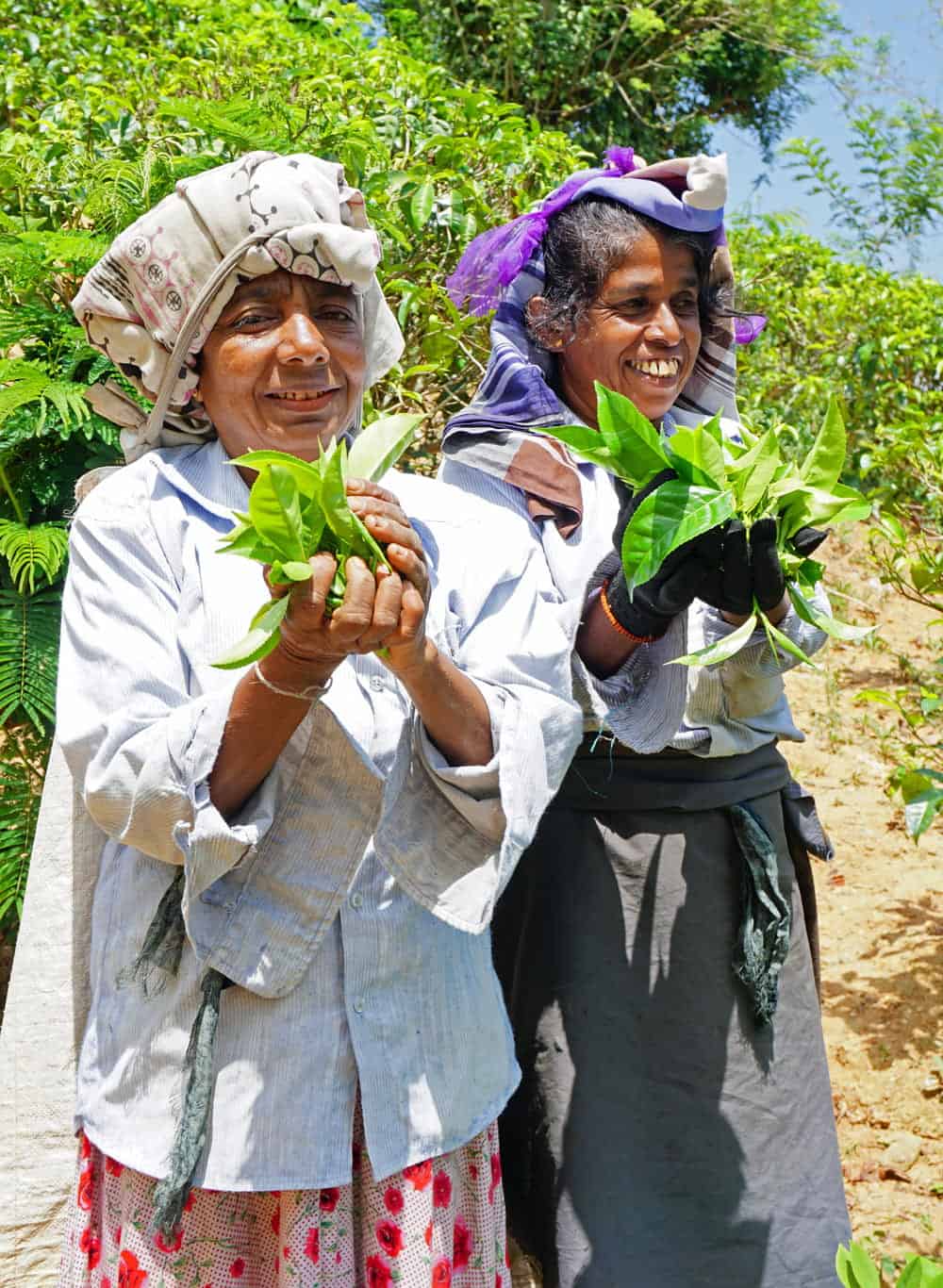
On our tour, we learned how tea leaves are hand-plucked, watched them being cleaned and processed and, of course, tasted several different teas.
We were particularly intrigued by white tea. Made from the youngest buds and minimally processed, it’s considered the crème de la crème of teas and is prized for its delicate flavor and high levels of antioxidants.
Our Geragama tea tour felt a little rushed, however. Perhaps that was because we squeezed it in at the end of our first day in Kandy.
We also enjoyed a much longer and more in-depth tea plantation tour later in Ella, higher in the hills and smack-dab in the heart of Sri Lanka’s tea country.
So if you’re heading to Ella or Nuwara Eliya, we’d probably save your tea touring for there. But if Kandy is your only chance to peek inside a working tea factory, Geragama is well worth a visit.
Plan your tea factory visit
- Where – In Pilimathalawa, about a 20- to 30-minute drive west of central Kandy
- Hours – Generally open daily from around 8:00 am to 5:00 pm
- How long – Allow about 45 minutes to an hour for the factory tour and tea tasting
- Cost – Tours are typically free, with no obligation to buy (though there’s a tea shop, of course!)
6) Stroll around Kandy Lake
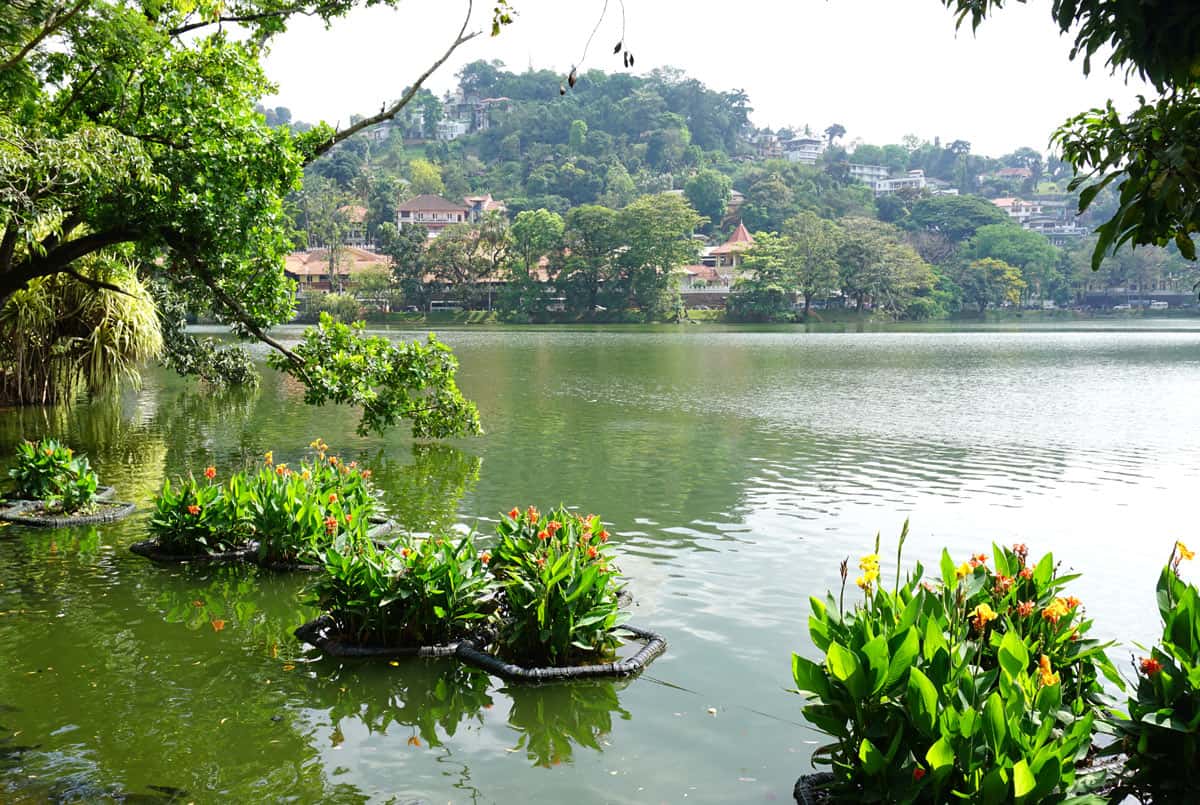
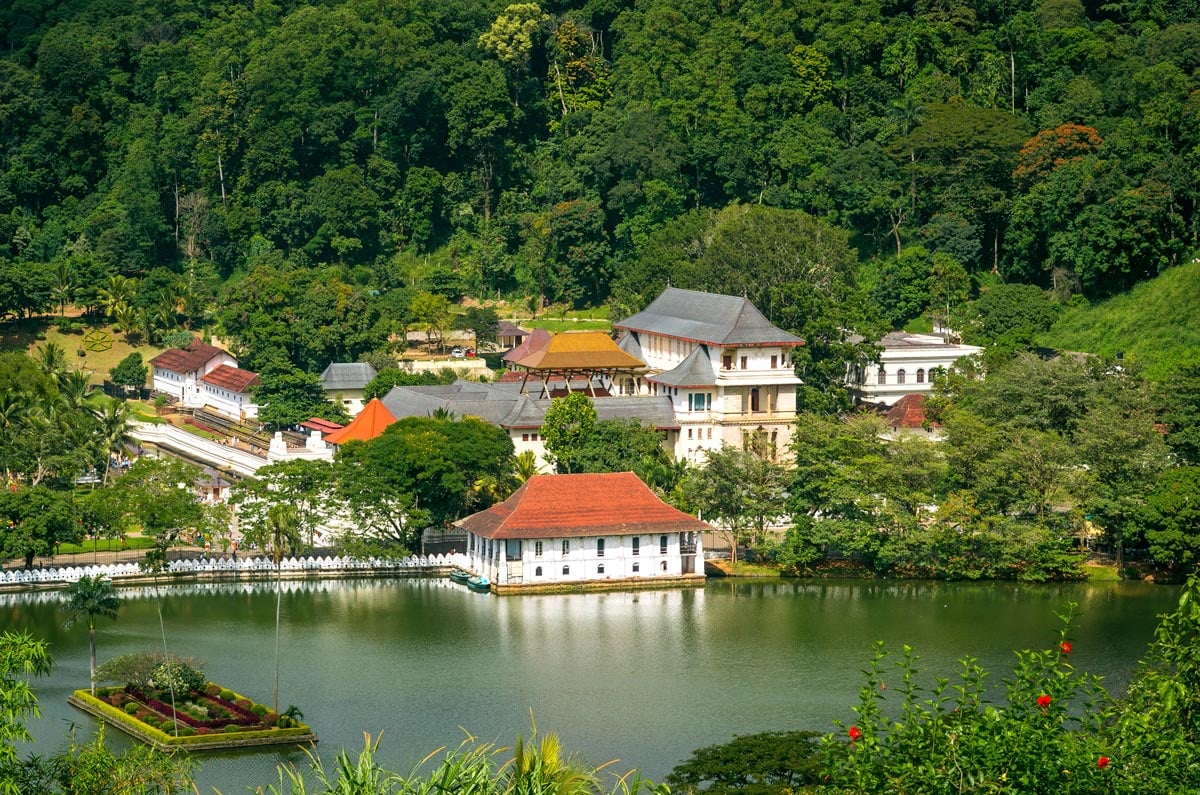
Built in 1807 by Sri Lanka’s last king, Kandy Lake (also known as Bogambara Lake) is a surprisingly peaceful spot in the heart of busy Kandy.
A shady path loops around the water, with quacking ducks, waterbirds and the occasional monkey for company. Sunset is an especially lovely time for a stroll.
The little island in the middle has a more intriguing past. It’s said to have been used by the king’s harem for bathing and to have been connected to the royal palace by a secret tunnel.
Allow about an hour to walk the full loop – or simply wander partway around and enjoy the views.
7) Watch a Kandyan dance performance
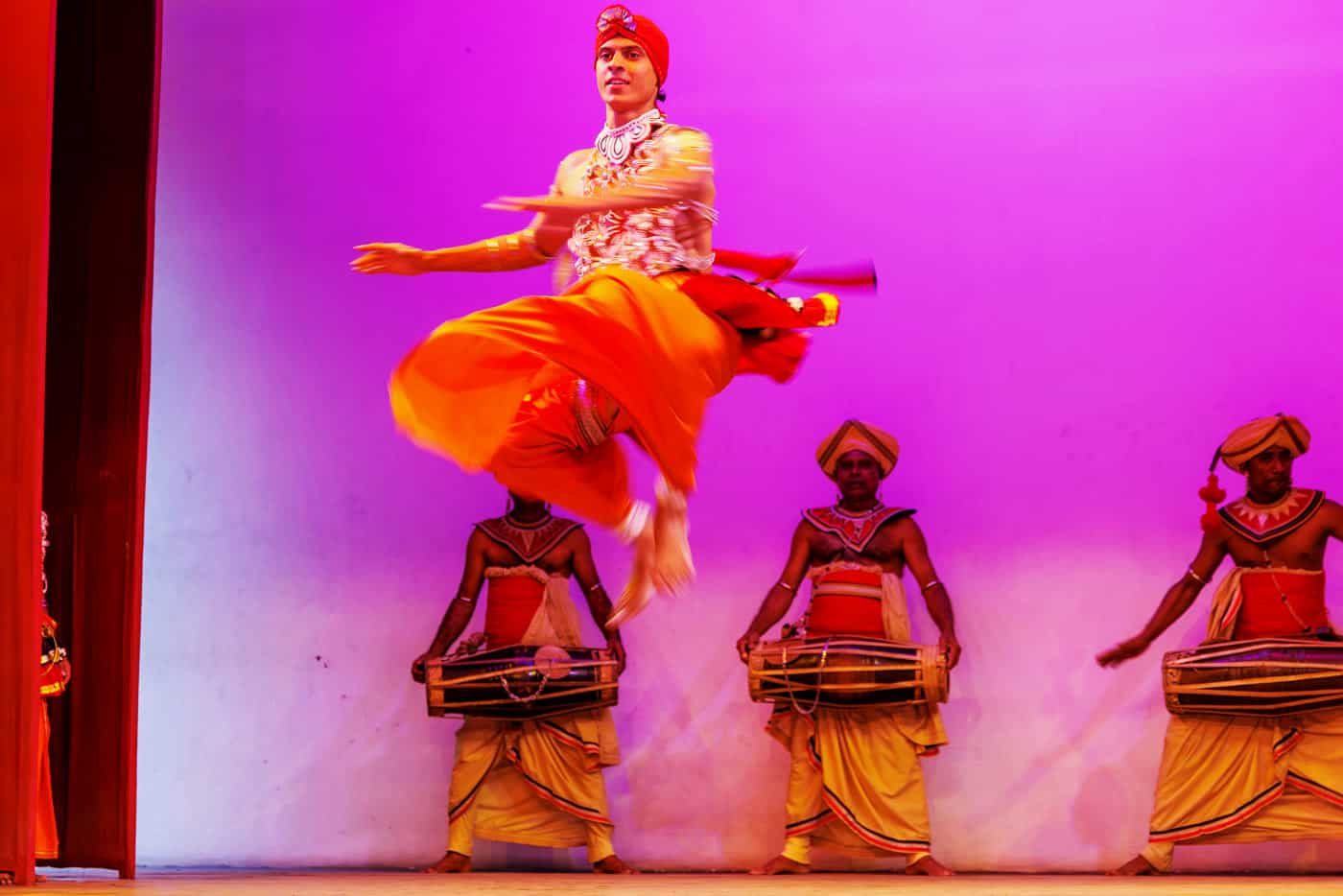
For a colorful dose of Sri Lankan culture, catch a traditional Kandyan dance show.
These lively performances are a feast for the senses – pounding drums, swirling costumes, gravity-defying leaps and plenty of twirling. Dancers mimic peacocks, cobras and elephants, while acrobats spin plates and pull off some impressive stunts.
There’s real history behind all that twirling and drumming. Some Kandyan dances date back centuries to ancient healing rituals performed by shamans.
And, yes, today’s shows are geared to visitors. But they still offer a fascinating taste of an authentic centuries-old art form.
A few venues around Kandy stage shows in the late afternoon and early evening. One of the best known is the Kandy Lake Club – where the hour-long cultural performance packs in a dozen or so traditional dances, along with drumming and fire.
And just when you think it’s all over, out come the glowing coals!
Barefoot fire walking, anyone? It makes for a suitably sizzling finale.
Details
- Where – Kandy Lake Club, 7 Sangamitta Mawatha
- Hours – Shows are held daily from 5:00 to 6:00 pm (you should be seated by 4:45 pm).
- Cost – $20 USD p.p. for reserved tickets and front or premium seats
- Book – Kandy Lake Club Cultural Dance Show tickets
8) Take a hike in the Udawattakele Forest Reserve
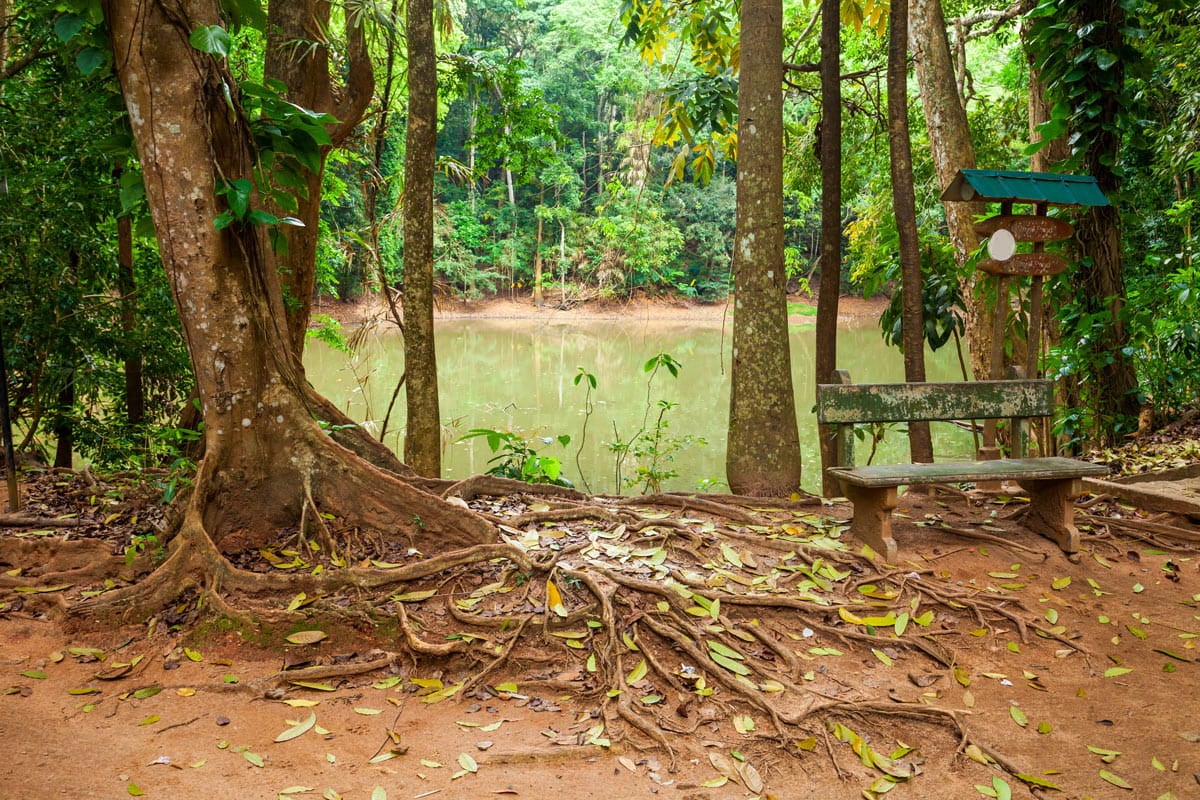
Spreading out on a hill behind the Temple of the Tooth, the 250-acre Udawattakele Forest Reserve is another welcome escape from Kandy’s traffic and bustle.
Unfortunately, we didn’t have time to explore it. But we understand that several walking trails wind through this lush tangle of tropical forest.
Once the private pleasure garden for the Kandyan kings, it’s a wildlife sanctuary today, so keep an eye out for monkeys, barking deer, turtles and plenty of birds. You might even spot a snake!
Budget about two hours to the main trails.
One little warning: If it’s been raining, watch out for leeches. They apparently love the forest as much as hikers do.
9) Browse the Kandy Central Market
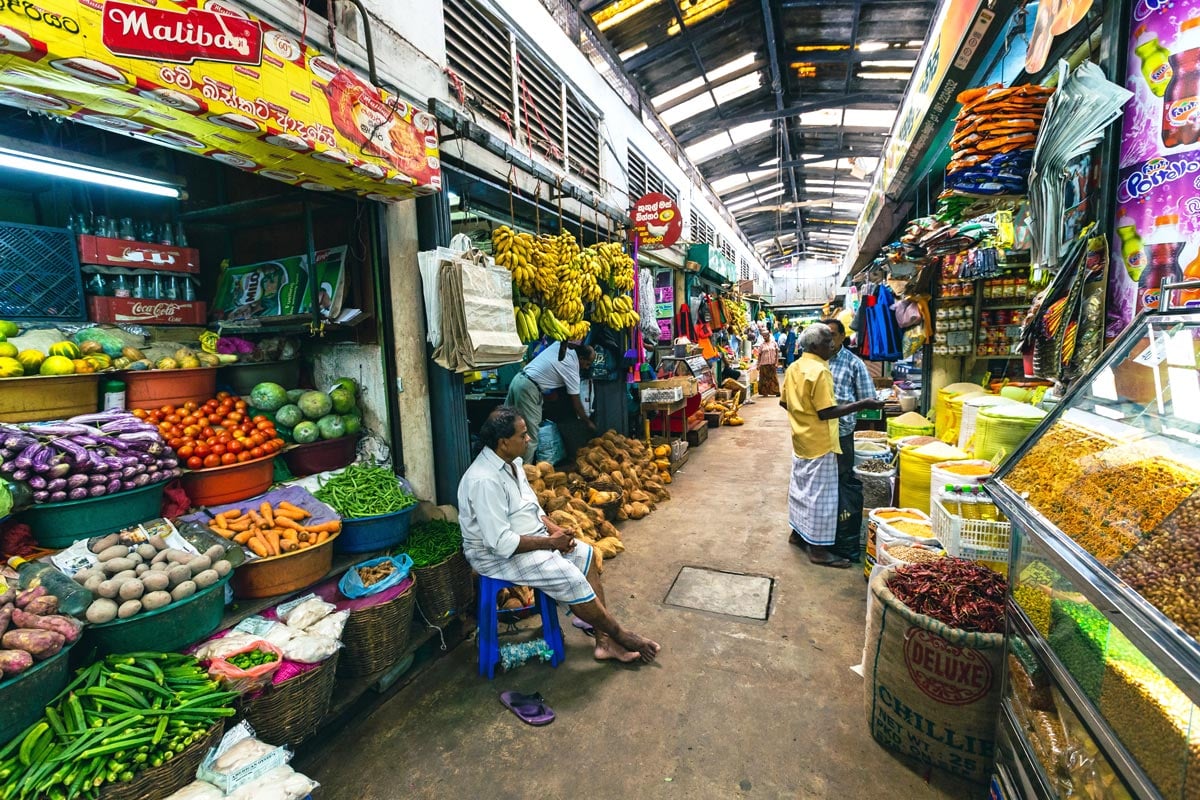
For a taste of everyday Kandy life, duck into the bustling Kandy Central Market in the heart of town.
The two-story market is stuffed with stalls piled high with tropical fruit and vegetables, spices, rice, dried fish and other local staples. You’ll also find tea, clothing and a smattering of souvenirs.
It’s not a Kandy must-see. But if you’re nearby, it’s a fun place to wander for 30 minutes or so, snap some colorful photos and see where Kandyan locals actually shop.
How many days do you need in Kandy?
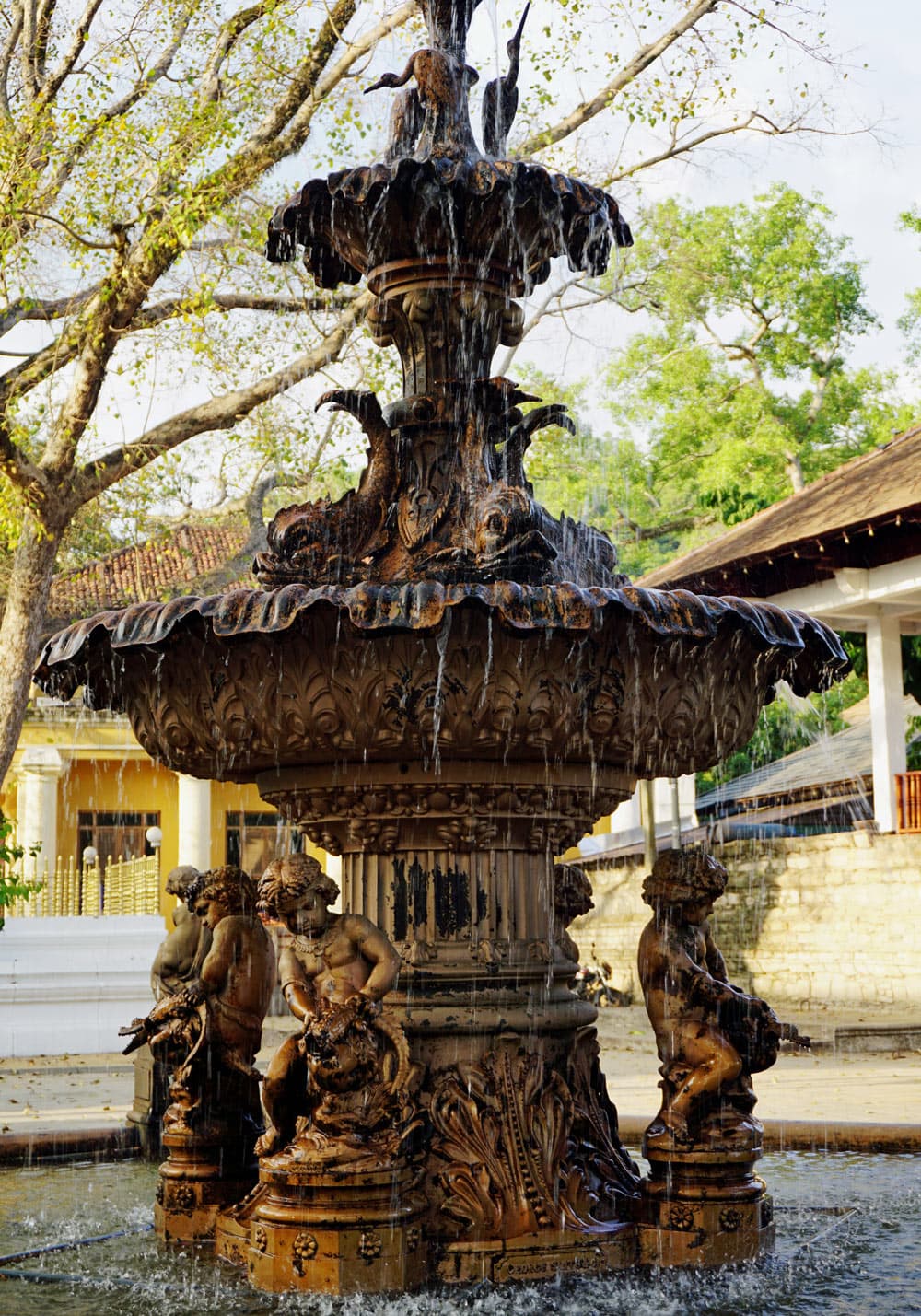
You can see Kandy’s main sights in one full busy day. But if your trip allows, we recommend spending two full days in Kandy.
That gives you enough time to visit the temples, gardens and other highlights without racing from one attraction to the next.
We spent three nights in Kandy, giving us two full days to explore – which felt just right.
How to spend 2 days in Kandy
Here’s how we’d divide up your sightseeing:
- Day 1 → Temple of the Tooth → stroll around Kandy Lake → lunch → Big Buddha and viewpoint → Kandyan dance show
- Day 2 → Royal Botanic Gardens → Kandy War Cemetery → Udawattakele Forest Reserve or Kandy Market
Only have one day in Kandy?
You can still squeeze in the highlights. Focus on the Temple of the Tooth, Kandy Lake and the Royal Botanic Gardens. If you have the energy, finish with a Kandyan dance show in the early evening.
Or let a licensed local guide show you around! This private one-day Kandy city tour by tuk-tuk is tailored to your interests – and gets rave reviews from English-speaking visitors.
Kandy travel tip
If you’re touring Sri Lanka with a car and driver, consider doing what we did.
Our driver dropped us off in Kandy for a few days of DIY exploring – and took our big suitcase with him.
We then rode the train to Ella (a spectacular ride!) with our smaller bags. After our stay in Ella, our driver picked us up, big suitcase in tow, and we continued our circle tour of Sri Lanka.
It worked brilliantly. We got to experience one of Sri Lanka’s great train journeys – without having to wrestle all our luggage on and off the train!
How to get around Kandy
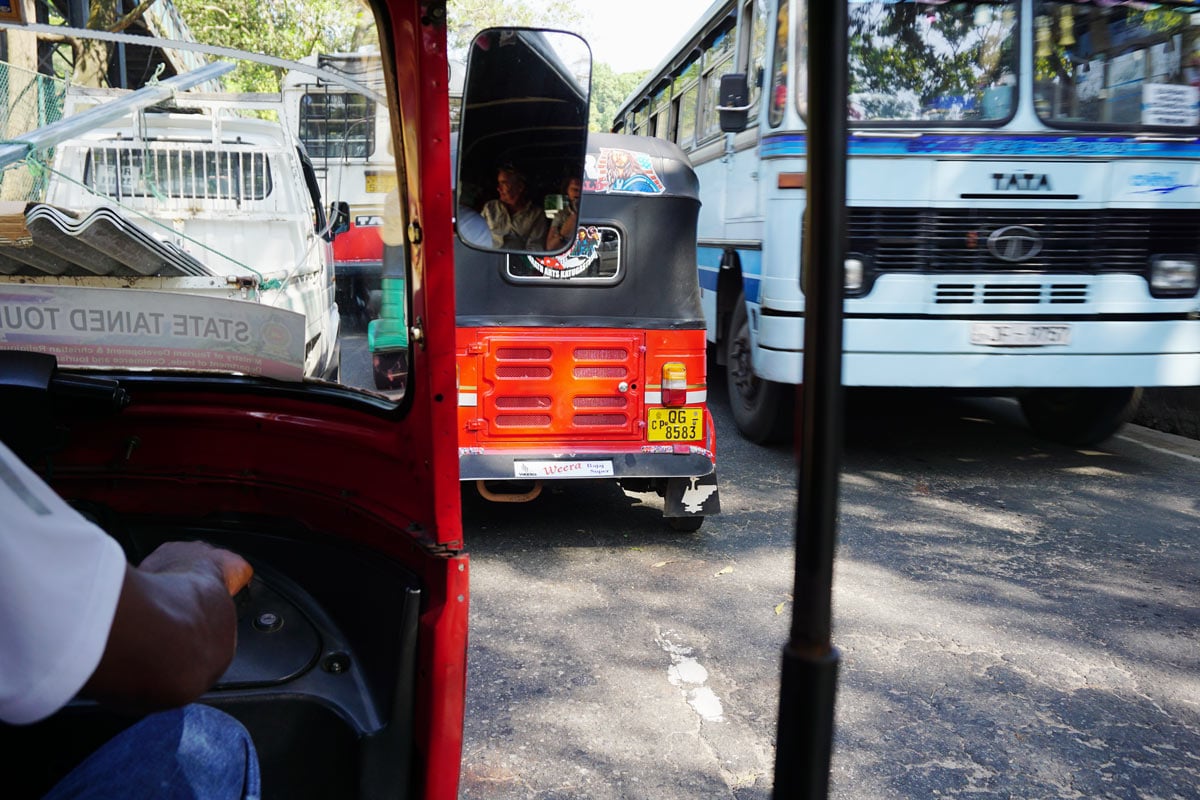
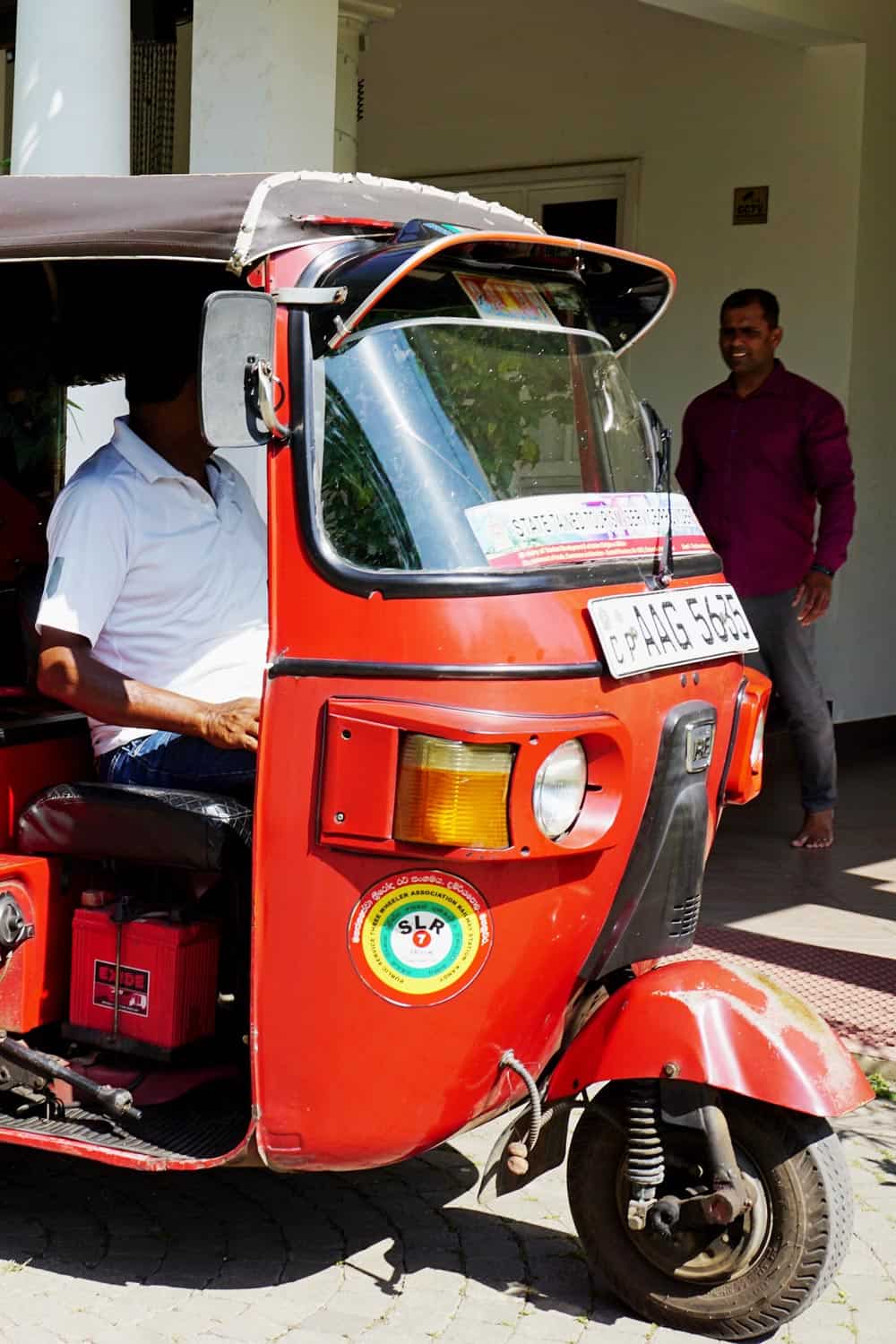
Tuk-tuks are hands-down the best way of getting around Kandy.
The city’s streets are chaotic. There always seems to be something under construction, roads can be potholed and traffic is a crazy mix of buses, trucks, scooters and gazillions of feisty tuk-tuks weaving around each other – with plenty of enthusiastic honking thrown in.
One perky little blue tuk-tuk we spotted had this slogan painted on the back: “No seatbelts. No airbags. But God is with us.”
That pretty much summed it up!
I (Janice) confess I found some rides a little hair-raising. George? Far more relaxed.
But there’s no doubt tuk-tuks are fun. They’re cheap, agile enough to zip through Kandy’s traffic and, well, exhilarating!
For longer trips outside the city – like the Royal Botanic Gardens – you can also use a taxi or private driver.
Where to stay in Kandy?
If you’re like us, you’ll want to escape Kandy’s traffic and tuk-tuk frenzy at the end of the day and retreat somewhere peaceful.
We’ve rounded up our picks for Kandy’s top luxury boutique hotels that let you do just that. (Hop on over for all the details.)
The following two are especially appealing – set in the quiet leafy hills overlooking Kandy, yet still just a short tuk-tuk ride from the main sights.
The Elephant Stables
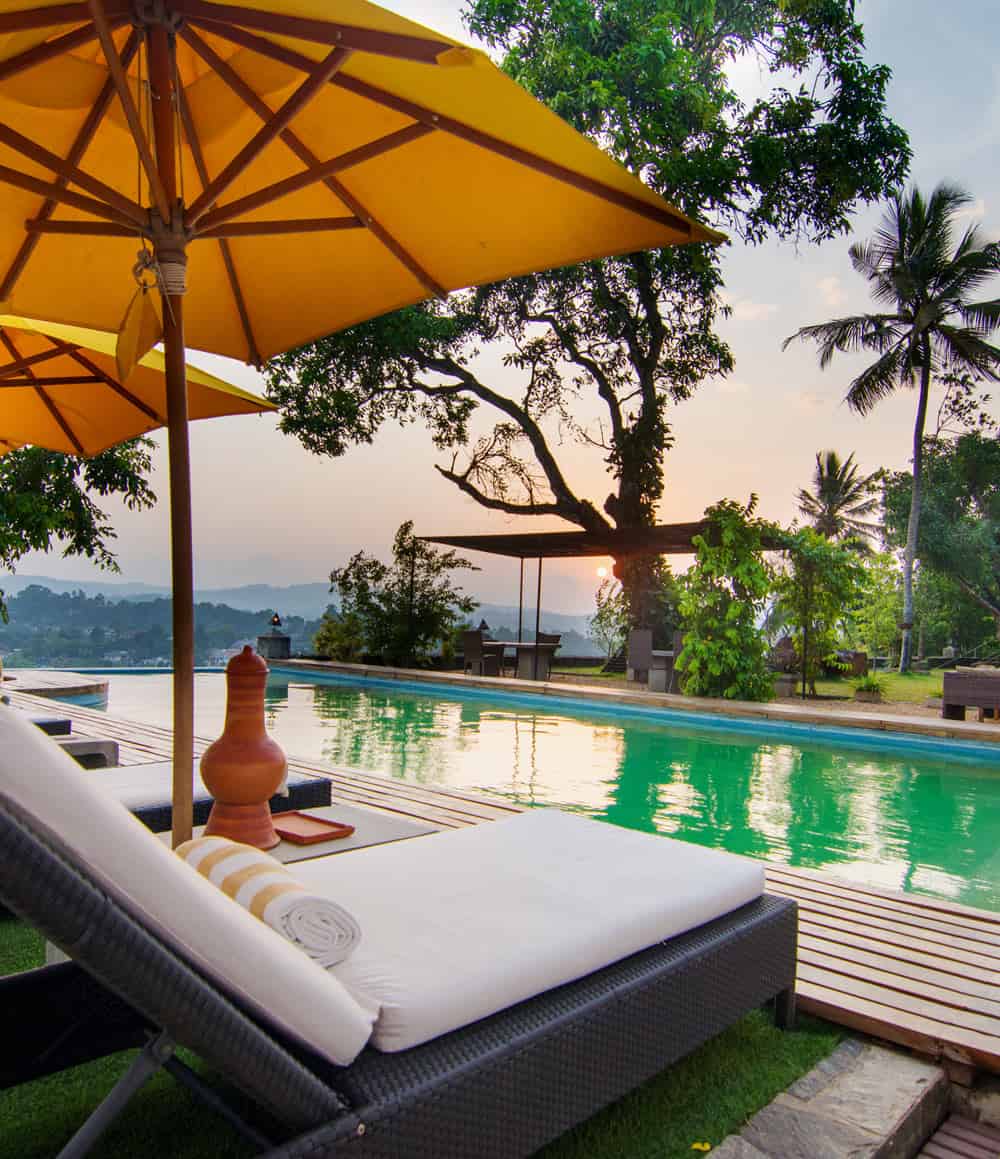
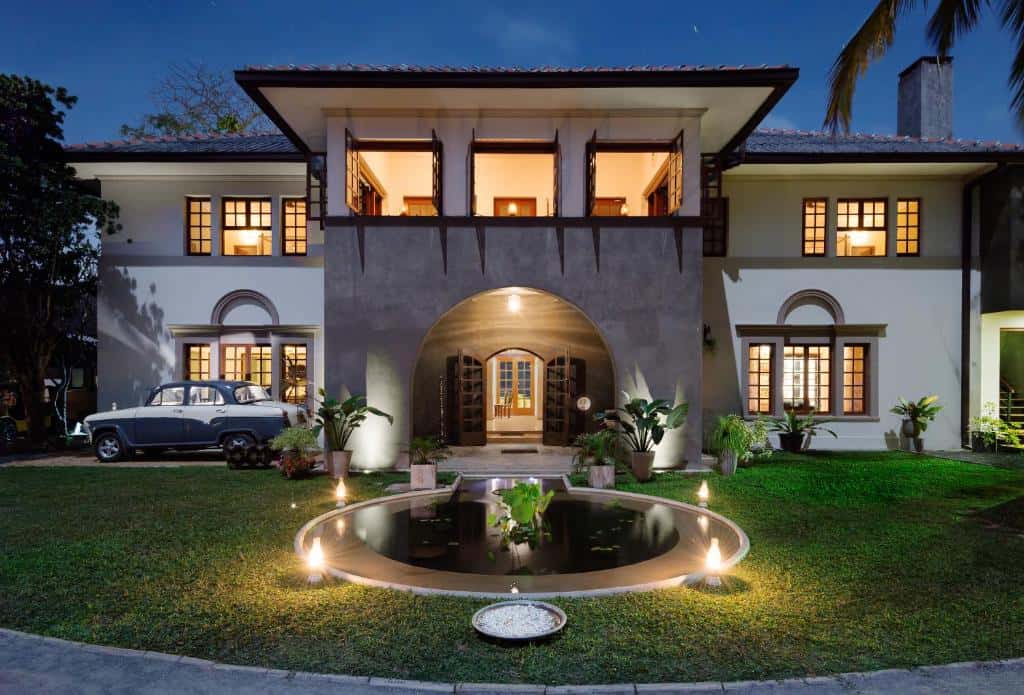
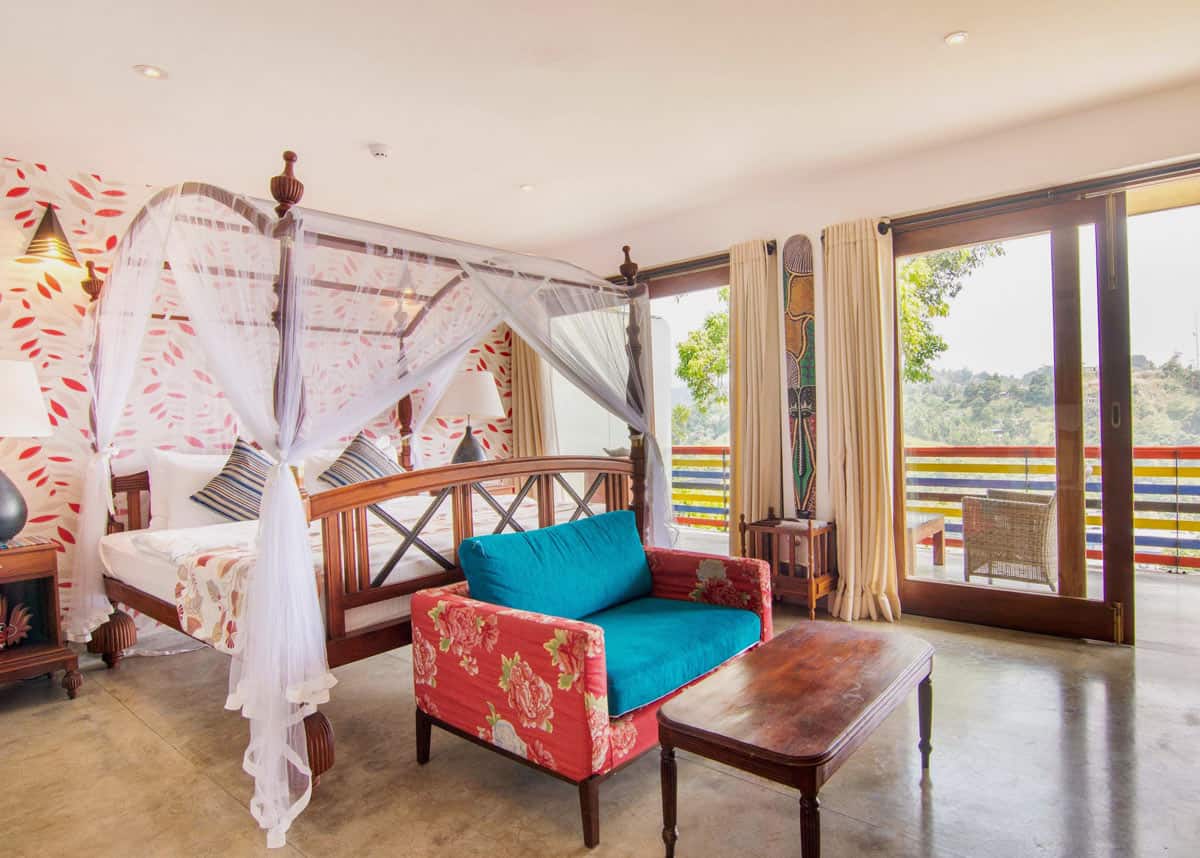
Once home to a prominent Kandyan family, The Elephant Stables occupies a beautifully restored colonial bungalow. Elephants were once kept in the gardens – hence the name.
There are just just a handful of individually styled rooms (plus a glamping tent!) with four poster beds and colonial Art Deco touches, along with tropical gardens, a restaurant and an infinity pool.
Kings Pavilion Luxury Hotel
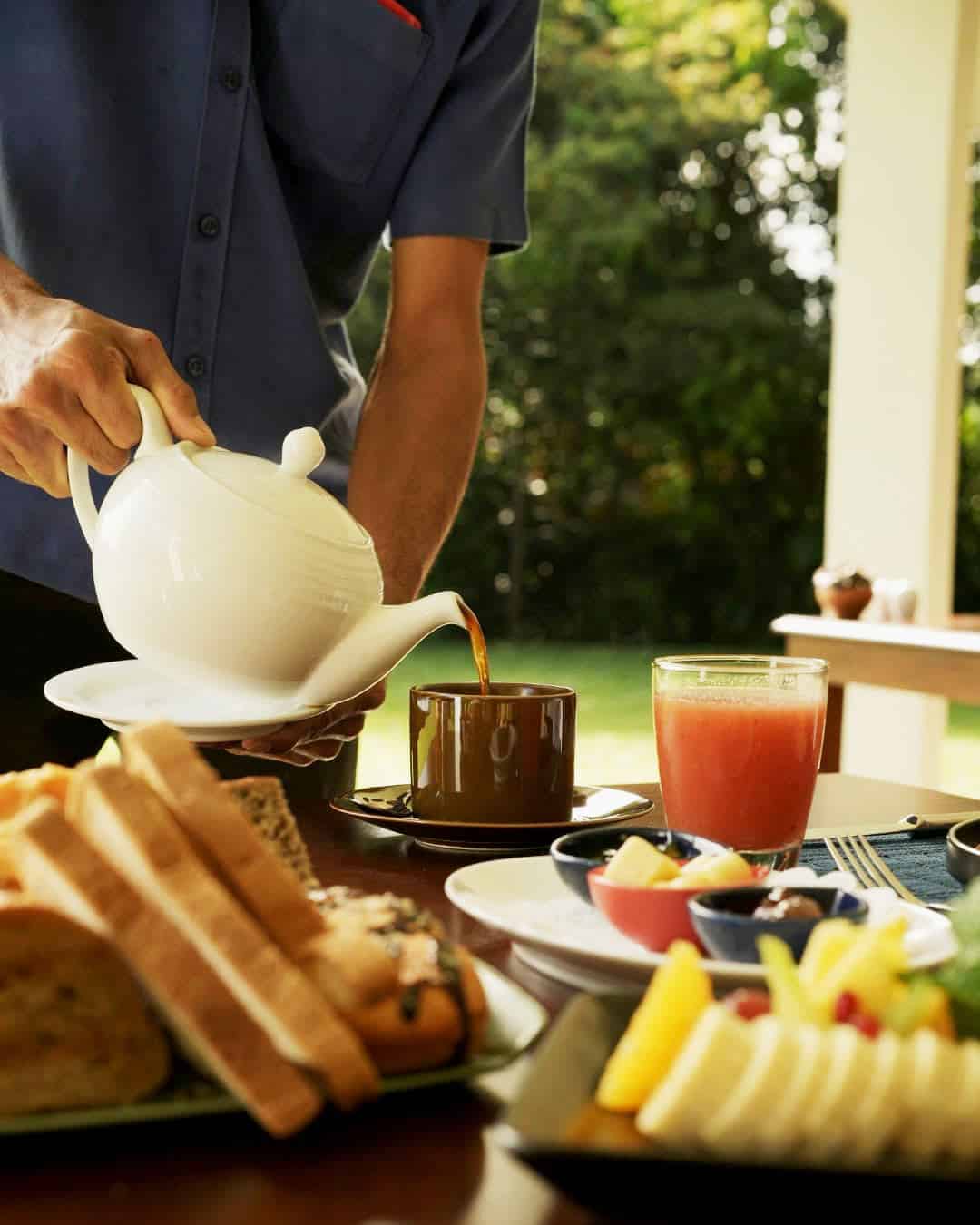
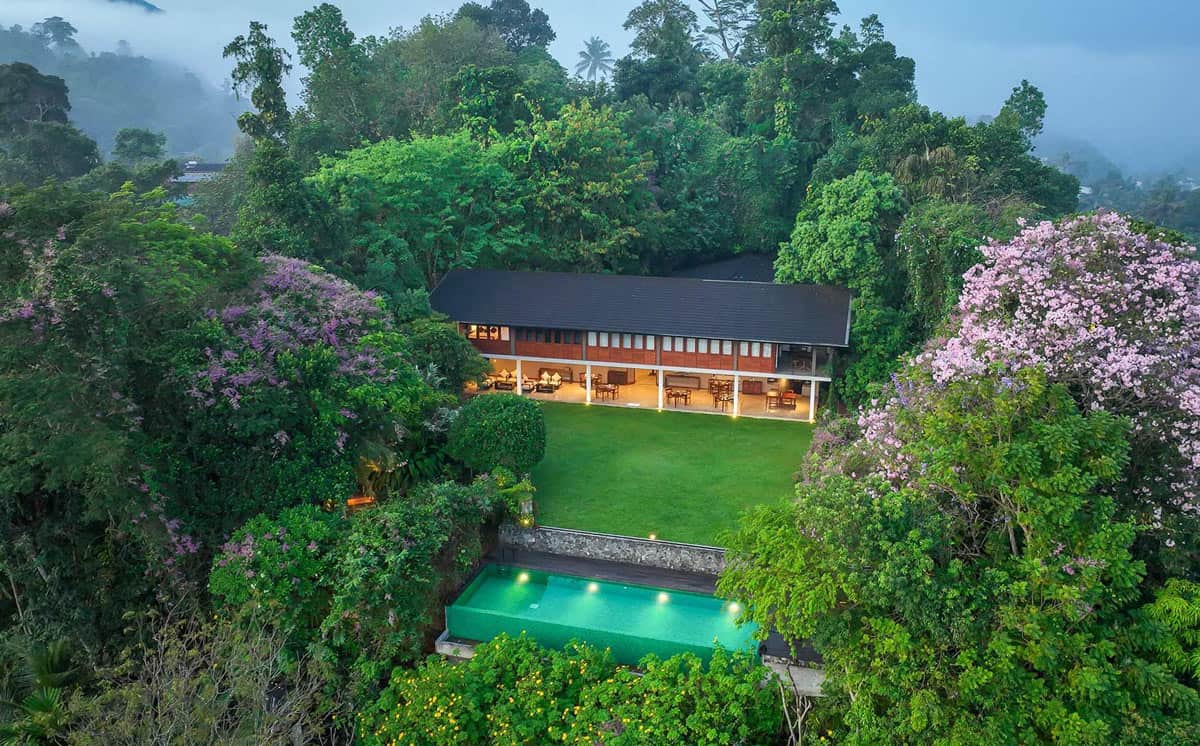
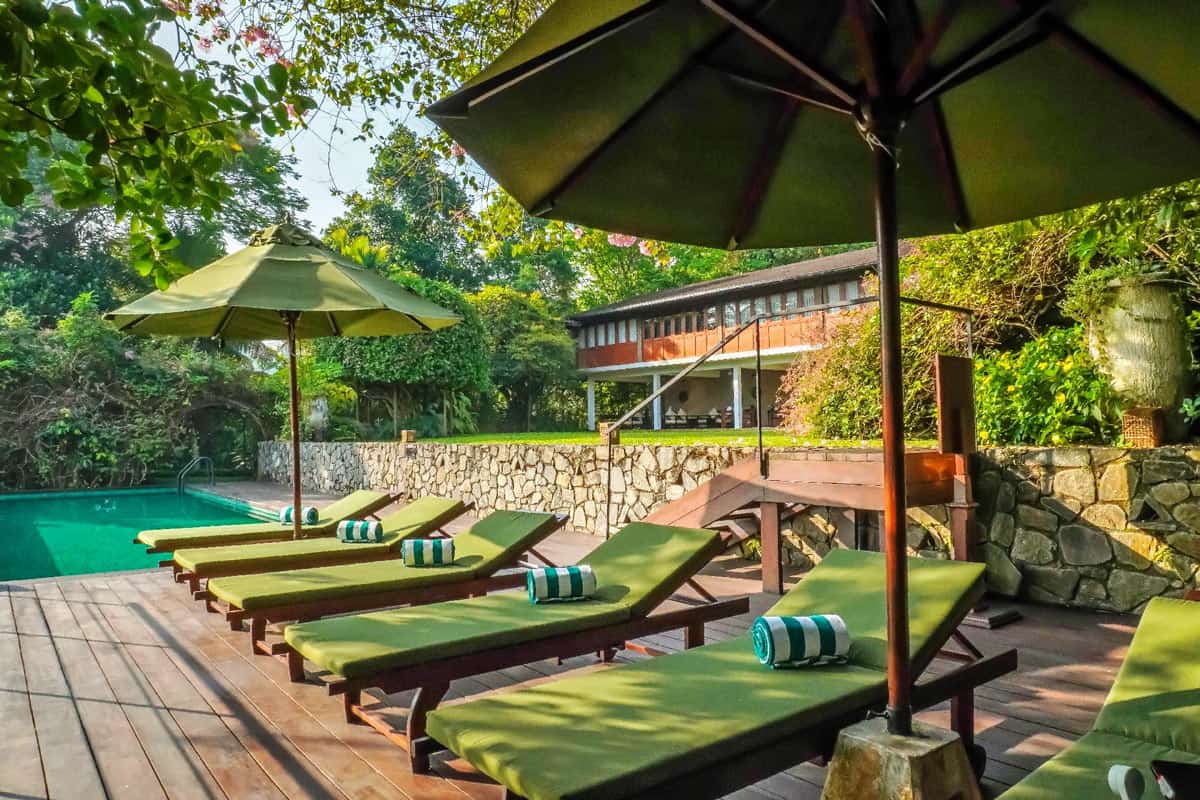
Kings Pavilion Luxury Hotel has more of a contemporary feel. But high ceilings, rich wood furnishings and paintings of Kandyan dancers give it a distinctly Sri Lankan character.
Its nine spacious rooms and suites come with balconies or secluded garden terraces. There’s also a pool overlooking the valley and a restaurant serving Sri Lankan and international dishes.
Where to eat in Kandy?
It’s no secret that Kandy isn’t exactly a foodie destination.
And after full days of sightseeing, we weren’t particularly adventurous about heading out at night. In fact, we ended up eating at the same restaurant – Slightly Chilled Lounge – on two of our three nights in Kandy.
Slightly Chilled Lounge & Sunset Bar
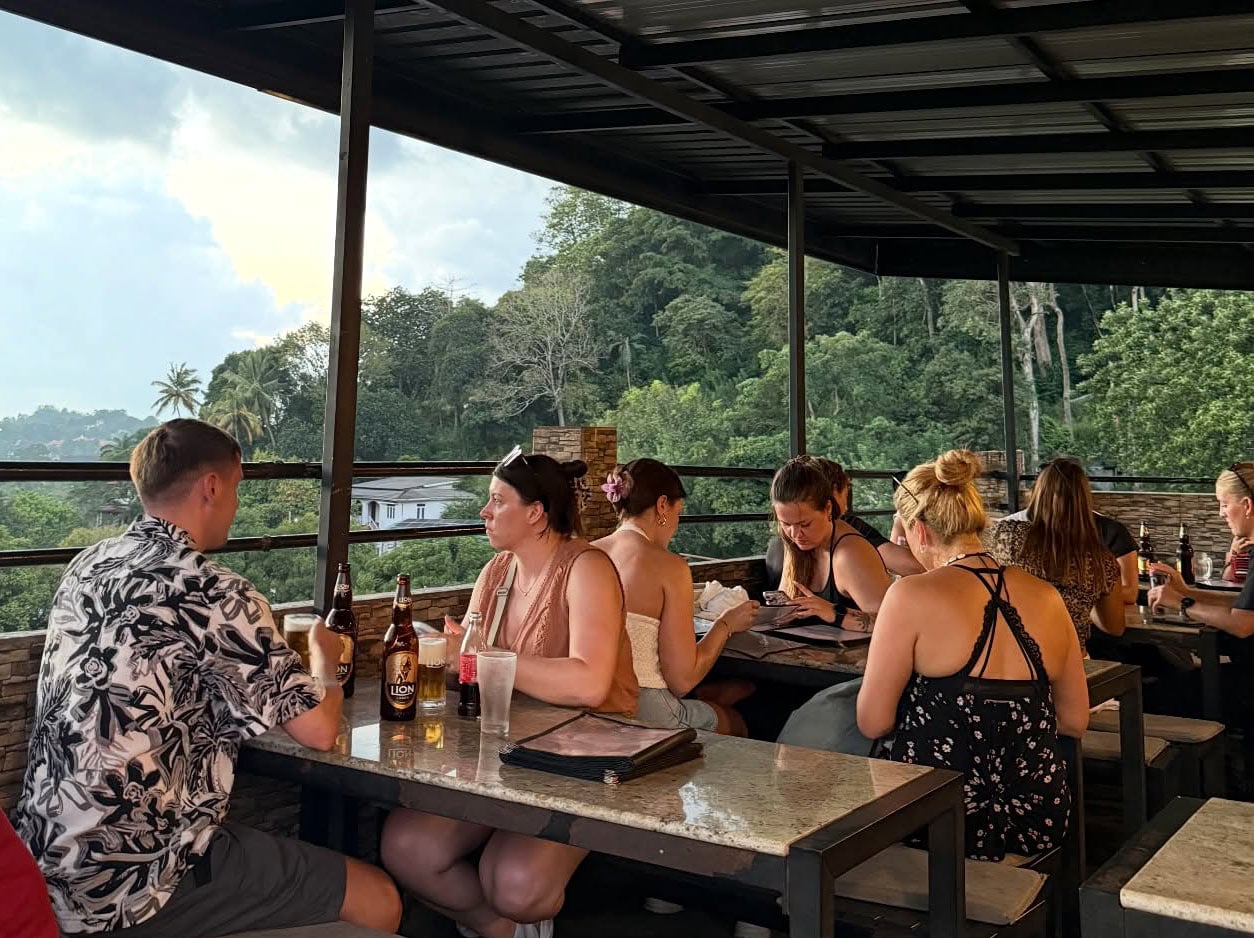
One of the better places to eat in Kandy, Slightly Chilled is run by a British bloke and his Chinese wife.
It’s a casual open-air rooftop hangout with terrific views over Kandy and its twinkling lights at night.
The deep-fried shrimp, cashew chicken and other Chinese-style dishes are tasty. And there’s beer, cider and gin-and-tonics too.
Other okay Kandy restaurants
We’ve heard these are also among the better picks:
- Hideout Lounge – A relaxed spot by the lake, popular for its Western dishes, poke bowls and cocktails.
- Royal Bar & Restaurant – An atmospheric colonial-style spot and one of Kandy’s old-time watering holes. Grab a seat on the balcony overlooking the street below.
Kandy village cooking class: Cook and eat!
With hundreds of glowing 5-star reviews, this Kandy village cooking class is a fun way to experience (and eat!) traditional Sri Lankan cooking in a beautiful countryside home.
After visiting a local market, you’re welcomed with tea, then head to the open-air kitchen to:
- Prepare rice and several curries
- Make coconut milk from scratch
- Fry crispy papadams
- Whip up sweet pancakes for dessert
Then sit down with your hosts to enjoy the feast you’ve made!
Good to know: Choose lunch or dinner. Kandy hotel pickup is included.
Best time to visit Kandy
The peak season in Kandy runs from December to March, when the weather is generally drier and cooler, with temperatures hovering around 72 F to 86 F (22 C to 30 C). This is considered the best time to visit.
August is another popular month, thanks to the spectacular Festival of the Tooth (Kandy Esala Perahera).
If you can, avoid October and November. This is when the Maha monsoon brings some of Kandy’s heaviest rainfall, making it the wettest – and generally least appealing – time to go.
Ready to explore Kandy?
Kandy is chaotic, colorful and a little rough around the edges – but that’s part of its charm.
Come for the sacred Temple of the Tooth, stay for the beautiful gardens, giant Buddha, tea, tuk-tuk rides and misty green hills.
Give Kandy a couple of days, embrace the bustle – and enjoy this colorful corner of Sri Lanka!
Discover more of Kandy and Sri Lanka!
- That Amazing Temple in Kandy, Built for a Tooth
- All Aboard the Scenic Kandy-to-Ella Train!
- 5 Gorgeous Places to Stay Around Kandy
- Ella Envy: 5 Lovely Hotels in the Hills
- How to Spend 2 Wonderful Weeks in Sri Lanka
- 15 Beautiful Luxury Hotels in Sri Lanka
- 7 Treasures of Sri Lanka’s Cultural Triangle
- 5 Great Places to Stay in Galle, From Fort to Beach
Pin our guide on things to see and do in Kandy!

Our top travel tips and resources
→ Hotels | Booking.com is our go-to for scoring a “wow” hotel – or at least a decent one – often at lower rates than the hotel’s own website. (We especially like Booking.com’s flexible cancellation policy!) You can also find excellent discounted rates on Expedia, especially for hotels in the U.S. and Mexico.
→ Vacation homes, condos and rentals | We prefer and use Vrbo (Vacation Rentals by Owner).
→ Flights | For the best flights, we search on Google Flights first. Expedia and Kayak are then perfect for snagging the cheapest tickets. (They’re often non-refundable, though, so for more flexibility, we book directly with the airline, even if it costs more.)
→ Airport lounge access | We love (and have) Priority Pass for comfy lounge seats, free snacks and drinks, complimentary WiFi and sometimes even showers and spa services!
→ Tours | For the best local food, walking and other guided tours, plus skip-the-line tickets to attractions, check out Viator (a TripAdvisor company) and GetYourGuide.
→ Car rental | Renting a car can be a great way to explore off the beaten path. Discover Cars searches car rental companies for the lowest rates.
→ Travel insurance | SafetyWing is designed for frequent travelers, long-term adventurers and digital nomads. It covers medical expenses, lost checked luggage, trip interruption and more. We also have and recommend Medjet for global air medical transportation.
→ Travel gear | See our travel shop to find the best luggage, accessories and other travel gear. (We suggest these comfy travel sandals for city walking, the beach and kicking about.)
→ Need more help planning your trip? | Check out our travel tips and resources guide for airline booking tips, ways to save money, how to find cool hotels and other useful trip planning info.
If you make a booking or purchase through our site, we may earn a small commission (at no cost to you). Thanks!
Photo credits: Hotel photos courtesy of the respective hotels
About the authors

Thanks so much for the kind words!